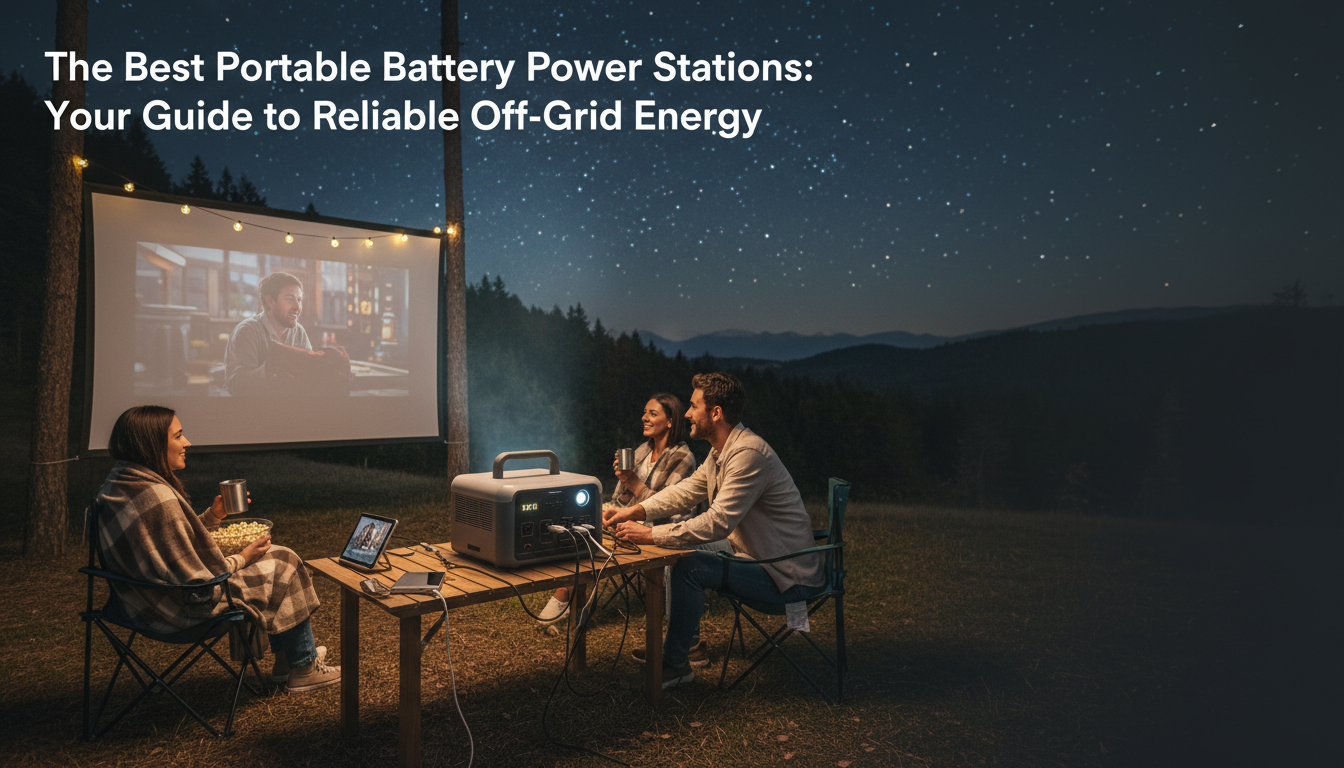
The Best Portable Battery Power Stations: Your Guide to Reliable Off-Grid Energy
Powering Your Adventures: Why Portable Battery Power Stations Are Essential
For outdoor enthusiasts, remote workers, and anyone seeking reliable power beyond the grid, portable battery power stations have become indispensable tools. These devices are essentially large, rechargeable battery packs equipped with various output ports, including AC outlets, USB ports, and DC connections, enabling them to power everything from smartphones and laptops to portable projectors and small appliances. They offer a significant upgrade over traditional gas generators, operating silently, producing no fumes, and being safe for use in tents, cabins, or other enclosed spaces.
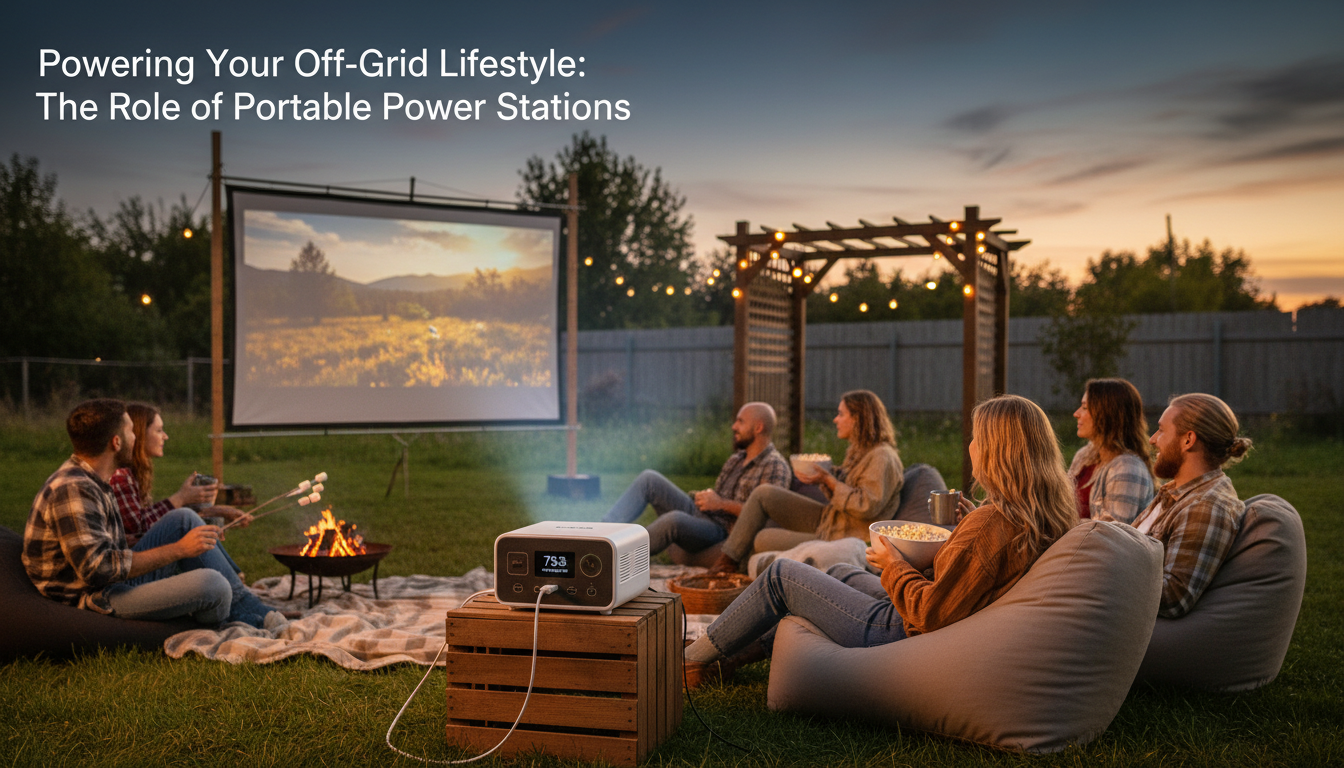
The versatility of a portable power station makes it a crucial companion for diverse scenarios. Campers can keep their lights on and devices charged deep in the wilderness, while remote workers can maintain productivity from virtually anywhere. They also provide peace of mind as an emergency backup for essential electronics during unexpected power outages. For those looking to enhance outdoor experiences, these stations are perfect for powering portable projectors for movie nights under the stars, ensuring your entertainment setup runs smoothly without a direct power source.
This guide is designed to help you navigate the options and confidently choose a portable power station that precisely matches your capacity, output, portability, and connectivity requirements, ensuring your adventures and work remain uninterrupted.
Decoding Portable Power Stations: Key Features and Specifications
Understanding the core technical specifications of a portable power station is crucial for selecting a unit that reliably meets your off-grid energy demands, whether for powering a remote workstation or an outdoor movie night. These features dictate a station's capability, longevity, and overall suitability for your specific adventures.
-
Battery Capacity (Watt-hours - Wh) This metric quantifies the total energy a power station can store. A higher Wh rating means longer run times for your devices. To estimate your needs, multiply your device's wattage by the hours you intend to use it. For example, a 60W laptop used for 5 hours requires 300Wh (60W * 5h), while a 100W portable projector used for 3 hours needs 300Wh (100W * 3h). Consider a power station with at least 20-30% more capacity than your calculated daily need to account for efficiency losses and unexpected usage.
-
Output Power (Watts - W) Output power specifies how much electricity the station can deliver at any given moment. This is typically split into continuous output (the stable power it can supply for extended periods) and peak (or surge) output (a brief burst of higher power for devices that require it upon startup, like some motors). Ensure the continuous output rating exceeds the highest wattage of any single device you plan to power, such as your laptop charger or portable projector.
-
Battery Chemistry (e.g., LiFePO4 vs. NMC) The type of lithium-ion battery chemistry significantly impacts a power station's performance and lifespan.
- LiFePO4 (Lithium Iron Phosphate): Known for exceptional longevity, offering thousands of charge cycles before significant degradation. They are generally safer due to higher thermal stability and are an excellent choice for frequent, long-term use in demanding outdoor environments.
- NMC (Nickel Manganese Cobalt): Often found in smaller or older units, NMC batteries offer higher energy density, meaning more power in a lighter package. However, they typically have fewer charge cycles and can be less thermally stable than LiFePO4.
-
Charging Options Versatile charging capabilities enhance a power station's utility in diverse settings.
- AC Wall Outlet: The fastest and most common method for recharging at home or any grid-connected location.
- Solar Panel Compatibility: Essential for true off-grid independence. Look for stations with an integrated MPPT (Maximum Power Point Tracking) controller for efficient solar charging, especially beneficial for multi-day camping trips.
- Car Charger: Allows for recharging from your vehicle's 12V outlet, a convenient option during travel, though typically slower than AC or solar.
-
Port Selection The array of output ports determines which devices you can power.
- AC Outlets: Standard three-prong outlets for laptops, projectors, camera chargers, and small appliances. The number of outlets dictates how many AC devices you can run simultaneously.
- USB-A Ports: Common for charging older smartphones, headlamps, and small electronics.
- USB-C (Power Delivery - PD) Ports: Crucial for rapidly charging modern smartphones, tablets, and many USB-C powered laptops, offering faster charging speeds than traditional USB-A.
- 12V DC Car Ports: Ideal for powering car refrigerators, air pumps, or other 12V-specific camping accessories. Ensure the port selection aligns with your specific device ecosystem.
Choosing Your Power Companion: Essential Buying Criteria
Beyond raw capacity and output, the practical aspects of a portable power station dictate its real-world utility for outdoor enthusiasts, remote workers, and those needing reliable backup. Evaluating these criteria against your specific activities ensures you select a device that seamlessly integrates into your lifestyle, rather than becoming a burden.
- Portability and Ease of Transport Consider how you'll move the unit. For backpackers or hikers, weight and compact dimensions are paramount. Car campers or those setting up remote workstations might prioritize integrated handles or even wheels for higher-capacity units, which can be significantly heavier. Assess the overall footprint to ensure it fits your vehicle or storage space.
- Recharge Speed and Versatility The time it takes to fully recharge a power station can be a critical factor, especially between adventures or during limited daylight hours for solar charging. Look for models that support rapid AC charging, efficient solar input, and car charging options. Faster recharge times mean less downtime and more consistent power availability.
- Durability and Build Quality Outdoor and rugged environments demand robust construction. Evaluate the materials used for the casing, the protection of ports, and overall resistance to dust, splashes, or minor impacts. A sturdy build ensures longevity and reliability when exposed to the elements or the rigors of travel.
- Safety Features Essential for protecting both the power station and your connected devices, a comprehensive suite of safety features is non-negotiable. Look for overload protection, which prevents damage from drawing too much power; temperature control, which manages battery heat; and short-circuit protection, safeguarding against electrical faults. These features contribute to the overall reliability and lifespan of the unit.
- User Interface and Display A clear and intuitive display provides vital information at a glance. Prioritize units with screens that clearly show remaining charge level, input/output wattage, and estimated run-time or recharge time. Easy-to-understand indicators and controls enhance usability, especially in low-light conditions or when quick adjustments are needed.
- Additional Functionalities Certain features can significantly enhance convenience and utility. Uninterruptible Power Supply (UPS) functionality allows devices to remain powered during a blackout by seamlessly switching to battery power. App control offers remote monitoring and management. Integrated lighting can be invaluable for camping or emergencies, and pass-through charging allows the unit to power devices while simultaneously recharging itself. Consider which of these extras align with your primary use cases.
Navigating the Choices: Understanding Trade-offs and Limitations
Selecting a portable battery power station involves understanding inherent compromises and potential limitations. Acknowledging these trade-offs ensures realistic expectations and helps prevent common pitfalls, particularly for outdoor enthusiasts, remote workers, and those powering specific devices like portable projectors.
-
Capacity, Portability, and Cost Balance These three factors are intrinsically linked. A power station with higher energy capacity (Wh) typically translates to a larger, heavier unit, which can reduce portability for activities like hiking or backpacking. Increased capacity and advanced features also generally lead to a higher purchase price. Users must prioritize which of these aspects is most critical for their primary use case, as maximizing one often means compromising on another.
-
Charging Time Versus Output Demands While a power station may offer high output wattage to run demanding devices like portable projectors or power tools, this high draw depletes the battery more quickly. Consequently, fully recharging a large-capacity station after significant use can take many hours, especially when relying on standard wall outlets or slower solar inputs. This can be a limitation in scenarios requiring continuous power without extended downtime for recharging.
-
Battery Degradation Over Time Like all rechargeable batteries, those within portable power stations have a finite lifespan, commonly measured in charge cycles. Each full charge and discharge cycle contributes to a gradual reduction in the battery's maximum capacity. Over several years of regular use, the power station's ability to hold a full charge will diminish, impacting its overall run time and performance.
-
Environmental Performance in Extreme Temperatures Portable power stations are designed with operating temperature ranges, and performance can be affected by extreme heat or cold. Very low temperatures can reduce battery efficiency, leading to shorter run times, while very high temperatures can accelerate battery degradation and potentially trigger safety shutdowns. Users operating in diverse climates should check the manufacturer's specified operating and storage temperature guidelines.
-
Ensuring True Device Compatibility It's crucial to verify that a power station's continuous output wattage can handle the specific power requirements of your devices. High-wattage items, such as certain portable projectors, small appliances, or power tools, may exceed the continuous output or peak surge capacity of smaller power stations, causing them to shut down. Always check the wattage requirements of your most demanding devices against the power station's specifications.
-
Consideration for Noise Levels While significantly quieter than gasoline generators, portable power stations are not entirely silent. Most units incorporate internal cooling fans that activate during high power output, fast charging, or when operating in warmer conditions. These fans produce an audible hum, which, while generally minor, might be a consideration for use in very quiet environments like tents, cabins, or during focused remote work sessions.
Finding Your Perfect Match: Power Stations for Every Scenario
Selecting the right portable battery power station hinges on aligning its capabilities with your specific activities and power demands. Different scenarios call for distinct feature sets, capacities, and levels of portability. Understanding these distinctions helps you make an informed choice that truly fits your needs, from powering a remote workstation to illuminating an outdoor movie night.
-
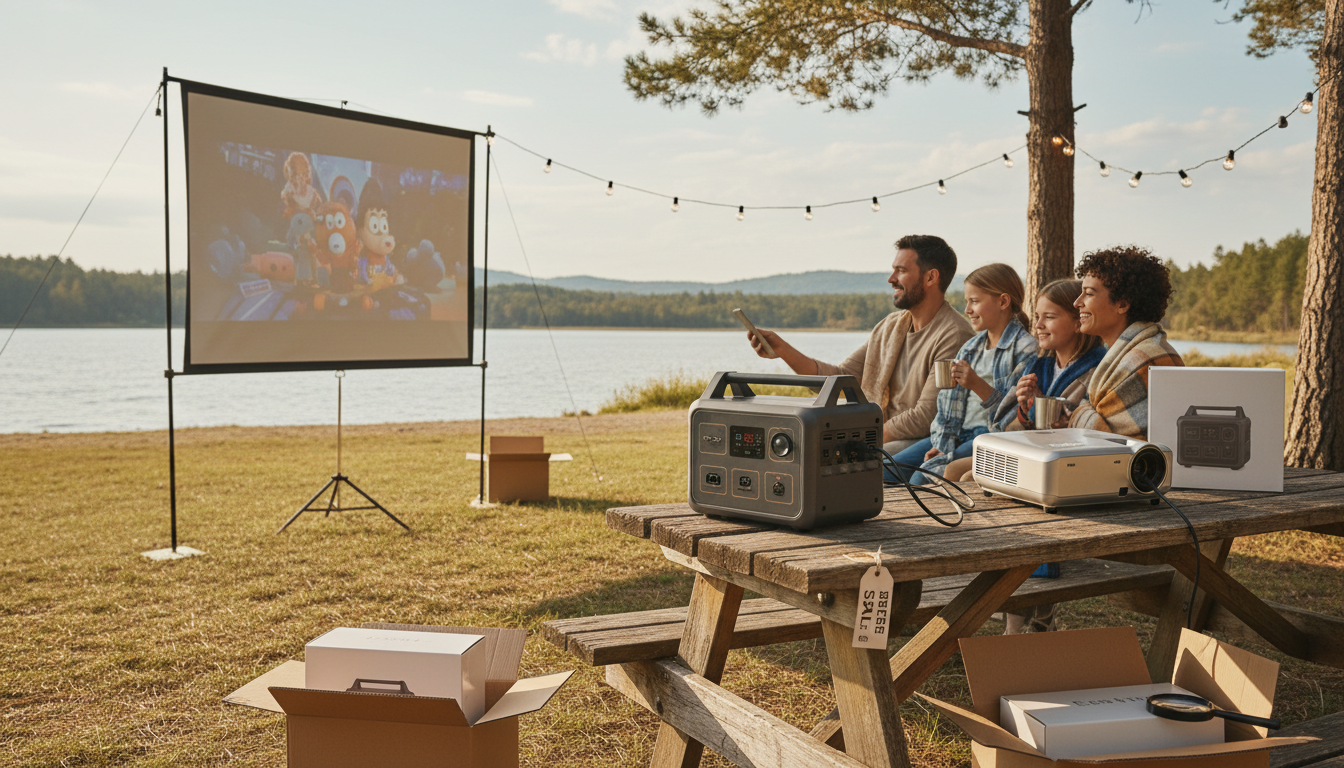
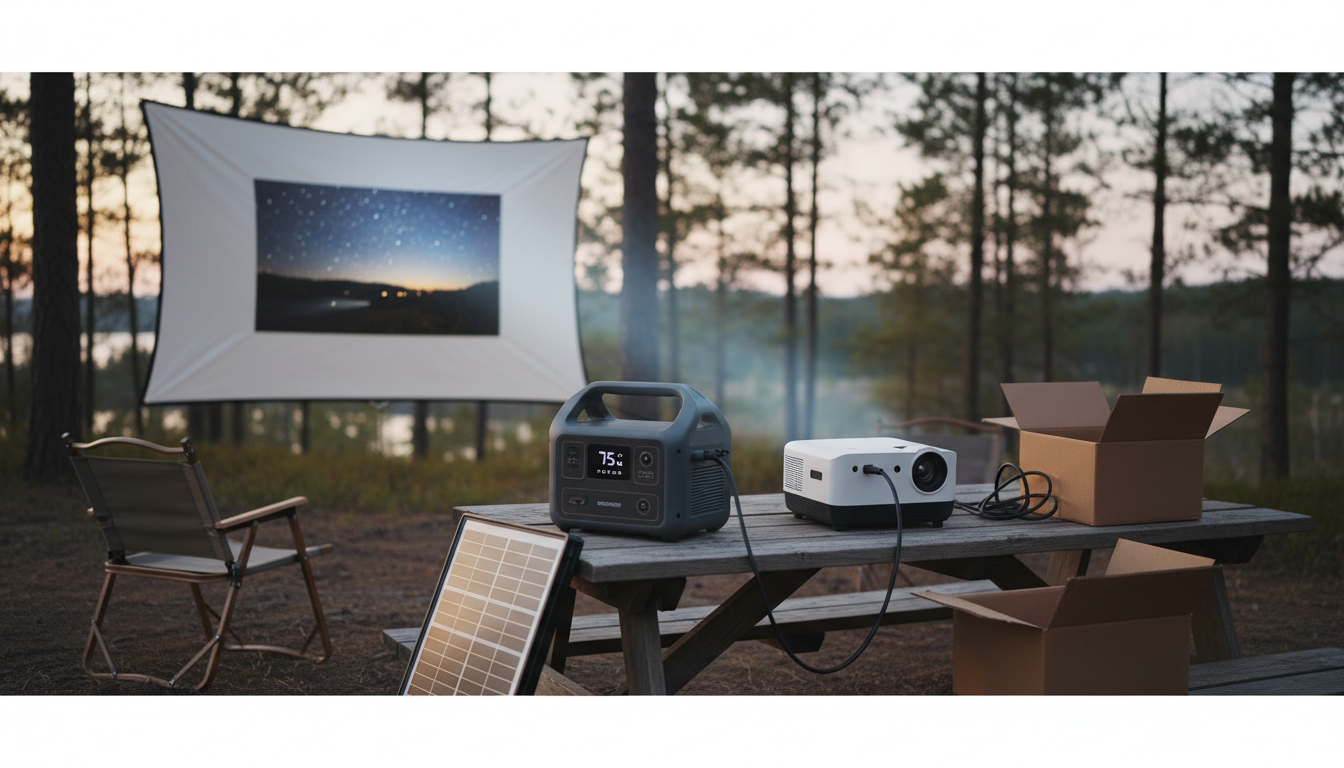
For Outdoor Projector Setups & Camping For weekend camping trips or setting up an outdoor cinema, a power station with moderate capacity (typically 500-1500 Watt-hours) strikes a balance between run time and portability. Look for robust AC output that can comfortably handle the wattage of your portable projector and other camp essentials like lights or a small fan. Integrated solar charging capability is a significant advantage for multi-day use, allowing you to replenish power away from an outlet. Prioritize models with sturdy handles and a manageable weight for easier transport to your campsite or viewing location. The trade-off here often involves balancing a larger battery for longer projector runtimes against the desire for a lighter unit to carry.
-
For Emergency Home Backup When preparing for unexpected power outages, the focus shifts to higher capacity (often 1000 Watt-hours or more) and reliability. A critical feature to consider is an Uninterruptible Power Supply (UPS) function, which allows essential devices like computers, medical equipment, or communication systems to remain powered without interruption during a grid failure. This rapid switchover prevents data loss or operational pauses. Ensure the unit offers diverse output types, including multiple AC outlets for essential home appliances, along with various USB ports for charging phones and tablets. While these units are typically heavier, their ability to sustain critical home functions outweighs the need for frequent portability.
-
For Van Life & Extended Off-Grid Adventures Life on the road or extended stays in remote locations demand power stations with very high capacities (2000 Watt-hours and above) and exceptional durability. These units need to withstand constant movement, varying temperatures, and potential impacts. Prioritize models offering multiple recharging methods, including robust solar input, vehicle charging, and standard AC wall charging, to ensure continuous power availability. The construction should be rugged, designed for prolonged outdoor exposure. The primary trade-off here is often the substantial size and weight, which are necessary to house the large battery and durable components required for sustained, demanding use.
-
For Light Use & Daily Device Charging If your primary need is to keep small personal devices charged on day trips, during commutes, or for quick power top-ups, ultra-portable and compact power stations are ideal. These units typically have lower capacities (under 500 Watt-hours) and focus on basic USB-A and USB-C outputs, sometimes including a single small AC outlet for a laptop. Their design emphasizes minimal weight and a small footprint, making them easy to carry in a backpack or shoulder bag. The compromise is their limited ability to power larger appliances or sustain devices for extended periods, but they excel in convenience and mobility for personal electronics.
-
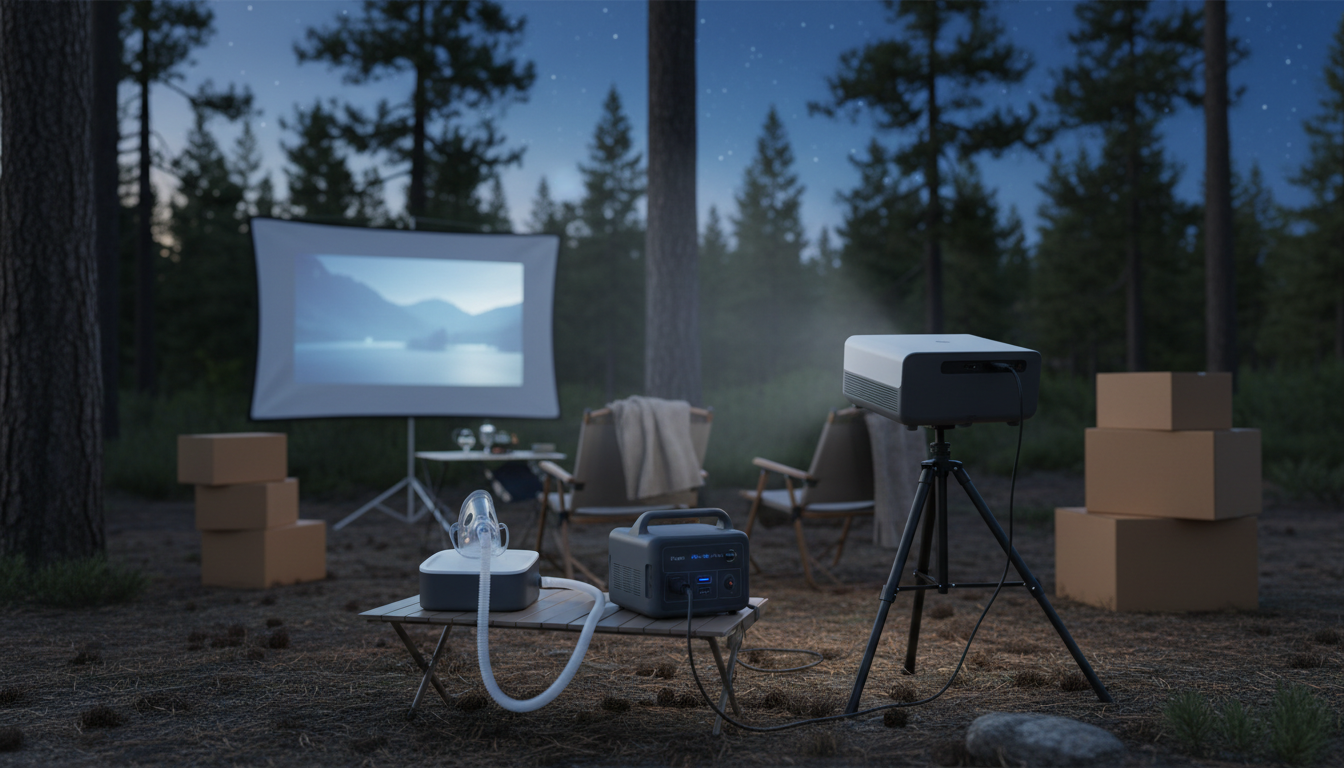
Considerations for Specific Power-Hungry or Critical Devices When powering essential or sensitive equipment, such as medical devices (e.g., CPAP machines, oxygen concentrators) or high-wattage professional tools, several factors become paramount. Always verify that the power station provides a pure sine wave AC output, which is crucial for protecting sensitive electronics from potential damage. For medical equipment, an integrated UPS function is often non-negotiable to ensure uninterrupted operation during power transitions. Carefully calculate the device's power consumption and desired run time, then select a power station with ample capacity and a safety buffer. In critical scenarios, considering a backup charging method or a secondary, smaller power source can add an extra layer of security.
Essential Q&A for Portable Power Stations
Navigating the world of portable power stations can bring up several questions, especially when considering them for specific uses like remote work or powering outdoor entertainment. Here are answers to common queries to help you make an informed decision.
What problem do portable battery power stations solve better than alternatives like gas generators? Portable battery power stations offer a distinct advantage by providing quiet, emission-free power. Unlike gas generators, they produce no fumes, making them safe for indoor use in tents, cabins, or homes during outages. They also operate silently, which is crucial for maintaining peace in natural environments or during remote work calls. Furthermore, their stable power output, often featuring a pure sine wave inverter, is safer for sensitive electronics like laptops, cameras, and portable projectors, reducing the risk of damage that can occur with less stable generator power.
How long do portable power stations typically last (lifespan, storage)? The lifespan of a portable power station is primarily determined by its battery chemistry, measured in charge cycles.
- Lifespan: Many modern power stations use Lithium Iron Phosphate (LiFePO4) batteries, which can offer 2,500 to 3,500+ full charge cycles before their capacity degrades to 80%. This translates to many years of reliable use, even with frequent charging. Older Lithium-ion batteries typically offer fewer cycles (e.g., 500-800).
- Storage: For optimal longevity, store your power station in a cool, dry place, ideally with a charge level between 50% and 80%. If storing for extended periods, check the manufacturer's guidelines and recharge every 3-6 months to prevent deep discharge, which can reduce battery life.
Can I run a portable projector with a power station? What should I look for? Yes, a portable power station is an excellent way to power a portable projector for outdoor movie nights or presentations. To ensure compatibility and adequate performance, consider:
- AC Output: Most portable projectors require a standard AC outlet. Verify the power station's continuous wattage output meets or exceeds your projector's power consumption (found in the projector's specifications).
- Capacity (Wh): Calculate the projector's wattage multiplied by your desired run time. For example, a 100W projector used for 2 hours needs 200Wh, so a power station with 300-500Wh capacity would provide a comfortable buffer.
- Pure Sine Wave Inverter: This is crucial for sensitive electronics like projectors. A pure sine wave inverter delivers clean, stable electricity, preventing potential damage and ensuring optimal projector performance.
Are portable power stations safe to use indoors? Absolutely. One of the main benefits of portable power stations over fuel-based generators is their safety for indoor use. They run on rechargeable batteries, producing no carbon monoxide fumes, exhaust, or significant noise. This makes them ideal for providing backup power inside your home, RV, or tent without ventilation concerns. Always ensure the unit's vents are unobstructed to prevent overheating during operation or charging.
What's the difference between a portable power bank and a portable power station? While both store and deliver power, their scale and capabilities differ significantly:
- Portable Power Bank: Typically small, pocket-sized devices with capacity measured in milliamp-hours (mAh). They are designed primarily for charging small USB-powered devices like smartphones, tablets, and headphones.
- Portable Power Station: Much larger in physical size and capacity, measured in watt-hours (Wh). They feature multiple output types, including AC outlets, DC ports, and various USB ports, allowing them to power larger appliances, laptops, portable projectors, and even small refrigerators for extended periods.
How do I maintain my portable power station for optimal performance? Proper maintenance extends the life and efficiency of your power station:
- Charge Cycles: Follow the manufacturer's recommendations for charging, especially the initial charge. While LiFePO4 batteries are robust, avoiding consistent full discharge to 0% can contribute to longevity.
- Storage Conditions: Store the unit in a cool, dry environment, away from direct sunlight or extreme temperatures. Maintain a partial charge (typically 50-80%) during long-term storage.
- Cleanliness: Keep all ports and vents free of dust and debris. Use a dry, soft cloth for cleaning the exterior.
- Temperature Ranges: Operate and charge your power station within the specified temperature ranges provided by the manufacturer. Extreme heat or cold can negatively impact battery health and performance.
Empower Your Life: Making Your Final Decision
As you conclude your search for the ideal portable battery power station, remember that the most effective choice is one that precisely aligns with your unique demands. Having explored the critical specifications, practical criteria, and inherent trade-offs, your final decision hinges on a clear understanding of your primary use cases.
Revisit the foundational aspects that shape a power station's utility. Consider the balance between:
- Energy Capacity (Wh): Sufficient power for your devices without excessive bulk.
- Output Capabilities (W): Matching the wattage requirements of your most power-hungry electronics, like a portable projector or a high-wattage tool.
- Portability: The ease with which you can transport the unit, whether it's for backpacking, car camping, or simply moving it around a remote workspace.
- Charging Versatility: How you plan to recharge the station—solar, AC, or vehicle—and the speed at which it can replenish its charge.
- Durability and Features: The robustness required for your environment and any specific ports or functionalities essential for your workflow or entertainment.
Prioritize the scenarios where reliable power is most critical. If powering a portable projector for outdoor movie nights is paramount, ensure the station's output and capacity can handle the projector's demands for the desired duration. For remote work, focus on consistent laptop and accessory charging. If emergency preparedness is your main concern, emphasize longevity and a variety of output options for essential home devices. By focusing on your most frequent and critical applications, you can filter options and confidently select a power station that serves your needs without compromise.
Ultimately, a well-chosen portable battery power station offers more than just electricity; it provides the freedom to venture further, work more flexibly, and enjoy uninterrupted experiences. It delivers peace of mind, knowing you have a dependable energy source at your disposal, empowering your adventures and ensuring you stay connected and productive wherever life takes you.
More in Portable Power Stations
View All
How Long Do Portable Power Stations Last? Understanding Battery Lifespan and Maintenance
Compare how long do portable power stations last with a practical informational SEO brief, decision criteria, FAQs, and publishing checks before you commit
How Do Portable Power Stations Work? A Beginner's Guide to Off-Grid Energy
Compare how do portable power stations work with a practical informational SEO brief, decision criteria, FAQs, and publishing checks before you commit.
Best Portable Power Stations for CPAP: Ensuring Uninterrupted Sleep On the Go
Compare best portable power stations for cpap with a practical commercial SEO brief, decision criteria, FAQs, and publishing checks before you commit.