Understanding Portable Battery Power Stations: Your Complete Guide to Features and Types
Powering Your Adventures: Why Portable Battery Power Stations Are Essential
Accessing reliable power away from traditional outlets, whether deep in nature or during an unexpected outage, presents a common challenge. This is where portable battery power stations become indispensable tools. These self-contained units store electrical energy in a rechargeable battery, delivering power through various output ports like AC outlets, USB ports, and DC connections. They are designed to provide electricity on demand, wherever you need it.
Unlike noisy, fume-emitting gas generators, portable power stations offer a cleaner, quieter alternative, making them ideal for a range of scenarios without the need for fuel or extensive maintenance. Their utility extends beyond simple device charging, empowering users to maintain connectivity and comfort wherever they are.
Consider their impact on:
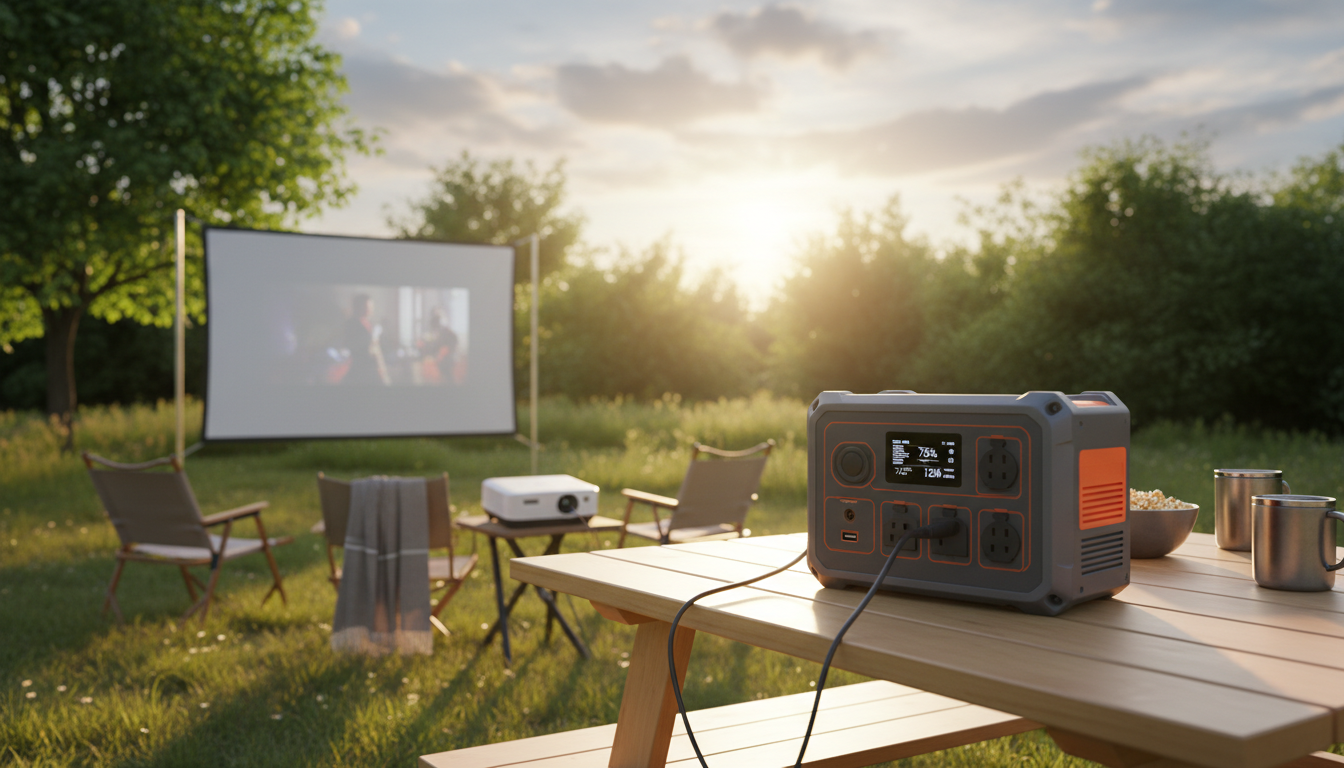
- Outdoor Activities & Camping: Keeping essential gear, like lights, mini-fridges, or even outdoor projectors for movie nights, running during camping trips or remote excursions.
- Emergency Preparedness: Providing critical backup power for medical devices, communication tools, or to keep a remote projector setup operational during power outages.
- Remote Work & Leisure: Powering laptops, cameras, and, notably, enabling outdoor presentations or entertainment with projectors in locations without grid access.
Ultimately, portable battery power stations solve the fundamental problem of providing accessible, on-demand electricity, transforming how we experience off-grid activities and prepare for unforeseen circumstances. They offer the freedom to power your devices and adventures reliably, anywhere.
Decoding the Specs: Essential Features of Portable Power Stations
Selecting the right portable power station requires understanding its core technical specifications. These details dictate how much power a unit can store, how quickly it can deliver that power, and how well it integrates into your specific use cases, such as powering a projector for an outdoor movie night or keeping critical devices running remotely.
To confidently compare models, focus on these key aspects:
- Capacity (Watt-hours - Wh): This metric indicates the total energy a power station can store. A higher Wh rating means it can power devices for a longer duration. To estimate runtime for a specific device, divide the power station's Wh by the device's wattage (W). For example, a 500Wh power station could theoretically run a 50W projector for approximately 10 hours (500 Wh / 50 W = 10 hours), though actual performance may vary due to inverter efficiency losses. Understanding this relationship is crucial for ensuring your outdoor projector setup doesn't cut short.
- Output (Watts - W): This refers to the power a station can deliver at any given moment.
- Continuous Output: The maximum wattage a power station can sustain for an extended period. Ensure this meets or exceeds the continuous power draw of your most demanding device, like a projector.
- Surge Output: A temporary peak wattage a unit can provide for a few seconds, designed to handle the initial power spike some devices (like motors or certain electronics) require upon startup. While important, prioritize continuous output for consistent device operation.
- AC/DC Ports: Power stations typically offer standard AC (alternating current) outlets, similar to wall sockets, for household electronics. DC (direct current) ports, including USB-A, USB-C, and 12V car outlets, are efficient for charging smaller devices and some specialized equipment. Matching the available ports to your devices, especially for cameras, laptops, and projector accessories, prevents the need for additional adapters.
- Battery Chemistry: The type of battery cells used impacts a unit's lifespan, safety, and weight.
- Lithium-ion (Li-ion): Common due to its high energy density, offering a good balance of capacity and portability. However, Li-ion batteries typically have a shorter cycle life (number of full charge/discharge cycles before significant capacity degradation) compared to newer chemistries.
- Lithium Iron Phosphate (LiFePO4): Increasingly popular for its enhanced safety, longer lifespan (often thousands of cycles), and better thermal stability. While potentially heavier and larger for the same capacity, LiFePO4 can be a more durable, long-term investment, particularly for frequent outdoor or demanding use.
- Input/Recharging Methods: How you replenish the power station's energy is vital for continuous use.
- Wall Charger (AC): The fastest and most common method, using a standard wall outlet.
- Solar Input: Essential for off-grid scenarios, especially for extended outdoor projector events or camping. Look for the maximum solar input wattage (e.g., 120W, 200W) to gauge recharging speed. Higher wattage generally means faster charging under optimal sunlight.
- Car Charger (DC): Allows charging from your vehicle's 12V cigarette lighter port, useful during transit to a remote location.
- Portability: For outdoor and remote setups, a power station's physical characteristics are paramount.
- Weight and Dimensions: Directly impact ease of transport. Consider if you'll be carrying it by hand, in a backpack, or moving it short distances from a vehicle.
- Ergonomic Design: Features like sturdy handles, compact shapes, and robust casing contribute to comfortable and secure transport, reducing the risk of damage during movement.
- Display and Connectivity: These features enhance user experience and monitoring.
- Clear Display: A digital screen showing battery percentage, input/output wattage, and remaining runtime is crucial for managing power effectively, especially when powering multiple devices or a high-draw projector.
- App Control and Monitoring: Many modern power stations offer Bluetooth or Wi-Fi connectivity, allowing you to monitor and control the unit from your smartphone. This can be particularly convenient for remote adjustments or checking battery status without needing to be physically next to the unit.
Matching Power to Purpose: Selecting the Ideal Station for Your Devices
Translating your specific power requirements into the right portable power station specifications is crucial for a practical and effective choice. This process involves understanding how much energy your devices consume, what types of connections they need, and how long you expect them to run, especially for varied scenarios like powering a remote projector setup or simply charging a phone.
First, determine your total energy needs by calculating the required capacity. A fundamental formula for estimating runtime is:
- Runtime (hours) = Power Station Capacity (Watt-hours, Wh) ÷ Device Wattage (Watts, W)
For instance, if a projector consumes 100W and you need it to run for 3 hours, you'd ideally look for a power station with at least 300Wh of usable capacity (100W x 3 hours = 300Wh). Remember that device wattage can fluctuate, and power stations don't always deliver 100% of their rated capacity due to inefficiencies, so consider a buffer. Also, distinguish between a device's continuous wattage (what it draws during operation) and its surge wattage (a higher, brief draw upon startup, common in devices with motors). Your power station's AC output rating must accommodate both.
Next, evaluate the necessary output ports to ensure compatibility with all your intended devices:
- AC Outlets (Standard Wall Plugs): Essential for powering most projectors, laptops, blenders, or other household appliances. Check both the continuous wattage output and the peak/surge wattage rating to ensure it can handle your highest-draw devices without overloading.
- USB-A Ports: Common for charging older smartphones, tablets, and smaller accessories. Look for multiple ports if you have several low-power USB devices.
- USB-C Ports (with Power Delivery - PD): Increasingly vital for modern laptops, many projectors, and fast-charging newer smartphones and tablets. USB-C PD offers higher wattage output and often bidirectional charging, making it a versatile option.
- 12V DC Outlets (Car Port): Ideal for powering car-specific accessories like portable coolers, air compressors, or certain camping lights.
Consider your specific use cases carefully. Powering a high-wattage projector for an outdoor movie night demands a power station with substantial AC output and a high Wh capacity. In contrast, merely charging phones and small electronics for a weekend trip might only require a smaller unit with multiple USB ports and less overall capacity. For a portable cooler, a reliable 12V DC output and sufficient Wh capacity for continuous draw become paramount.
This leads to inherent trade-offs that will shape your final decision:
- Capacity vs. Weight: Higher capacity (more Wh) almost always means a heavier and bulkier unit, impacting portability. A station suitable for a projector might be too heavy for backpacking but perfect for car camping.
- Capacity vs. Cost: Generally, more capacity translates to a higher purchase price. Balancing your actual needs against your budget is key.
- Features vs. Cost: Advanced features like faster charging input/output, a wider array of port types (especially high-wattage USB-C PD), robust displays, or app connectivity often increase the cost.
Ultimately, your shortlist of potential power stations should materially change based on specific criteria. If powering a laptop or projector via USB-C PD is a primary need, any station lacking high-wattage USB-C ports is immediately unsuitable. Similarly, if you require continuous AC power for a specific appliance, ensure the station's continuous AC output rating meets or exceeds that device's draw. For remote setups where frequent recharging isn't possible, a higher Wh capacity becomes non-negotiable, even if it means a heavier unit.
Beyond the Specs: Understanding Potential Issues and Longevity
While portable battery power stations offer remarkable convenience, a clear-eyed understanding of their limitations and potential issues is crucial for making an informed purchase and ensuring long-term satisfaction. Knowing what can go wrong, and why, helps set realistic expectations and guides smart usage.
Common operational challenges include:
- Overloading: Attempting to draw more power (watts) than the station's inverter can continuously supply will often trigger a safety shutdown. This protects the unit but interrupts power to your devices, including projectors, and can be frustrating if not anticipated.
- Slow Charging: Recharging a power station can take many hours, especially larger units or when using slower charging methods like car outlets or smaller solar panels. This is a common point of frustration if expectations are not managed, particularly when needing a quick turnaround.
- Overheating: Under heavy continuous loads or in hot environments, power stations can generate heat. While internal cooling systems are designed to manage this, excessive heat can reduce efficiency, trigger shutdowns, and, in extreme cases, shorten battery life.
- Display Glitches: The digital display, which shows crucial information like battery percentage and input/output, can occasionally malfunction. Research indicates these are often temporary communication issues rather than a sign of a dead battery, but they can hinder monitoring.
A frequent pitfall for new users is misunderstanding battery capacity and realistic runtime expectations. A power station's capacity is measured in Watt-hours (Wh), while device consumption is in Watts (W). The common mistake is overestimating how long a device, such as an outdoor projector, will run. A practical estimate for runtime can be calculated as:
Runtime (hours) = Power Station Capacity (Wh) ÷ Device Power Consumption (W)
Remember that this is an ideal calculation; real-world factors like inverter efficiency losses and temperature can slightly reduce actual runtime.
Regarding expected battery lifespan, most portable power stations are designed to last between 3 to 7 years, depending on battery chemistry and usage patterns. Factors significantly affecting this longevity include:
- Cycle Life: Batteries are rated for a certain number of charge-discharge cycles (e.g., 500 to 3000+ cycles to 80% original capacity). LiFePO4 (Lithium Iron Phosphate) batteries generally offer a higher cycle count than older lithium-ion chemistries.
- Depth of Discharge: Consistently discharging the battery to near 0% can reduce overall lifespan more rapidly than partial discharges.
- Storage Conditions: Storing the unit in extreme hot or cold temperatures, or leaving it fully discharged or fully charged for extended periods, can degrade battery health.
Finally, it's essential to recognize the trade-offs and fit limits of portable power stations. They are not a universal solution. For instance, if your need is for very high continuous power for large appliances (e.g., a full-size refrigerator for days, or heavy-duty power tools), a portable power station may not be the most practical or cost-effective solution. In such cases, a traditional gas generator or a more robust home battery backup system might be more appropriate.
Risks associated with improper usage or incompatible charging sources can also impact both performance and safety. Always use the charging cables and adapters provided or recommended by the manufacturer. Using incompatible chargers can damage the battery management system, lead to inefficient charging, or even pose a fire risk. Similarly, operating the unit outside its specified temperature range or using it in wet conditions (unless explicitly rated for water resistance) can lead to damage or malfunction. Adhering to the manufacturer's guidelines is paramount for safe and effective operation.
Getting the Most Out of Your Power Station: Tips for Optimal Use
Maximizing the performance and lifespan of your portable power station involves adopting smart usage, charging, and storage habits. By understanding these best practices, you can ensure your unit reliably powers your outdoor adventures, remote work, or projector setups for years to come.
Smart Charging Practices
Effective charging is crucial for battery health and readiness. Whether you're using wall power or harnessing the sun, a thoughtful approach extends your unit's life.
- Wall Charging Habits: Always use the charger provided by the manufacturer. While most modern power stations have overcharge protection, it's generally best practice to disconnect the unit once fully charged if not in immediate use. Charge in a well-ventilated area, avoiding extreme temperatures, which can stress the battery.
- Optimizing Solar Charging: For maximum efficiency, position solar panels directly facing the sun, adjusting their angle throughout the day to follow its path. Avoid shaded areas, as even partial shading can significantly reduce output. Regularly clean panels to remove dust or debris that might obstruct sunlight. Understand that solar charging rates vary greatly with weather conditions and sunlight intensity.
- Vehicle Charging: While convenient for topping up on the go, vehicle charging is often slower than wall or solar charging. Use it strategically, perhaps during travel to a remote location, rather than as a primary charging method.
Safe Device Connection and Power Management
Understanding your power station's limits and your devices' needs is essential to prevent damage and ensure consistent power delivery.
- Understand Power Draw Limits: Every power station has a continuous output rating (in Watts, W) and often a higher surge output rating. Ensure the total wattage of all connected devices does not exceed the continuous output. For devices with high startup power (like some projectors or power tools), check that their surge requirement is within your power station's surge capacity. Overloading is a common issue that can trigger safety shutdowns or even damage the unit.
- Connect Devices Appropriately: Utilize the correct ports for your devices. AC outlets are for standard household electronics, while USB-A, USB-C, and DC ports are suited for smaller gadgets. Always check device voltage requirements against the output of the power station's ports.
Storage for Longevity
Proper storage is key to preserving battery health and preventing degradation over time.
- Optimal Charge Level: For long-term storage, aim to keep your power station charged to around 50-80% of its capacity, rather than fully charged or completely depleted. Storing at extreme charge levels can accelerate battery aging.
- Temperature and Environment: Store the unit in a cool, dry place, away from direct sunlight, excessive humidity, and extreme temperatures. High heat or freezing conditions can negatively impact battery chemistry.
- Periodic Recharging: If stored for extended periods, check the charge level every 3-6 months and recharge it to the recommended 50-80% to prevent deep discharge, which can permanently reduce battery capacity.
Basic Troubleshooting and Efficiency Tips
Even with careful use, minor issues can arise. Knowing how to maximize efficiency helps extend runtime, especially for critical applications like powering a remote projector.
- Common Minor Issues:
- No Output: First, ensure the power station is powered on and that the specific output port you're trying to use (e.g., AC, USB) is activated. Many units require you to manually turn on AC or DC outputs. If the display shows an error, consult your manual for troubleshooting steps.
- Slow Charging: Verify that your charging cable and adapter are fully seated and undamaged. For solar charging, re-evaluate panel placement and check for any obstructions.
- Display Glitches: Sometimes, a display might temporarily show incorrect information. If the unit is otherwise functioning, this might resolve itself or indicate a minor communication issue rather than a dead battery.
- Maximizing Runtime:
- Prioritize and Unplug: Only power essential devices. Unplug devices when they are fully charged or not in active use to prevent "phantom drain."
- Optimize Device Settings: For devices like projectors, consider using a lower brightness or eco-mode setting if suitable for your viewing environment. This can significantly reduce power consumption.
- Efficient Appliances: When possible, use energy-efficient versions of appliances (e.g., LED lights instead of incandescent bulbs) to get more runtime from your power station.
Frequently Asked Questions About Portable Battery Power Stations
Understanding the nuances of portable battery power stations is key to making an informed decision. Here are answers to common questions that can help clarify technical aspects and address potential concerns, especially when planning for outdoor projector setups or other remote power needs.
What is the difference between Watt-hours (Wh) and Watts (W)?
Watt-hours (Wh) measure the total energy capacity a portable power station can store, similar to the size of a fuel tank. It indicates how long a device can run. Watts (W), on the other hand, measure the instantaneous power a device consumes or a power station can output at any given moment, like the rate of fuel consumption. For instance, a projector might draw 100W of power, and a 500Wh power station could theoretically run it for about 5 hours (500 Wh / 100 W = 5 hours), assuming no efficiency losses.
How do I calculate the capacity I need for my devices?
To determine the approximate Watt-hour (Wh) capacity you need, identify the wattage (W) of each device you plan to power and how many hours you intend to run it. Multiply the device's wattage by its desired runtime in hours. Sum these values for all devices. It's often prudent to add a buffer (e.g., 20-30%) to account for efficiency losses and unexpected usage.
- Example for a projector setup:
- Projector: 150W for 3 hours = 450 Wh
- Laptop: 60W for 2 hours = 120 Wh
- Small speaker: 10W for 3 hours = 30 Wh
- Total estimated Wh needed: 450 + 120 + 30 = 600 Wh. A power station with 700-800 Wh capacity would provide a comfortable margin.
What are the most common problems people experience with these stations?
Users commonly encounter issues such as underestimating capacity needs, leading to shorter runtimes than expected. Other challenges include slow charging times, especially from certain sources, and occasional overloading if devices draw more power than the station's inverter can handle. Some users also report display glitches or issues with pass-through charging, where the station's output is limited while it's simultaneously being recharged. Proper device management and understanding specifications can mitigate these.
How long do portable power station batteries typically last?
The lifespan of a portable power station's battery is usually measured in "life cycles" – the number of times it can be fully discharged and recharged before its capacity significantly degrades (e.g., to 80% of its original capacity). Many modern stations use LiFePO4 (Lithium Iron Phosphate) batteries, which can offer 2,500 to 3,500+ cycles, translating to many years of use. Older or cheaper lithium-ion batteries might offer 500-800 cycles. In terms of years, a well-maintained unit can typically last 3-7 years or more, depending on battery chemistry and usage frequency.
Can a portable power station replace a gas generator for home backup?
For certain backup needs, a portable power station can be a viable alternative to a gas generator. They are quieter, produce no emissions, and require no fuel storage, making them suitable for powering essential electronics, lights, and small appliances during short outages. However, for sustained, high-wattage demands like running central air conditioning, electric water heaters, or an entire home for extended periods, gas generators typically offer higher continuous power output and longer runtimes through refueling. Portable power stations are better suited for targeted backup, such as keeping a refrigerator cold, charging communication devices, or powering a remote work setup.
What are the best ways to charge a portable power station?
Portable power stations offer several charging options, each with its advantages:
- AC Wall Outlet: This is usually the fastest charging method, utilizing the included AC adapter to plug into a standard home outlet.
- Solar Panels: Ideal for off-grid scenarios, solar charging allows you to replenish the battery using renewable energy. Charging speed depends on panel wattage, sunlight intensity, and weather conditions.
- Car Charger (12V/Cigarette Lighter Port): Convenient for on-the-go charging while driving, though typically slower than AC charging.
- USB-C PD (Power Delivery): Some smaller stations can be charged via USB-C, offering versatility with compatible chargers, though often at lower wattages.
The "best" method depends on your situation, with a combination of AC for quick top-ups and solar for sustained off-grid power often being the most versatile.
Your Buying Checklist: Key Considerations Before You Buy
Making an informed decision about a portable battery power station requires a structured approach, aligning the unit's capabilities with your specific power demands. Before committing to a purchase, consider these critical factors and questions to ensure the chosen solution effectively meets your needs, especially for powering outdoor projectors or supporting remote work.
A portable power station offers a distinct advantage over alternatives like gas generators for many users. It provides silent, emission-free power, making it suitable for indoor use, quiet outdoor environments, and powering sensitive electronics such as projectors without noise interference or exhaust fumes. This clean energy solution is ideal for situations where traditional generators are impractical or prohibited.
To confidently select your power station, ask yourself:
- What is my total power requirement?
- Calculate the total Watt-hours (Wh) needed by all devices you plan to power. For a projector setup, include the projector itself, any sound system, and a media player.
- Determine the peak Wattage (W) for all devices operating simultaneously. Does this fall within the power station's continuous and surge output limits?
- How critical is portability?
- Will you be carrying it long distances, or will it mostly stay in a vehicle or fixed location? Consider weight and dimensions.
- What charging options are essential?
- Do you need solar charging for off-grid use, or is AC wall charging sufficient? How quickly does it need to recharge?
- What level of durability is required?
- Will it be exposed to dust, moisture, or rough handling in outdoor settings? Look for robust construction and appropriate ingress protection (IP) ratings if relevant.
- Which output ports do I need?
- Ensure it has enough AC outlets for your projector and accessories, as well as USB-A, USB-C, or DC ports for smaller devices.
Finally, review user feedback regarding common issues like battery capacity misunderstanding or slow charging, and confirm the warranty and customer support options. These checks help mitigate potential frustrations and ensure long-term satisfaction with your portable power investment.
Empowered and Prepared: Your Journey to Portable Power
You've now explored the essential features and types of portable battery power stations, gaining insights into how these devices deliver reliable power away from traditional outlets. This understanding, from deciphering capacity and output to recognizing the importance of battery chemistry and charging options, empowers you to confidently approach your selection. The ability to power everything from communication devices during an outage to a projector for an outdoor cinema experience is a significant advantage in today's world.
The true value of a portable power station lies in the versatility and independence it offers. It's about more than just charging a phone; it's about maintaining critical connectivity, ensuring comfort in remote settings, and staying prepared for unexpected power disruptions. Whether your primary need is extended outdoor adventures, reliable backup for home essentials, or powering a remote projector setup for work or entertainment, the criteria discussed in this guide provide a solid foundation for your decision.
By aligning your specific power needs with the appropriate technical specifications and considering the trade-offs involved, you are well-equipped to choose a portable power station that delivers both performance and peace of mind. Embrace the readiness that comes with having portable power at your fingertips, ensuring you're capable and connected in any power-dependent situation.
More in Portable Power Stations
View All
How Long Do Portable Power Stations Last? Understanding Battery Lifespan and Maintenance
Compare how long do portable power stations last with a practical informational SEO brief, decision criteria, FAQs, and publishing checks before you commit
How Do Portable Power Stations Work? A Beginner's Guide to Off-Grid Energy
Compare how do portable power stations work with a practical informational SEO brief, decision criteria, FAQs, and publishing checks before you commit.
Best Portable Power Stations for CPAP: Ensuring Uninterrupted Sleep On the Go
Compare best portable power stations for cpap with a practical commercial SEO brief, decision criteria, FAQs, and publishing checks before you commit.