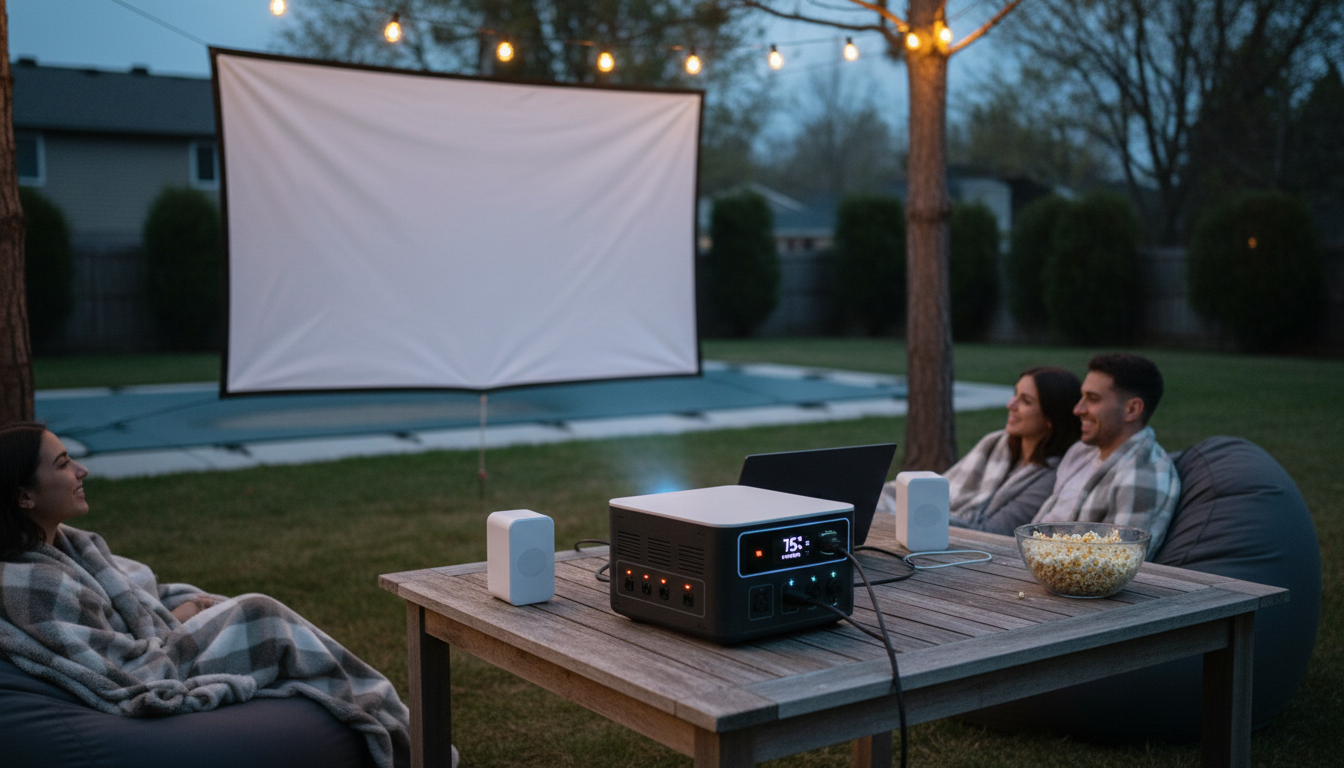
Stay Powered Up: The Best Portable Power Stations for Home Backup During Outages
Powering Through: Why Portable Power Stations are Essential for Home Backup
Power outages are an increasingly common disruption, stemming from severe weather, aging infrastructure, or unexpected grid issues. These interruptions can impact everything from essential appliances and communication devices to home security and heating or cooling systems. Relying on traditional fuel-powered generators comes with considerations like noise, emissions, and fuel storage.
Portable power stations offer a modern, versatile alternative for maintaining essential functions during an outage. Unlike their traditional counterparts, these battery-powered units provide:
- Clean Energy: Operate without fumes or carbon monoxide, making them safe for indoor use.
- Quiet Operation: Produce minimal to no noise, preserving peace and quiet in your home.
- Ease of Use: Typically plug-and-play, requiring less setup and maintenance than gas generators.
This guide will empower you to confidently select a portable power station tailored to your home backup needs. You'll learn how to assess critical factors such as power capacity, output capabilities, expandability options, and how these align with your budget and specific appliance requirements, ensuring you stay powered up when it matters most.
Defining Your Home's Backup Power Needs: A Practical Checklist
Selecting the right portable power station for home backup begins with a clear understanding of what you need to power and for how long. This proactive assessment prevents overspending on unnecessary capacity or, more critically, underestimating your requirements and being left without power for essential items. Use this checklist to quantify your specific demands.
-
Identify Essential Appliances: Begin by listing every appliance you absolutely need to operate during an outage. This typically includes:
- Refrigeration: A refrigerator and/or freezer to preserve food. Note if you have an energy-efficient model.
- Medical Devices: Any life-sustaining or critical medical equipment (e.g., CPAP machines, oxygen concentrators, nebulizers).
- Lighting: Basic illumination for safety and comfort (e.g., LED lamps, not entire room overheads).
- Communication: Charging for smartphones, laptops, and powering your internet router/modem.
- Comfort: Small fans, electric blankets, or a furnace's blower fan (if within power station limits and not a whole-house system).
- Water: Sump pumps or well pumps, if critical for your home's water supply or flood prevention.
-
Calculate Total Wattage and Surge Requirements: For each essential appliance, find its running wattage (how much power it uses continuously) and its surge wattage (the brief, higher power spike needed to start up). These figures are usually on the appliance label or in its manual.
- Running Watts: Sum the running wattage of all appliances you anticipate using simultaneously. This total determines the continuous output (measured in Watts or W) your power station must provide.
- Surge Watts: Identify the appliance with the highest surge wattage. Your power station's peak output capability must exceed this single highest surge to prevent tripping or failure upon startup.
-
Determine Necessary Battery Capacity (Watt-hours): Once you know your total running wattage, calculate the battery capacity (measured in Watt-hours or Wh) needed for your desired runtime.
- Formula: (Total Running Watts) x (Desired Hours of Runtime) = Minimum Watt-hours.
- Example: If your essential appliances draw 250W simultaneously and you need them to run for 8 hours, you'd need at least 2000 Wh (250W x 8h).
- Buffer: Consider adding a 20-30% buffer to this figure to account for efficiency losses, battery degradation over time, and unexpected usage.
-
Consider the Number and Type of Outlets: Review your list of essential appliances and determine the specific types and quantities of ports required.
- AC Outlets: How many standard three-prong plugs do you need for appliances like refrigerators, lamps, or medical devices?
- USB-A and USB-C Ports: Ensure sufficient ports for charging phones, tablets, and laptops, especially if fast-charging (Power Delivery or PD) is a priority for certain devices.
- DC Outlets (12V): Some specialized devices, like certain portable coolers or small car accessories, might require a 12V car-style outlet.
Beyond the Basics: Key Features for Reliable Home Backup
Once you've cataloged your essential home appliances and their power requirements, the next step involves understanding the technical specifications that translate into dependable performance during an outage. These features determine not only what you can power, but also for how long, how safely, and how quickly your system can recover.
-
Battery Chemistry: Longevity vs. Density The core of any portable power station is its battery. For home backup, Lithium Iron Phosphate (LiFePO4) batteries are often preferred due to their extended lifespan, offering thousands of charge cycles, and superior thermal stability, which enhances safety. While Nickel Manganese Cobalt (NMC) batteries might provide higher energy density, making units lighter and more compact for the same capacity, their shorter cycle life and potentially higher thermal risk make LiFePO4 a more robust choice for stationary home backup applications where longevity and safety are paramount.
-
Output Power (AC Wattage) and Surge Capability The continuous AC wattage rating indicates the total power a station can supply simultaneously. This figure must meet or exceed the combined running wattage of the appliances you intend to operate. Equally critical is the surge capability, which allows the power station to temporarily provide a much higher wattage to start motors found in refrigerators, microwaves, or sump pumps. Without sufficient surge capacity, these essential appliances may fail to start, even if their running wattage is within the continuous output limit.
-
Charging Speed and Multiple Input Options The speed at which a power station recharges can be crucial during intermittent power availability. Fast AC wall charging minimizes downtime, allowing you to quickly replenish the battery when grid power briefly returns. For extended outages, multiple input options become vital. Solar charging capabilities, often requiring compatible portable solar panels, offer a renewable way to recharge during daylight hours. Car charging (via a 12V port) provides an additional mobile option, though typically slower.
-
Expandability Options for Extended Outages For prolonged power interruptions, the ability to expand a power station's capacity is a significant advantage. Many models offer ports to connect external battery packs, effectively multiplying their total Watt-hour (Wh) rating. This feature allows you to scale your backup power system to match the duration of an outage or to accommodate growing power needs over time, without replacing the entire unit.
-
Uninterruptible Power Supply (UPS) Functionality UPS functionality allows the power station to act as a pass-through power source for connected devices. When grid power is present, it charges the battery while powering devices directly. Should the grid fail, the system automatically switches to battery power within milliseconds, ensuring sensitive electronics like computers, medical equipment, or networking gear continue to operate without interruption. This seamless transition prevents data loss or device resets.
-
Safety Features and Certifications Reliable home backup power demands robust safety measures. Look for comprehensive Battery Management Systems (BMS) that protect against overcharge, over-discharge, over-current, over-temperature, and short-circuit conditions. Independent safety certifications (e.g., UL, CE, FCC) provide assurance that the product meets recognized safety and quality standards, which is essential for peace of mind when operating powerful electrical equipment within your home.
Navigating the Choices: Understanding Trade-offs and Limitations
Selecting a portable power station for home backup involves a series of compromises. No single unit perfectly excels in every aspect, requiring buyers to weigh various factors against their specific needs and budget. Understanding these trade-offs helps manage expectations and ensures a more informed decision, preventing common pitfalls.
One primary compromise lies in the balance between capacity, portability, and cost. Higher capacity units, essential for powering multiple appliances or extending runtimes during an outage, are inherently heavier and typically more expensive. A power station capable of running a refrigerator for an extended period might be too cumbersome for easy relocation, while a smaller, more portable unit will offer significantly less power and duration, potentially falling short of critical home backup requirements.
Another critical consideration is battery degradation over time and cycle life. Portable power stations rely on advanced battery chemistries, but all batteries have a finite lifespan. Manufacturers often specify a "cycle life," indicating how many charge-discharge cycles the battery can endure before its capacity significantly diminishes (e.g., to 80% of its original capacity). For a home backup device, which might sit idle for long periods but needs to perform reliably when called upon, understanding this long-term wear is crucial.
Limitations of power output also present a practical constraint. While many portable power stations can handle common household electronics and even some larger appliances, they typically cannot power high-demand items like central air conditioning units, electric water heaters, or electric stoves. The continuous wattage output and surge capacity of a power station must align with the maximum draw of your essential appliances; exceeding these limits can trip the unit's safety features or damage it.
During operation, particularly when under heavy load, cooling fans are often necessary to prevent overheating. These fans can generate audible noise, which, while generally quieter than a gasoline generator, might still be noticeable and potentially disruptive in a quiet home environment. This is an often-overlooked factor that can impact comfort during an extended outage.
Environmental factors significantly affect both the performance and lifespan of a portable power station. Extreme temperatures, whether very hot or very cold, can reduce battery efficiency and overall capacity. Storing the unit in an unconditioned space, such as a garage or shed, where temperatures fluctuate widely, can accelerate battery degradation. Proper storage within recommended temperature ranges is vital for maintaining readiness and longevity.
Finally, the importance of proper maintenance and storage cannot be overstated. A portable power station designed for emergency use must be kept in optimal condition. This includes periodic charging to prevent deep discharge, which can permanently damage the battery, and storing it in a dry, temperate location. Neglecting these simple maintenance steps can result in a unit that fails to perform when an outage occurs, undermining its entire purpose as a reliable home backup solution.
Versatile Power: Adapting to Different Home Backup Scenarios
Portable power stations offer a flexible solution for various power outage situations, moving beyond a one-size-fits-all approach. Understanding how different models and features align with specific home backup needs is key to making an informed choice. The ideal station adapts to the duration and criticality of the power interruption, from brief blackouts to more prolonged grid failures.
For short-term outages, the primary goal is often to maintain essential communication, lighting, and basic comfort.
- Fit: A power station with moderate capacity (e.g., 500-1500 Wh) and multiple USB and AC outlets can effectively charge phones, power LED lamps, and keep a Wi-Fi router operational.
- Considerations: Prioritize models with efficient pass-through charging if you anticipate needing to recharge devices while the power station itself is charging from a generator or vehicle.
When facing extended outages, the demand shifts to sustaining critical appliances like refrigerators and freezers.
- Fit: This requires a higher capacity unit (typically 2000 Wh or more) with a robust inverter capable of handling the surge wattage of motors in these appliances.
- Trade-offs: Larger capacity stations are heavier and more expensive, but many offer modular expansion battery options, allowing you to scale power as needed without a complete replacement.
Beyond general household needs, portable power stations can provide crucial support for specific functions.
- Medical Equipment and Home Office: For sensitive medical devices (e.g., CPAP machines, oxygen concentrators) or home office setups (computers, monitors), a power station with a pure sine wave inverter is essential. This ensures a clean, stable power output that prevents damage to delicate electronics.
- Risk: Non-pure sine wave inverters can cause buzzing, overheating, or even damage to sensitive equipment, making this a critical specification for these use cases.
For homeowners seeking enhanced resilience, integrating a portable power station with existing home solar systems can significantly extend backup capabilities.
- Fit: Look for models that accept a wide range of solar input voltages and feature efficient Maximum Power Point Tracking (MPPT) controllers to optimize charging from solar panels.
- Benefit: This allows for continuous recharging during daylight hours, transforming the portable station into a more sustainable, long-term power source during prolonged outages.
Finally, portable power stations are integral components of emergency preparedness kits and considerations for off-grid living.
- Fit: Their portability and ability to be charged from multiple sources (wall, car, solar) make them versatile for situations where grid power is unavailable for extended periods or for supporting remote operations.
- Guidance: Evaluate durability, charge retention capabilities, and the variety of output ports to ensure it meets diverse emergency power needs, from powering tools to charging navigation devices.
Making Your Choice: A Step-by-Step Decision Guide
With a clear understanding of your home's backup power requirements from your personalized assessment, the next step is to translate those needs into a confident purchasing decision. This guide outlines a structured approach to matching your specific situation with the ideal portable power station, balancing features, budget, and long-term reliability.
Prioritizing Essential Features for Home Backup
Your power requirements dictate the core specifications of your portable power station. Focus on these key attributes to ensure it meets your home backup objectives:
- Capacity (Watt-hours - Wh): This determines how long a power station can run your appliances. Refer to your calculated total watt-hours needed per day. For home backup, prioritize higher capacities, often ranging from 1,000 Wh to 4,000 Wh or more, depending on the duration and number of essential items you identified.
- Output (Watts - W & Surge Watts): The continuous output wattage must exceed the running wattage of your most demanding essential appliance. Crucially, check the surge wattage capability, as many appliances (like refrigerators or microwaves) require a brief, higher power draw to start. Ensure the power station can handle these temporary spikes.
- Battery Chemistry: For home backup, LiFePO4 (Lithium Iron Phosphate) batteries are a strong choice due to their extended lifespan (more charge cycles), enhanced safety, and stability compared to other lithium-ion variants. While potentially a higher upfront cost, their durability offers better long-term value.
- Charging Options and Speed: Consider how you will recharge the unit. Fast AC wall charging is vital for quick turnarounds between outages. Solar input capability, often requiring separate solar panels, provides a sustainable way to replenish power during prolonged events. Car charging can be a secondary option.
- Expandability: Some portable power stations allow you to connect additional battery packs, significantly increasing their overall capacity. This feature is particularly valuable for home backup, offering flexibility to scale up your power reserves if your needs grow or for extended outages.
- Output Ports: Verify the number and type of AC outlets, USB-A and USB-C ports (especially for modern devices), and 12V DC car ports. Ensure it accommodates all your essential devices simultaneously without needing adapters or power strips.
Balancing Budget with Long-Term Value
While initial cost is a factor, consider the overall value proposition for a home backup solution. A cheaper unit that fails to meet critical needs or degrades quickly may prove more expensive in the long run.
- Brand Reputation and Support: Research brands known for reliability, product longevity, and responsive customer service. For an emergency device, knowing you have support if issues arise is invaluable.
- Warranty: A robust warranty period indicates a manufacturer's confidence in their product's durability. Longer warranties, especially for the battery, can provide peace of mind.
- Build Quality: For units that may be moved or stored, a durable exterior and solid construction contribute to long-term performance.
Final Considerations for a Confident Purchase
Before making your final selection, take a balanced approach to ensure the power station integrates seamlessly into your home backup plan.
- Safety Features: Confirm the unit includes essential safety protections such as overcharge, over-discharge, over-current, short-circuit, and temperature control. These are critical for safe operation, especially indoors.
- Portability vs. Stationary Use: For dedicated home backup, extreme portability might be less critical than raw power and capacity. Larger, heavier units are often acceptable if they primarily reside in a fixed location, such as a garage or utility room.
- Maintenance and Storage: Understand the recommended charging and storage practices to maximize battery life. Most portable power stations require minimal maintenance but benefit from being stored at a partial charge in a cool, dry place.
- Future-Proofing: If your energy needs might increase in the future (e.g., new medical device, smart home integration), consider a model with expandability or a slightly higher baseline capacity than your immediate needs.
Frequently Asked Questions About Portable Power Stations for Home Backup
Understanding the nuances of portable power stations can help clarify their role in home emergency preparedness. Here are answers to common questions about using these devices for backup power during outages.
-
How do portable power stations differ from traditional generators for home backup? Portable power stations operate on rechargeable batteries, producing electricity without combustion. This means they are fume-free, whisper-quiet, and safe for indoor use, eliminating the carbon monoxide risks associated with traditional, fuel-powered generators. While generators typically offer higher, sustained power output suitable for an entire house, power stations are generally designed for powering essential appliances or specific circuits. They require no fuel storage or engine maintenance, offering a simpler, cleaner backup solution.
-
What's the typical lifespan of a portable power station battery? The lifespan of a portable power station battery is measured in "charge cycles" – the number of times it can be fully charged and discharged before its capacity significantly degrades. Many modern power stations, particularly those using LiFePO4 (Lithium Iron Phosphate) battery chemistry, are rated for 2,500 to 3,500+ cycles while retaining 80% of their original capacity. This translates to many years of reliable use for occasional home backup scenarios, though actual longevity depends on usage patterns and storage conditions.
-
Can a portable power station power an entire house? Generally, no, not in the same comprehensive way a large standby generator can. Portable power stations are primarily designed to power critical appliances or essential circuits, such as a refrigerator, lights, a few communication devices, or medical equipment. While high-capacity models with expandable battery packs can handle more substantial loads, powering every appliance simultaneously throughout an entire home typically exceeds their capabilities and intended use. For whole-home integration, a licensed electrician would need to install a transfer switch for specific circuits.
-
Are portable power stations safe to use indoors? Yes, this is one of their primary advantages for home backup. Because they run on batteries and have no combustion engine, portable power stations produce no exhaust fumes, carbon monoxide, or significant noise. This makes them perfectly safe for indoor operation, allowing you to keep essential devices powered within your living space without ventilation concerns.
-
How long does it take to charge a portable power station? Charging times vary widely based on the power station's battery capacity and the charging method. Using a standard AC wall outlet, smaller units might fully charge in a few hours, while larger, high-capacity models can take 8 to 12 hours or more. Many newer models incorporate fast-charging technology to reduce this duration. Charging via solar panels is typically much slower, depending on panel wattage and sunlight conditions, often requiring a full day or longer for a complete charge. Car chargers offer the slowest charging rates, primarily suitable for maintaining charge or very gradual top-ups.
-
What maintenance is required for a portable power station? Portable power stations require minimal maintenance compared to fuel generators. Key practices include:
- Storage: Store the unit in a cool, dry place, ideally at a partial charge (e.g., 50-80%) if it will be unused for an extended period.
- Periodic Recharging: If stored, recharge the battery every 3-6 months to prevent deep discharge, which can reduce battery lifespan.
- Cleaning: Keep the unit's exterior clean and free of dust, and ensure ventilation ports are unobstructed.
- Inspection: Periodically check cables and ports for any signs of wear or damage. No fuel management, oil changes, or spark plug replacements are necessary.
Empowering Your Home: Preparedness for Any Power Challenge
A thoughtfully selected portable power station transcends a mere convenience; it represents a foundational element of home resilience. By aligning a unit's capacity, output, and expandability with your specific needs, you gain the assurance that essential appliances, communication, and comfort can be maintained during grid disruptions. This strategic investment provides a clean, quiet, and reliable alternative to traditional backup methods, safeguarding your household from the uncertainties of power loss.
The decision to equip your home with a suitable portable power station is an active step towards preparedness, offering long-term security and invaluable peace of mind. Empower yourself to navigate any power challenge with confidence, knowing your critical needs are covered. Secure your home's power future today, ensuring uninterrupted comfort and functionality when it matters most.
More in Portable Power Stations
View All
How Long Do Portable Power Stations Last? Understanding Battery Lifespan and Maintenance
Compare how long do portable power stations last with a practical informational SEO brief, decision criteria, FAQs, and publishing checks before you commit
How Do Portable Power Stations Work? A Beginner's Guide to Off-Grid Energy
Compare how do portable power stations work with a practical informational SEO brief, decision criteria, FAQs, and publishing checks before you commit.
Best Portable Power Stations for CPAP: Ensuring Uninterrupted Sleep On the Go
Compare best portable power stations for cpap with a practical commercial SEO brief, decision criteria, FAQs, and publishing checks before you commit.