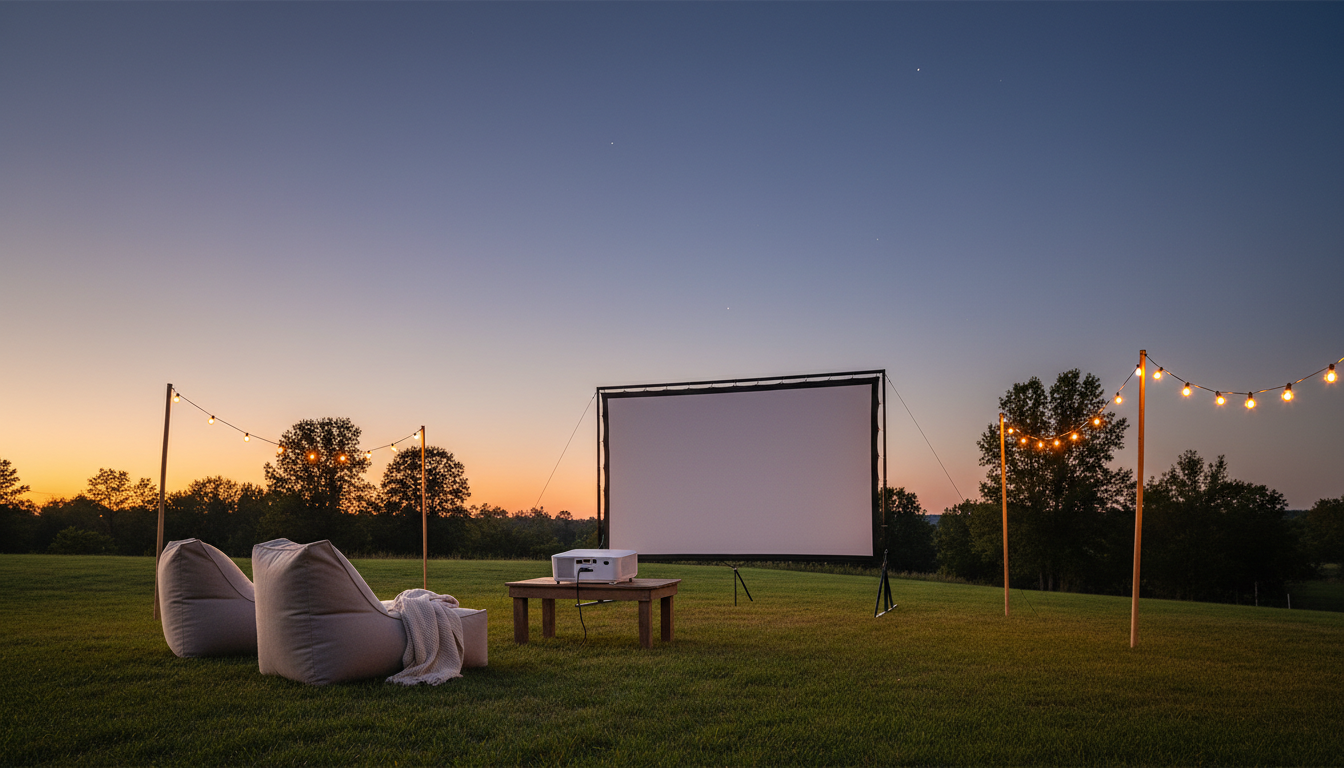
Setting Up Your Outdoor Cinema: A Guide to Projectors and Screens
Unveiling Your Ultimate Outdoor Cinema Experience
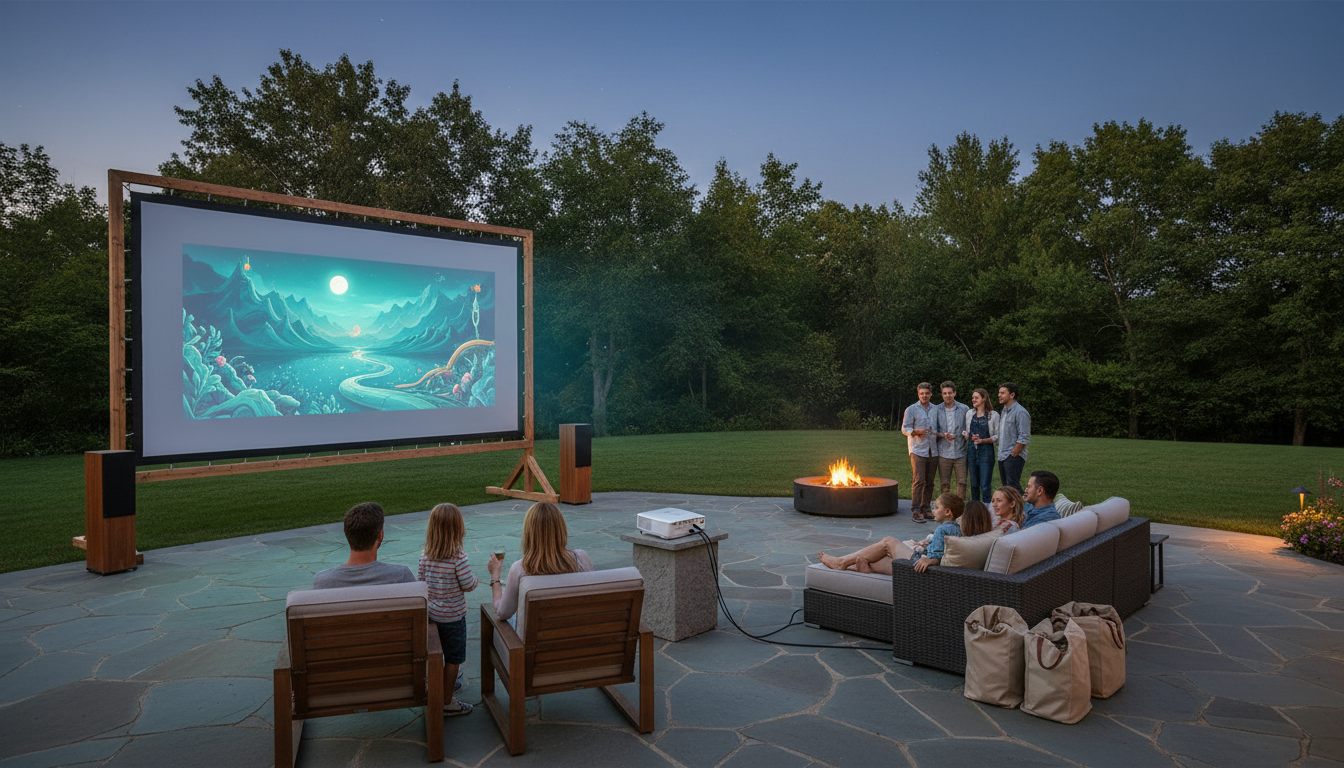
The allure of transforming your backyard into a personal movie theater continues to grow, offering a unique blend of entertainment and fresh air. From family movie nights under the stars to hosting unforgettable sporting events, an outdoor cinema setup provides a distinctive viewing experience that conventional indoor screens can't replicate. This growing appeal highlights a desire for immersive entertainment beyond the living room.
This guide aims to equip you with the essential knowledge to confidently select and combine the ideal projector and screen for your outdoor entertainment needs. We'll navigate the key considerations, trade-offs, and practicalities involved, ensuring you can make an informed decision without common pitfalls.
Creating a seamless outdoor cinema experience hinges on selecting equipment specifically suited for the environment. Unlike indoor setups, outdoor conditions introduce variables like ambient light, wind, and varying temperatures, all of which impact image quality and equipment longevity. Understanding these factors is crucial for choosing a compatible projector and screen that will deliver vibrant visuals and withstand the elements.
Beyond the Wall: Why Purpose-Built Projectors and Screens Elevate Your Outdoor Viewing
While the idea of projecting an image onto a garage door or a hanging bedsheet for an impromptu outdoor movie night might seem appealing, these makeshift solutions often fall short of delivering a truly enjoyable viewing experience. Dedicated outdoor projectors and screens are engineered to address the unique challenges of open-air environments, significantly enhancing image quality and overall durability.
Projecting onto non-specialized surfaces introduces several limitations. A garage door's textured surface or a stucco wall's unevenness can distort the image, making straight lines appear wavy and details blurry. Bed sheets, even taut ones, are prone to movement from breezes, leading to a constantly shifting picture. Furthermore, these surfaces typically lack uniform color and optimal reflective properties, which can result in poor contrast, washed-out colors, and a dim image, especially when contending with any ambient light. Cracks, seams, and variations in material density on these improvised screens further compromise visual fidelity.
In contrast, a purpose-built outdoor projector screen is designed with specific materials and coatings to optimize light reflection. These screens feature smooth, uniform surfaces that ensure accurate image reproduction, vibrant colors, and sharp details. Their construction often includes weather-resistant fabrics and sturdy frames, providing stability against wind and protection from moisture, which is crucial for longevity and consistent performance in an outdoor setting. This specialized design means the screen actively works to enhance the projector's output rather than detracting from it.
Complementing a dedicated screen, a high-lumen projector is essential for outdoor viewing. Unlike indoor environments where light control is straightforward, outdoor spaces inherently have more ambient light, even after sunset. A projector with a high lumen output can effectively cut through this environmental light, producing a brighter, more discernible image that maintains clarity and color saturation. Without sufficient brightness, the projected image can appear faded and difficult to see, diminishing the cinematic impact. Together, a high-lumen projector and a purpose-built screen create a cohesive system designed to overcome outdoor viewing challenges, delivering a significantly superior and reliable entertainment experience.
Decoding Outdoor Projector Essentials: Powering Your Open-Air Vision
Selecting the right projector is fundamental to establishing a compelling outdoor cinema experience. Unlike indoor viewing, external factors significantly influence image quality and visibility, necessitating a focused evaluation of specific projector attributes. Understanding these core specifications helps align your purchase with your environment and usage expectations.
- Lumen Output: This is arguably the most critical factor for outdoor projectors. Ambient light, even at dusk, significantly washes out projected images. While indoor projectors might suffice with 2,000-3,000 ANSI lumens, outdoor setups often require 3,000 ANSI lumens or more to produce a bright, discernible image, especially if you plan to start viewing before complete darkness. Higher lumen counts directly translate to better visibility in less-than-ideal lighting conditions.
- Resolution: Image clarity is important, but its impact outdoors can differ from indoors. Full HD (1080p) offers a sharp, detailed picture that is generally excellent for outdoor viewing. While 4K projectors are available, the nuances of ultra-high definition might be less perceptible at typical outdoor viewing distances or with slight ambient light interference. Consider your screen size and viewing distance; a 1080p projector often provides an optimal balance of performance and cost for many outdoor scenarios.
- Connectivity Options: Your projector needs to connect seamlessly with your media sources. Look for a range of inputs, including HDMI for streaming devices, Blu-ray players, or laptops. USB ports can be convenient for playing media directly from a flash drive, while wireless connectivity (Wi-Fi, Bluetooth) simplifies streaming from smartphones or tablets and connecting to external audio.
- Portability and Setup: For frequent outdoor use, consider the projector's size, weight, and ease of deployment. Features like automatic keystone correction, which adjusts the image shape if the projector isn't perfectly aligned, and quick focus can significantly reduce setup time. A compact, lighter unit is easier to transport and store, but often comes with trade-offs in other areas.
- Durability and Weather Resistance: Outdoor environments expose electronics to dust, moisture, and temperature fluctuations. While few projectors are fully waterproof, many offer some level of dust and splash resistance, often indicated by an IP rating. This protection is crucial for safeguarding your investment against accidental spills or light dew. Always ensure proper storage indoors when not in use to prolong the projector's lifespan.
Understanding Key Trade-offs
When choosing an outdoor projector, you'll encounter common trade-offs that impact performance and convenience:
- Battery-powered vs. Brightness: Battery-operated projectors offer ultimate portability, freeing you from power outlets. However, this convenience typically comes at a significant cost to brightness. Battery-powered units often produce lower lumen outputs, limiting them to smaller image sizes (e.g., under 40 inches) and requiring very dark conditions for a visible picture. For larger, brighter images, a projector requiring AC power is generally necessary.
- Size vs. Portability: Smaller, lighter projectors are easier to move and set up, but they may compromise on features, brightness, or internal cooling systems, potentially affecting long-term performance. Larger, more robust projectors often offer superior brightness and a wider array of features but demand more effort for transport and storage. Your ideal choice depends on how frequently you plan to move the setup versus the premium you place on image quality and features.
Selecting Your Ideal Outdoor Projection Screen: The Canvas for Your Cinema
Choosing the right outdoor projection screen is fundamental to achieving a clear, vibrant image for your outdoor cinema. While a plain wall or sheet might seem sufficient, a dedicated screen significantly enhances picture quality by providing a smooth, optimized surface. Understanding the core attributes of outdoor screens allows you to match a screen to your specific viewing environment and content.
Screen Material and Optical Properties
The screen's material and its "gain" rating directly influence image brightness and viewing angles. Gain refers to how much light the screen reflects compared to a standard matte white surface.
- Higher Gain: Screens with higher gain reflect more light, making the image appear brighter, which can be beneficial in environments with some ambient light. However, this often comes at the cost of a narrower viewing angle, meaning viewers positioned off-center may experience a dimmer or less uniform image.
- Lower Gain (e.g., Matte White): These screens offer a wider, more consistent viewing angle, ensuring a uniform image for a larger audience spread. The trade-off is a potentially less bright image, requiring a more powerful projector or darker viewing conditions. Some grey materials can also enhance contrast in ambient light.
Sizing and Aspect Ratio Considerations
The ideal screen size depends on your available space and typical viewing distance. A screen that's too large for the viewing distance can make individual pixels noticeable, while one that's too small can strain viewers' eyes. Measure your intended viewing area and consider the "2x to 5x rule," where the ideal viewing distance is 2 to 5 times the screen's diagonal measurement.
Aspect ratio dictates the screen's shape.
- 16:9 (Widescreen): This is the standard for most modern movies, TV shows, and video games.
- 4:3 (Standard): More common for older content or presentations. Selecting an aspect ratio that matches your primary content minimizes black bars (letterboxing or pillarboxing) and maximizes the use of the screen surface.
Outdoor Screen Setup Types
Outdoor screens come in various configurations, each with distinct advantages and suitability for different outdoor scenarios:
- Inflatable Screens:
- Pros: Easy, rapid setup and takedown; can achieve very large sizes; relatively lightweight.
- Cons: Require a constant air blower (can be noisy); highly susceptible to wind; less rigid surface may show ripples.
- Portable Frame Screens:
- Pros: Sturdy, provides a flat projection surface; good image quality; often pack down for transport.
- Cons: Requires manual assembly; typically heavier and less compact than inflatables.
- Fixed Frame Screens:
- Pros: Best image flatness and quality; durable for permanent outdoor installations.
- Cons: Not portable; requires a dedicated, weather-protected structure for mounting.
- Pull-Down Screens:
- Pros: Convenient for semi-permanent setups (e.g., mounted under a patio); retracts for storage.
- Cons: Less stable in wind than framed options; typically smaller sizes.
Front vs. Rear Projection Methods
Most outdoor setups utilize front projection, where the projector is placed in front of the screen, between the screen and the audience. This is the most common and versatile method.
Rear projection involves placing the projector behind the screen, with the audience viewing from the front. This setup prevents shadows from people walking in front of the projector and can be useful in tight spaces. However, it requires a specialized translucent screen material designed to allow light to pass through efficiently. Attempting rear projection on a standard front-projection screen will result in a very dim, washed-out image. Ensure the screen material is explicitly rated for rear projection if this is your desired setup.
Wind Resistance and Structural Stability
Outdoor conditions demand a screen with robust wind resistance. A flimsy screen or frame can lead to a distorted image, damage, or even injury. Look for screens with:
- Sturdy Frames: Thick, durable aluminum or steel frames offer better rigidity.
- Wide Bases and Anchoring Points: These distribute weight and allow for securing the screen with stakes, sandbags, or tie-downs.
- Integrated Tensioning Systems: These help keep the screen surface flat, even in light breezes.
Always assess your typical outdoor wind conditions. Even a slight breeze can cause significant screen movement and disrupt viewing.
Durability and Weatherproofing
For long-term outdoor use, the screen material and frame must withstand environmental exposure. Prioritize screens designed with:
- UV Resistance: Prevents the material from yellowing, fading, or becoming brittle over time due to sun exposure.
- Moisture and Mildew Resistance: Essential for preventing degradation and unsightly growth in damp outdoor conditions.
- Robust Frame Materials: Rust-resistant metals or durable plastics for the frame components.
Even with weather-resistant properties, proper storage (e.g., indoors, in a protective bag) when not in use will significantly extend the lifespan of your outdoor screen.
<h2>Synergizing Your Projector and Screen for Optimal Outdoor Viewing</h2>Creating an effective outdoor cinema experience relies on the harmonious interaction between your projector and screen. These components must be selected not in isolation, but as a complementary system, tailored to your specific environment and viewing intentions. A thoughtful approach to their combined capabilities ensures clarity, brightness, and overall enjoyment, mitigating common outdoor viewing challenges.
Matching your projector's brightness, measured in lumens, to your chosen screen size and the ambient light conditions is a fundamental compatibility factor. Outdoor settings, even at night, rarely achieve the complete darkness of an indoor theater. Consequently, outdoor projectors generally require significantly higher lumen outputs—often several thousand lumens—to project a vivid image that can contend with residual light from streetlights, distant homes, or the moon. A larger screen surface inherently demands more light to maintain brightness across its area. Conversely, a screen with a higher "gain" (reflectivity) can help compensate for lower projector brightness or higher ambient light by directing more light back to the viewer, though this can sometimes narrow viewing angles.
Your specific outdoor space dictates practical constraints and opportunities. Consider the dimensions of your backyard or viewing area to determine the maximum feasible screen size and projector throw distance. Access to reliable power outlets is crucial for both the projector and any external audio equipment; evaluate if extension cords or portable power stations are necessary. Wind exposure is another critical factor; screens, especially larger inflatable or freestanding models, require robust anchoring or a stable frame to prevent movement that distorts the image or causes damage.
Optimizing placement and viewing angles ensures a comfortable experience for all viewers. Position the projector at the correct throw distance for your screen size, ensuring the image fills the screen without significant keystone correction, which can reduce image quality. For the screen itself, consider how it will be positioned relative to your audience to minimize obstructions and provide a clear line of sight. Some screens support rear projection, allowing the projector to be placed behind the screen, which can be advantageous for preventing shadows from viewers or for noise reduction, but this requires a specific screen material.
While projectors often include built-in speakers, their output is typically insufficient for an immersive outdoor audio experience. Plan for external audio solutions, such as a soundbar or dedicated outdoor speakers, positioned to distribute sound evenly across your viewing area. This ensures dialogue is clear and soundtracks are impactful, completing the cinematic atmosphere.
Your primary use case should guide many of your decisions. For casual family movie nights, a moderately bright projector and a portable screen might suffice. For larger gatherings or public events, a much brighter projector, a larger screen, and a more robust sound system become necessary. Gamers will prioritize projectors with low input lag and screens that maintain image integrity during fast-paced action. Those using the setup for presentations may prioritize aspect ratios suitable for slides (e.g., 4:3 or 16:10) over cinematic formats.
Finally, ensure technical compatibility between your projector and screen. Verify that the projector's native aspect ratio (e.g., 16:9 for widescreen movies) matches the screen's format to avoid wasted screen space or image distortion. Physically, assess the screen's mounting options—whether it's a tensioned frame, inflatable, or pull-down—and confirm it can be securely installed in your chosen location, considering stability against wind and ease of setup and takedown.
Navigating Potential Challenges: Common Pitfalls in Outdoor Cinema Setup
Setting up an outdoor cinema offers unique rewards, but anticipating potential issues can prevent frustration and protect your investment. Understanding these common pitfalls helps in making informed decisions about your equipment and setup strategy.
- Underestimating Ambient Light: Even at dusk, ambient light significantly impacts projected image quality. Relying on a garage wall or a bedsheet will likely result in a washed-out, dull picture. Prioritize a projector with a high lumen output for outdoor use, and select a screen material specifically designed to enhance brightness and contrast in varying light conditions.
- Ignoring Weather Conditions: Outdoor equipment is exposed to the elements. Rain, high humidity, and strong winds can damage electronics and screens. Choose screens made from weather-resistant materials, and always have a contingency plan to quickly cover or store your projector, speakers, and other sensitive electronics if conditions change unexpectedly.
- Inadequate Power Supply: A stable and sufficient power source is crucial for your entire setup. While some portable projectors are battery-powered, many lack the lumen output required for a large, bright outdoor image. Plan for outdoor-rated extension cords, surge protectors, or a reliable portable power station to ensure consistent power for your projector, audio system, and any other accessories.
- Screen Instability: A flimsy screen can quickly become a liability in windy conditions. Wind can cause the screen to sag, flap, or even topple over, distorting the image and potentially damaging the equipment or posing a safety risk. Look for screens with robust frames and secure anchoring systems, or designs specifically engineered for stability in outdoor environments.
- Audio Neglect: The visual experience is only half the show. Projector-integrated speakers are typically inadequate for filling an open outdoor space with clear, immersive sound. Plan to incorporate external audio solutions, such as a dedicated soundbar or portable Bluetooth speakers, positioned to provide balanced sound coverage for your viewing area.
- Overlooking Storage and Maintenance: Protecting your outdoor cinema investment extends beyond its use. Failing to clean and store equipment properly can significantly shorten its lifespan. Always follow manufacturer guidelines for cleaning your screen and projector, and store all components in a dry, temperature-controlled environment away from direct sunlight and moisture when not in use.
Frequently Asked Questions About Outdoor Projectors and Screens
- Dedicated Screen vs. Sheet/Wall: A dedicated outdoor screen offers superior image quality, contrast, and brightness over makeshift sheets or walls, which introduce wrinkles, textures, and color distortion.
- Required Lumens for Outdoor Projectors: Target 2,000-3,000 lumens for clear viewing with ambient light; 4,000+ lumens are better for earlier viewing or larger screens to combat daylight.
- Weatherproofing Your Outdoor Setup: Protect electronics from moisture/temperature extremes with covers or indoor storage. Choose UV-resistant, mold-resistant screen materials with sturdy, wind-stable frames.
- Outdoor Cinema Sound: Projector speakers are often insufficient. Enhance audio with external, weather-resistant solutions like portable Bluetooth speakers or a soundbar for optimal sound.
Crafting Your Perfect Outdoor Entertainment Hub
Building a successful outdoor cinema is about more than just buying individual components; it's about creating a harmonious system where your projector and screen work together. The quality of your outdoor viewing experience ultimately hinges on thoughtful selection, ensuring each piece complements the other and withstands the elements.
As you finalize your setup, prioritize these critical factors:
- Projector Lumens: For vibrant images that cut through ambient light, especially after dusk, a high-lumen projector is essential. This directly impacts visibility and picture clarity outdoors.
- Screen Durability: Your screen must be designed for outdoor conditions, resisting wind, moisture, and UV exposure. Look for materials and construction that promise longevity and stability.
- Compatibility: Ensure your projector's throw ratio matches your available space and that the screen material is optimized for the projector's light output and your viewing angle.
By carefully considering these aspects, you equip yourself to make informed decisions that prevent common pitfalls. With the right combination of projector and screen, you're poised to transform your outdoor space into a captivating entertainment destination, ready for countless memorable movie nights under the open sky.
More in Outdoor Projector Screens
View All
Buying Outdoor Projector Screens on Amazon: What to Look For
Compare outdoor projector screens amazon with a practical informational SEO brief, decision criteria, FAQs, and publishing checks before you commit.
Indoor-Outdoor Projector Screens: The Versatile Choice for Any Space
Compare indoor outdoor projector screens with a practical informational SEO brief, decision criteria, FAQs, and publishing checks before you commit.
Selecting Large Outdoor Projector Screens: What to Consider for Big Views
Compare large outdoor projector screens with a practical informational SEO brief, decision criteria, FAQs, and publishing checks before you commit.