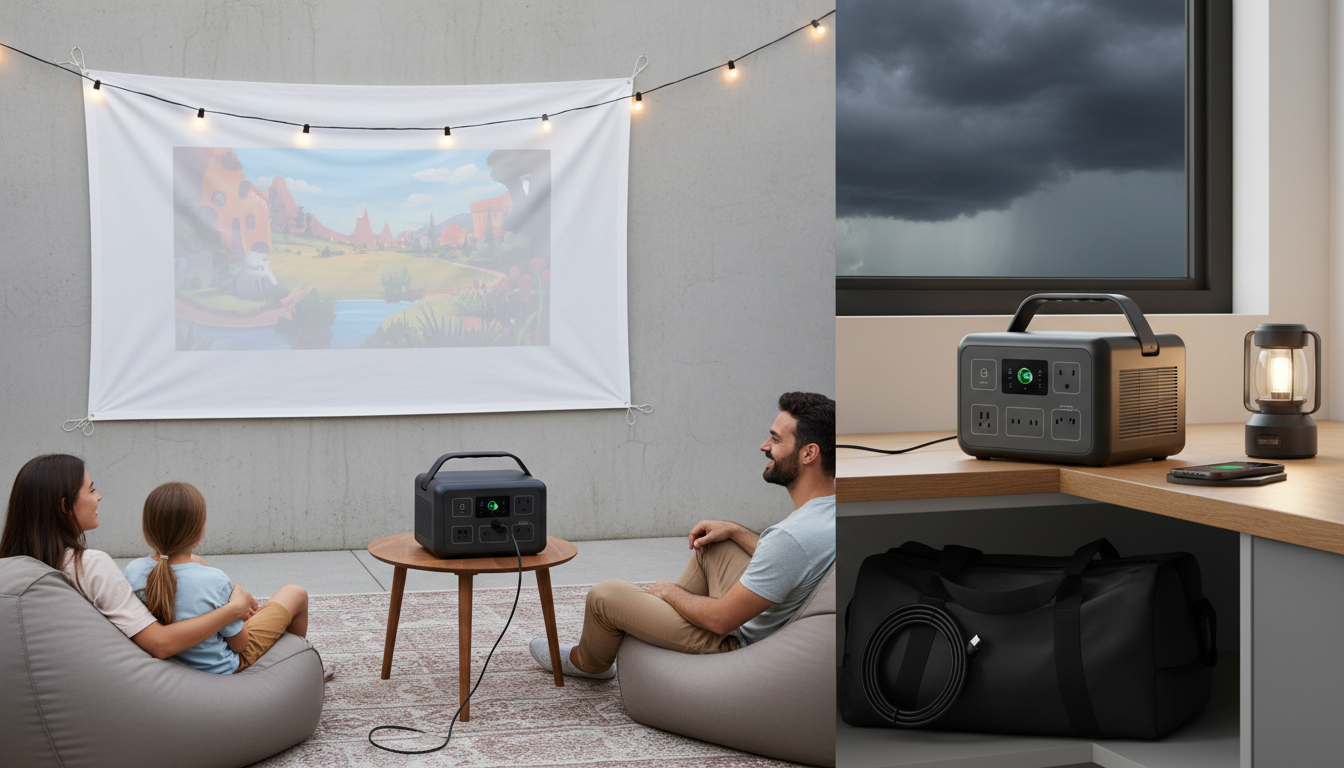
Portable Power Stations for Home Use: Everyday Convenience and Emergency Preparedness
Powering Your Home: The Versatility of Portable Power Stations
Portable power stations are self-contained, battery-powered units designed to deliver electricity for a wide array of household needs. Unlike traditional gas generators, these modern devices operate silently, produce zero emissions, and are safe for indoor use, making them an increasingly popular and practical solution for homeowners and renters alike. Their plug-and-play nature means they can be deployed quickly without complex installation or professional assistance.
The appeal of these power stations extends beyond mere emergency backup. While crucial for maintaining essential services during unexpected outages, they also offer significant daily convenience. From powering tools for DIY projects in the garage to running outdoor entertainment setups or creating flexible workspaces anywhere in the home, their versatility is transforming how households access and manage power. This guide will explore how these dynamic devices can serve both your routine power demands and critical emergency preparedness, helping you identify the ideal fit for your specific lifestyle and requirements.
Beyond the Blackout: Everyday Convenience for Your Home
While their role in emergency preparedness is undeniable, portable power stations offer a significant upgrade to daily home life, providing flexible and accessible power wherever it's needed. These devices extend your home's electrical reach, transforming how you utilize various spaces and engage in routine activities.
Consider how a portable power station can enhance everyday convenience:
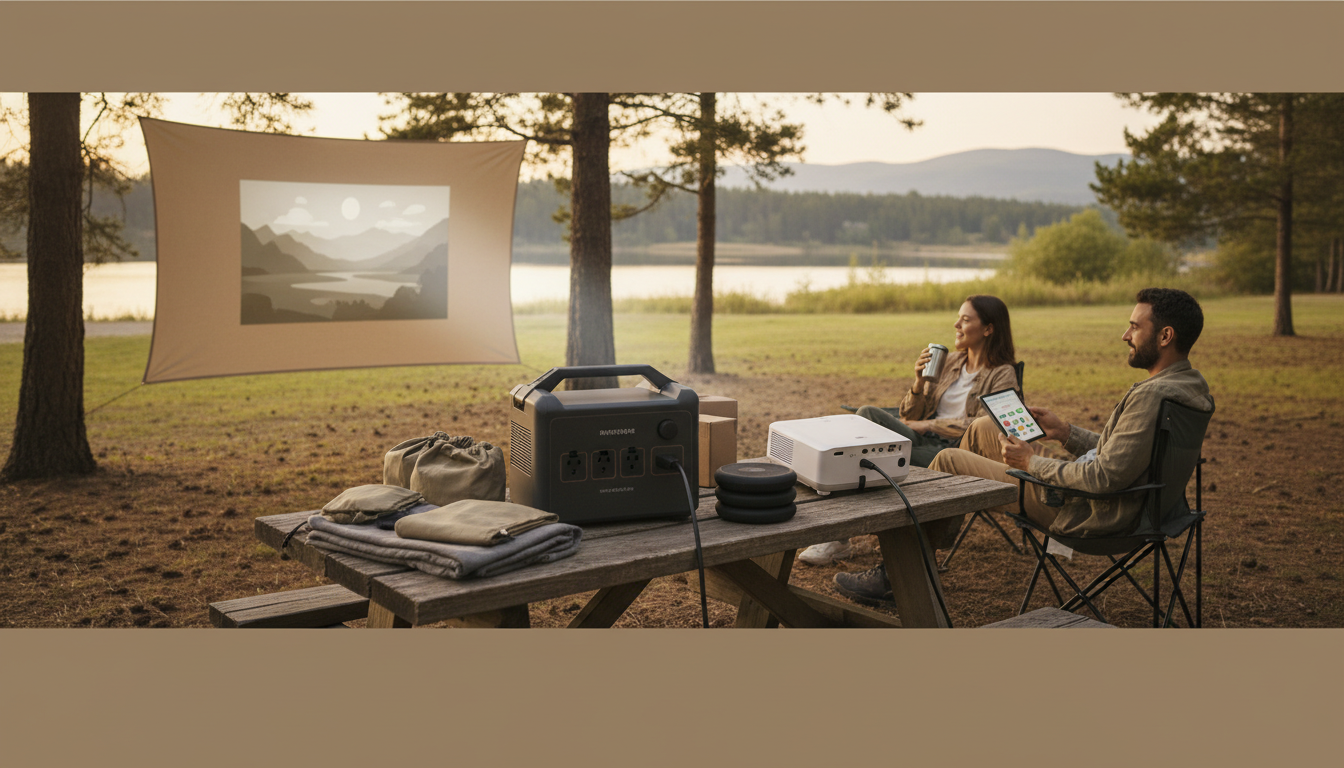
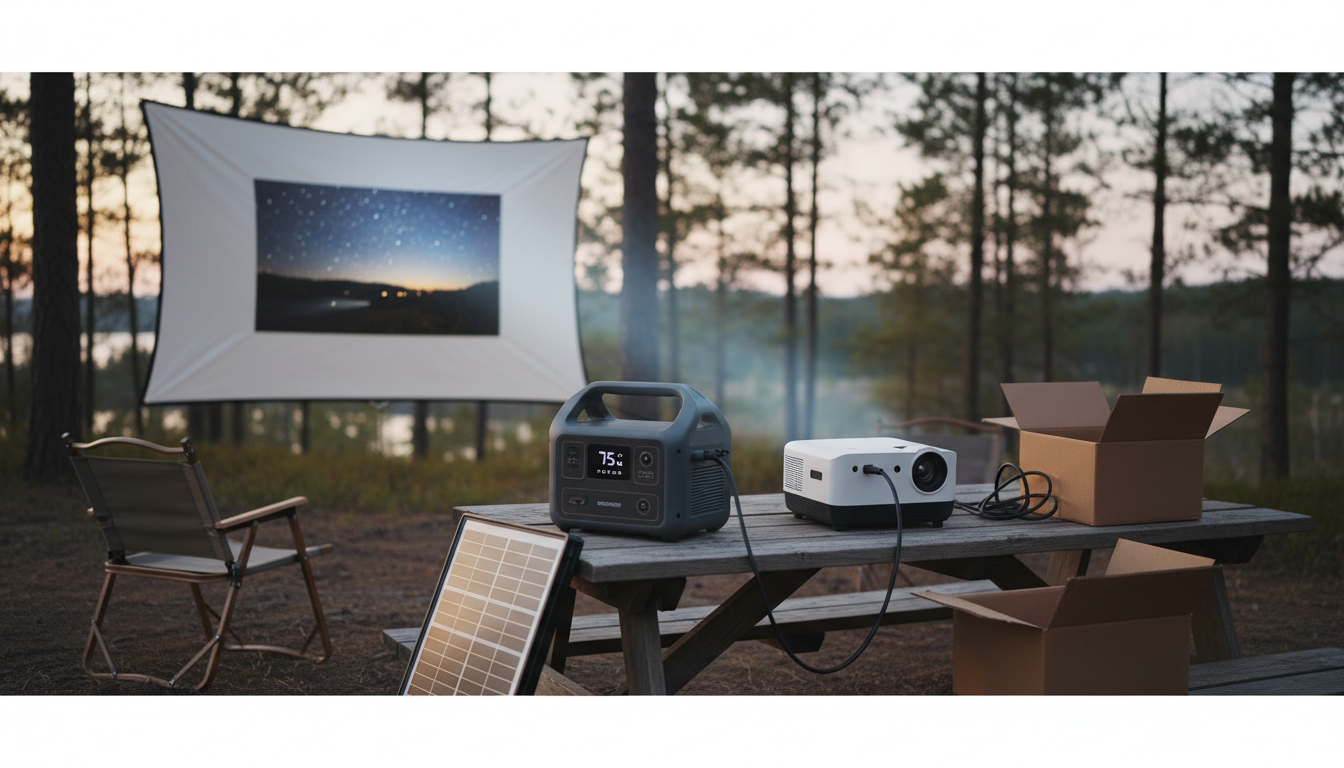
- Outdoor Entertainment Hubs: Create an instant outdoor cinema or concert venue in your backyard. A power station can run a projector for movie nights under the stars, power a sound system for gatherings, or illuminate an area with decorative string lights, all without the hassle or safety concerns of running long extension cords from inside your home.
- Flexible DIY Workspaces: Tackle home improvement projects in areas traditionally lacking convenient power. Whether it's a detached garage, a shed, or even a spot in the driveway, a portable power station can power drills, sanders, saws, or charging stations for cordless tool batteries, freeing you from outlet limitations.
- Mobile Workstations and Charging Stations: Break free from static desk setups. A power station allows you to create a temporary office space on a patio, in a quiet corner of the yard, or even in a different room of the house, powering laptops, monitors, and charging multiple devices simultaneously.
- Power for Remote Home Areas: Provide essential power to parts of your property that aren't wired for electricity. This includes garden sheds for charging lawn equipment, greenhouses for small fans or lights, or even a poolside area for a blender or music player, enhancing the functionality of these spaces.
- Reduced Reliance on Extension Cords: Minimize the clutter and potential tripping hazards associated with long extension cords. For temporary power needs, a portable power station offers a safer, tidier, and more efficient alternative, delivering power directly to the point of use.
For these daily convenience applications, factors like a unit's physical size, weight, and the variety of output ports (AC, USB-A, USB-C) become particularly relevant. Matching the station's capacity and sustained wattage output to the demands of your intended devices ensures a seamless and convenient power experience, optimizing your home's versatility beyond just emergency scenarios.
Emergency Preparedness: Reliable Backup When You Need It Most
When unexpected power outages strike, portable power stations transition from convenience tools to critical components of home preparedness. They offer a modern, efficient, and safer alternative to traditional gas generators, ensuring essential household functions remain operational without the associated drawbacks. These devices provide immediate, on-demand power, bridging the gap until grid power is restored.
The primary role of a portable power station during an emergency is to sustain vital appliances and devices. Depending on its capacity, a single unit can keep crucial items running for hours or even days:
- Refrigerators and Freezers: Preserve perishable food and medication by powering refrigeration units.
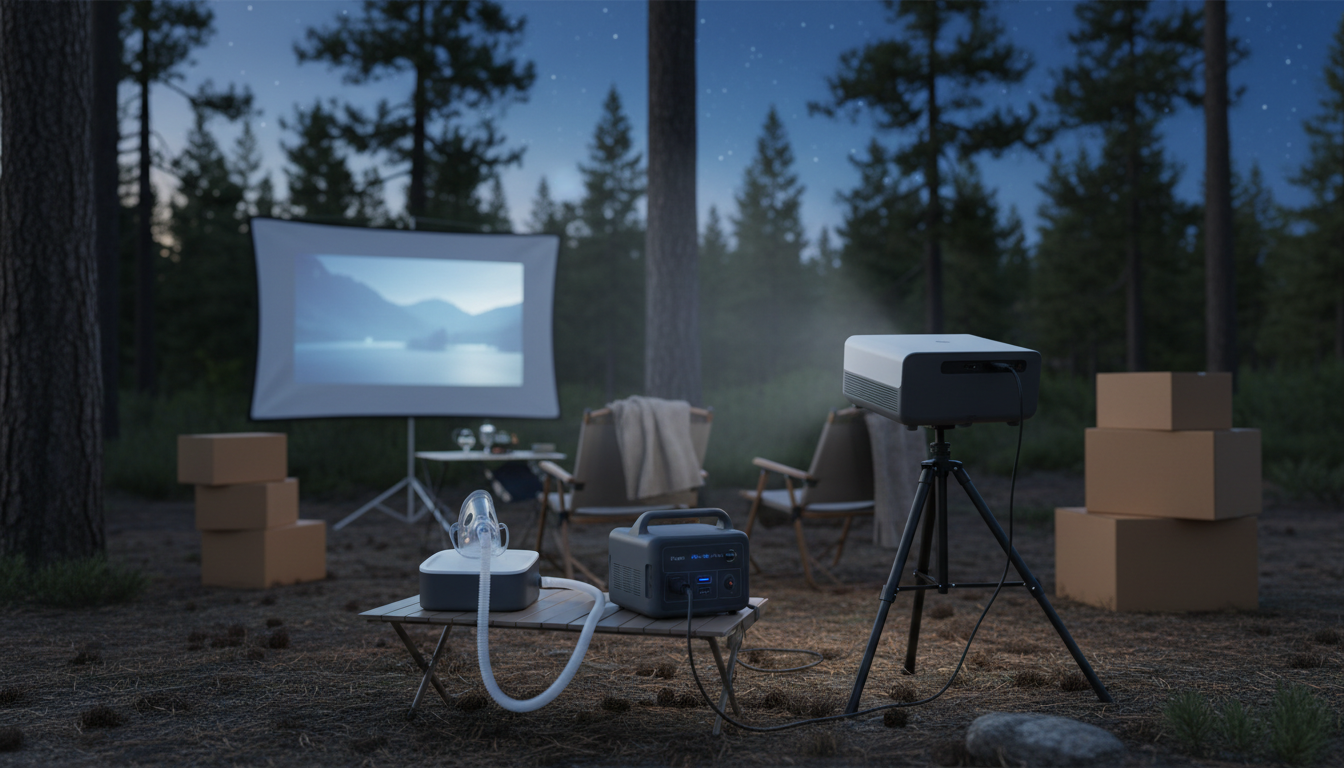
- Medical Devices: Maintain continuous operation for essential medical equipment, such as CPAP machines or oxygen concentrators.
- Lighting: Provide illumination throughout the home, replacing candles or less efficient battery-powered lanterns.
- Communication Devices: Keep phones, laptops, and Wi-Fi routers charged, enabling communication with emergency services and loved ones.
Unlike gas-powered generators, portable power stations operate silently and produce zero emissions, making them safe for indoor use. This eliminates the risk of carbon monoxide poisoning and the disturbance of loud engine noise. There's no need to store flammable fuel, simplifying logistics and enhancing safety. Furthermore, their plug-and-play design means they can be set up and put into use within minutes, requiring no complex installation or professional electrical work. This immediate readiness is a significant advantage during stressful emergency situations.
The scalability of portable power stations allows homeowners to tailor their emergency backup solution to specific needs. Smaller units can handle critical devices like phones and lights, while larger, higher-capacity models can support multiple essential appliances simultaneously. This flexibility ensures that whether facing a brief interruption or an extended blackout, there's a power station configuration that can provide reliable backup for various emergency scenarios.
Key Factors for Choosing a Portable Power Station for Your Home
Selecting the right portable power station for your household involves evaluating several technical and practical specifications. Understanding these criteria helps ensure the device meets both your daily convenience needs and your emergency preparedness goals without overspending or underperforming.
-
Battery Capacity (Watt-Hours / Wh) This metric indicates how much energy the power station can store, similar to the size of a fuel tank. For home use, capacity directly translates to how long a device can run. A higher Wh rating means longer run times for essential appliances during an outage or extended use for outdoor projects. For example, a small unit might recharge phones multiple times, while a larger one could power a refrigerator for several hours or run power tools for an afternoon.
-
Power Output (Wattage / W) Power output determines which devices the station can run and how many simultaneously. It's typically expressed in two figures:
- Continuous Wattage: The sustained power the unit can deliver. This must meet or exceed the running wattage of your intended appliances (e.g., a laptop, fan, TV).
- Surge Wattage: A brief, higher power burst available for starting motor-driven appliances like refrigerators, microwaves, or power tools, which demand extra power at startup. Ensure the surge rating can handle the initial draw of your most demanding devices.
-
Battery Chemistry (LiFePO4 vs. Li-ion) The type of battery impacts a power station's lifespan, safety, and overall performance in a home setting.
- LiFePO4 (Lithium Iron Phosphate): Known for a longer cycle life (more charge/discharge cycles before significant degradation), enhanced thermal stability (safer), and durability. This chemistry is often preferred for devices intended for frequent use and long-term emergency backup, though units may be heavier and have a higher upfront cost.
- Li-ion (Lithium-ion): Generally lighter and more compact for a given capacity, often found in more portable and budget-friendly models. They typically offer fewer charge cycles than LiFePO4 batteries but are suitable for occasional use and lighter-duty tasks.
-
Output Ports The variety and quantity of output ports dictate the versatility of the power station for different home devices.
- AC Outlets: Standard wall plugs for most household appliances and electronics.
- USB-A and USB-C Ports: Essential for charging smartphones, tablets, laptops, and other small electronics. Look for USB-C ports with Power Delivery (PD) for faster charging of compatible devices.
- DC Ports: Often 12V car-style outlets, useful for specific car accessories, portable coolers, or some lighting systems. Having a sufficient number and the correct types of ports ensures you can power all your necessary items simultaneously.
-
Charging Options How you recharge the power station is critical for both daily convenience and emergency scenarios.
- Wall Charging (AC): The fastest and most common method, ideal for routine top-ups.
- Solar Charging: Provides an eco-friendly and self-sufficient charging solution, invaluable during extended power outages or for off-grid use. Charging speed depends on solar panel wattage and sunlight conditions.
- Car Charging (DC): Allows charging from a vehicle's 12V outlet, useful during travel or as a supplementary option during emergencies.
-
Portability and Size Consider where you plan to use and store the power station within your home.
- Smaller units (e.g., 300Wh capacity) are typically under 10 pounds, about the size of a lunchbox, and easily moved between rooms or taken outdoors.
- Larger units (e.g., 2000W output or higher capacity) can weigh 40 pounds or more and may be the size of a beefy microwave. These offer substantial power but require more dedicated storage space and effort to move.
-
Safety Features Given that these devices will be used indoors and with valuable electronics, robust safety features are paramount. Look for protection against:
- Overload: Prevents damage if too many devices are plugged in or a device draws too much power.
- Over-temperature: Shuts down the unit if internal temperatures become unsafe.
- Short-circuit: Protects against electrical faults.
- Over-voltage/Under-voltage: Safeguards connected devices from power fluctuations.
-
Noise Levels Unlike noisy gas generators, portable power stations are generally quiet. However, some models, especially those with higher power output, may incorporate cooling fans that generate a low hum. For indoor use, particularly in living areas or bedrooms, a quieter unit can significantly enhance comfort.
Sizing Your Power Station: Matching Capacity to Your Home's Needs
Selecting a portable power station that precisely meets your home's demands, whether for daily convenience or emergency backup, hinges on accurately assessing your power requirements. A common pitfall is either underestimating needs, leading to insufficient power, or overestimating, resulting in unnecessary expense and bulk. Understanding the difference between a power station's energy capacity and its output capability is fundamental to making an informed choice.
To begin, identify the devices you intend to power and for how long. Most appliances have their wattage (W) listed on a label, in the user manual, or can be found with a quick online search. Remember that some appliances, like refrigerators or microwaves, have a higher "surge" wattage when they first start up, which is important for the power station's output rating.
- Estimate Appliance Wattage:
- Small electronics: Laptops (20-100W), phone chargers (5-20W), LED lights (5-15W).
- Mid-range appliances: Mini-fridge (60-150W running, higher surge), fan (20-75W), TV (50-200W).
- Larger appliances: Full-size refrigerator (100-200W running, 600-1200W surge), microwave (600-1500W), coffee maker (800-1500W).
Next, calculate the total Watt-hours (Wh) needed for your specific use case. Watt-hours represent the battery's capacity—how much energy it can store and deliver over time. The basic formula is:
Appliance Wattage (W) x Run Time (Hours) = Total Watt-hours (Wh)
For example:
- Emergency Refrigerator Operation: To keep a 150W refrigerator running for 12 hours during an outage:
150W * 12 hours = 1800 Wh. Add a buffer (e.g., 20-30%) for efficiency loss and unexpected needs, bringing the estimated requirement to around 2160-2340 Wh. - Daily Workspace Power: Powering a 60W laptop and a 10W LED lamp for 8 hours:
(60W + 10W) * 8 hours = 560 Wh. - Charging Multiple Devices: A power station primarily for charging phones and tablets might only need 200-500 Wh, depending on the number of devices and recharge cycles.
Beyond capacity, consider the power station's continuous output (measured in Watts). This indicates the maximum total wattage of devices it can run simultaneously. If you plan to run a 150W refrigerator and a 1000W microwave at the same time, your power station needs a continuous output rating of at least 1150W, plus headroom for surge wattage. Powering several small electronics simultaneously is less demanding on output than running one large appliance.
It's important to set realistic expectations. While portable power stations are incredibly versatile, even high-capacity units are generally designed to power essential devices or specific zones within a home, not to replace a whole-house generator for extended periods. Expecting a single portable unit to sustain an entire household's energy consumption for days can lead to disappointment. Instead, focus on critical loads or specific convenience scenarios to find the best fit.
Common Pitfalls and Important Considerations Before You Buy
Investing in a portable power station for your home, whether for daily convenience or emergency backup, requires careful thought to avoid common missteps. Understanding potential challenges and making informed choices upfront can prevent frustration and ensure your purchase truly meets your needs.
-
Miscalculating Power Requirements A frequent pitfall is either overestimating or underestimating the power necessary for your devices. Underestimating can lead to a unit that can't power essential appliances for long enough, or even at all, rendering it insufficient during a critical moment. Conversely, overestimating can result in an unnecessarily expensive and bulky unit that exceeds your actual needs.
- Guidance: Create a list of all devices you intend to power, noting their running wattage (W) and surge wattage (W). For emergency use, prioritize critical items. Calculate the total Watt-hours (Wh) you'd need to run these devices for your desired duration. This helps match the power station's capacity to your actual consumption.
-
Overlooking Weight and Size While "portable" is in the name, larger capacity power stations designed for home use can be surprisingly heavy and substantial. Units with capacities exceeding 1500 Wh often weigh 40 pounds or more, with some high-capacity models reaching over 100 pounds. This significant weight can limit true portability, making them difficult to move between rooms, transport for outdoor activities, or even store conveniently.
- Guidance: Consider where you plan to use and store the power station. If frequent movement is required, prioritize a lighter, more compact unit, even if it means slightly less capacity.
-
Unrealistic Solar Charging Expectations Solar charging is a valuable feature for sustainability and off-grid power, but it's often slower than anticipated. The efficiency of solar charging depends heavily on factors like direct sunlight availability, panel angle, weather conditions, and the wattage of your solar panels. Expecting a rapid recharge solely from solar power, especially for larger capacity units, can lead to disappointment.
- Guidance: View solar charging as a supplementary or maintenance charging method rather than a primary, rapid power source. Understand that a full recharge via solar can take many hours, or even days, depending on conditions and panel size.
-
Ignoring Environmental Factors and Storage Portable power stations, particularly those with lithium-ion batteries, are sensitive to extreme temperatures. Operating or storing them outside the manufacturer's recommended temperature range can degrade battery health, reduce efficiency, and in rare cases, pose safety risks. Leaving a unit in direct sunlight, a freezing garage, or a hot car for extended periods can significantly shorten its lifespan.
- Guidance: Always store your power station in a cool, dry place, away from direct heat sources or extreme cold. Follow the manufacturer's guidelines for optimal storage charge levels, typically around 50-80%, to maintain long-term battery health.
-
Neglecting Long-Term Battery Health Like all rechargeable batteries, those in portable power stations have a finite number of charge cycles before their capacity begins to diminish. Improper charging and discharging habits can accelerate this degradation. Constantly draining the battery to zero or keeping it fully charged for extended periods can stress the cells.
- Guidance: Adhere to the manufacturer's recommendations for charging and discharging. Many suggest avoiding full discharge and maintaining a partial charge (e.g., 20-80%) for routine use to prolong battery life. Regular, moderate use is often better for battery health than prolonged inactivity.
-
The Inherent Trade-off: Portability, Capacity, and Cost Ultimately, buyers face a fundamental three-way trade-off. Generally, as capacity (Wh) increases, so do the cost and the physical size/weight of the unit. Conversely, highly portable and lightweight units typically offer less power and shorter run times. There is no single unit that excels equally in all three aspects.
- Guidance: Prioritize which factor is most critical for your primary use cases. Do you need maximum power for extended outages, or lightweight convenience for frequent movement? Your answer will guide you toward the optimal balance for your specific needs.
Making Your Decision: A Step-by-Step Framework for Home Use
Selecting the right portable power station for your home involves more than just picking a model; it requires a structured approach to align its capabilities with your specific needs. This framework guides you through key considerations, ensuring your investment provides both daily convenience and reliable emergency support.
-
Step 1: Define Your Primary Use Cases Begin by clarifying why you need a portable power station. Is it primarily for occasional outdoor movie nights and DIY projects (everyday convenience), critical appliance backup during outages (emergency preparedness), or a balanced combination of both? Your answer will fundamentally shape the required capacity and features.
-
Step 2: List Essential Appliances and Devices Make a comprehensive inventory of every item you intend to power. For emergency backup, this might include a refrigerator, lights, a modem, and medical devices. For convenience, consider tools, speakers, or camping gear. Be specific about each item.
-
Step 3: Calculate Watt-Hour (Wh) and Wattage (W) Requirements For each listed device, find its operating wattage (W) – typically on a label or in the manual. Sum the wattages of all devices you expect to run simultaneously to determine the peak output (W) your power station needs. To estimate runtime, calculate the total energy (Wh) required by multiplying each device's wattage by its expected hours of use. This total Wh helps determine the necessary battery capacity. Failing to match power needs to device wattage is a common pitfall.
-
Step 4: Prioritize Key Features Based on your use cases and power needs, identify indispensable features:
- Battery Chemistry: LiFePO4 batteries generally offer a longer cycle life and enhanced safety compared to traditional Li-ion.
- Output Ports: Ensure a sufficient number and variety (AC outlets, USB-A, USB-C, 12V DC) for all your devices.
- Charging Speed: Consider how quickly the unit recharges via AC wall outlets, solar panels, or car chargers.
- Portability: Evaluate its weight and physical dimensions if you plan to move it frequently between locations.
-
Step 5: Align Budget with Capacity and Features Portable power stations vary significantly in price, generally correlating with higher capacity (Wh) and advanced features. Determine your budget and then prioritize the most critical features and capacity from Step 4. This balance helps avoid overspending on unneeded capabilities or underspending on insufficient power.
-
Step 6: Evaluate Future-Proofing Options Consider features that extend the utility and lifespan of your investment. Expandable capacity, often through add-on battery packs, allows you to grow your power reserves over time. Robust solar input capabilities ensure sustainable recharging, particularly valuable for extended outages or off-grid applications.
Frequently Asked Questions About Home Portable Power Stations
Understanding the capabilities and limitations of portable power stations is key to making an informed decision for your home. Here are answers to common questions that often arise:
-
Are portable power stations safe to use indoors? Yes, portable power stations are inherently safe for indoor use. Unlike traditional gas generators, they operate on rechargeable batteries, producing no carbon monoxide emissions, fumes, or loud noise. This makes them ideal for powering appliances, medical devices, or lighting inside your home during an outage without ventilation concerns.
-
Can a portable power station power an entire house? While some very large portable power stations can connect to a home's electrical panel via a transfer switch to power select essential circuits, it's generally unrealistic to expect a single portable unit to power an entire house for extended periods. Most portable power stations are designed to run specific appliances or a critical set of devices, such as a refrigerator, lights, and charging electronics. For whole-house power, especially for high-draw appliances like central air conditioning, a more robust, often permanently installed, backup system is typically required.
-
How long do portable power stations typically last? This question has two common interpretations:
- Runtime on a single charge: The duration a power station can run devices depends on its battery capacity (measured in Watt-hours, Wh) and the total power draw of the connected devices (measured in Watts, W). A 1000Wh power station running a 100W device could theoretically last 10 hours, though efficiency losses mean it will be slightly less. Higher capacity means longer runtimes.
- Overall lifespan of the unit: The battery's lifespan is typically measured in "charge cycles." Most modern portable power stations use lithium-ion batteries designed to retain a significant portion of their capacity (e.g., 80%) after 500 to 3,000 full charge-discharge cycles. The actual number of cycles depends on battery chemistry (e.g., LiFePO4 generally offers more cycles) and usage patterns.
-
What's the difference between a portable power station and a traditional generator? The primary differences lie in their power source, operation, and safety:
- Fuel Source: Portable power stations use rechargeable batteries, while traditional generators run on fossil fuels like gasoline, propane, or diesel.
- Emissions & Noise: Power stations are silent and produce zero emissions, making them safe for indoor use. Generators are noisy and emit hazardous exhaust fumes, requiring outdoor operation.
- Maintenance: Power stations require minimal maintenance, mainly keeping them charged. Generators need regular fuel, oil changes, spark plug replacements, and other engine upkeep.
- Startup: Power stations offer instant-on power with the push of a button. Generators often require manual starting or an electric start system that still involves engine ignition.
-
Can I connect solar panels to any portable power station? While many portable power stations offer solar charging capabilities, it's crucial to verify compatibility. Not all solar panels work with all power stations. You need to ensure the solar panel's voltage and amperage output fall within the power station's input specifications. Additionally, the connector type (e.g., MC4, Anderson, DC5521) must match or be adaptable with an appropriate cable. Always check the power station's manual for recommended solar panel specifications and connection guidelines.
More in Portable Power Stations
View All
How Long Do Portable Power Stations Last? Understanding Battery Lifespan and Maintenance
Compare how long do portable power stations last with a practical informational SEO brief, decision criteria, FAQs, and publishing checks before you commit
How Do Portable Power Stations Work? A Beginner's Guide to Off-Grid Energy
Compare how do portable power stations work with a practical informational SEO brief, decision criteria, FAQs, and publishing checks before you commit.
Best Portable Power Stations for CPAP: Ensuring Uninterrupted Sleep On the Go
Compare best portable power stations for cpap with a practical commercial SEO brief, decision criteria, FAQs, and publishing checks before you commit.