
Maximizing Versatility: Choosing Portable Power Stations with AC Outlets
Unlocking Versatility: Why AC Outlets Matter in Portable Power Stations
Portable power stations equipped with AC outlets serve as self-contained, rechargeable power sources that replicate the functionality of a standard wall socket. Unlike smaller power banks limited to USB charging, these units convert their stored battery energy into alternating current (AC), enabling them to power a wide array of household appliances and electronic devices. Their fundamental purpose is to provide grid-independent electricity, extending your ability to use essential equipment wherever a traditional outlet is unavailable.
The inclusion of AC outlets is indispensable for a broad range of applications, significantly enhancing a power station's utility. Primary use cases include:
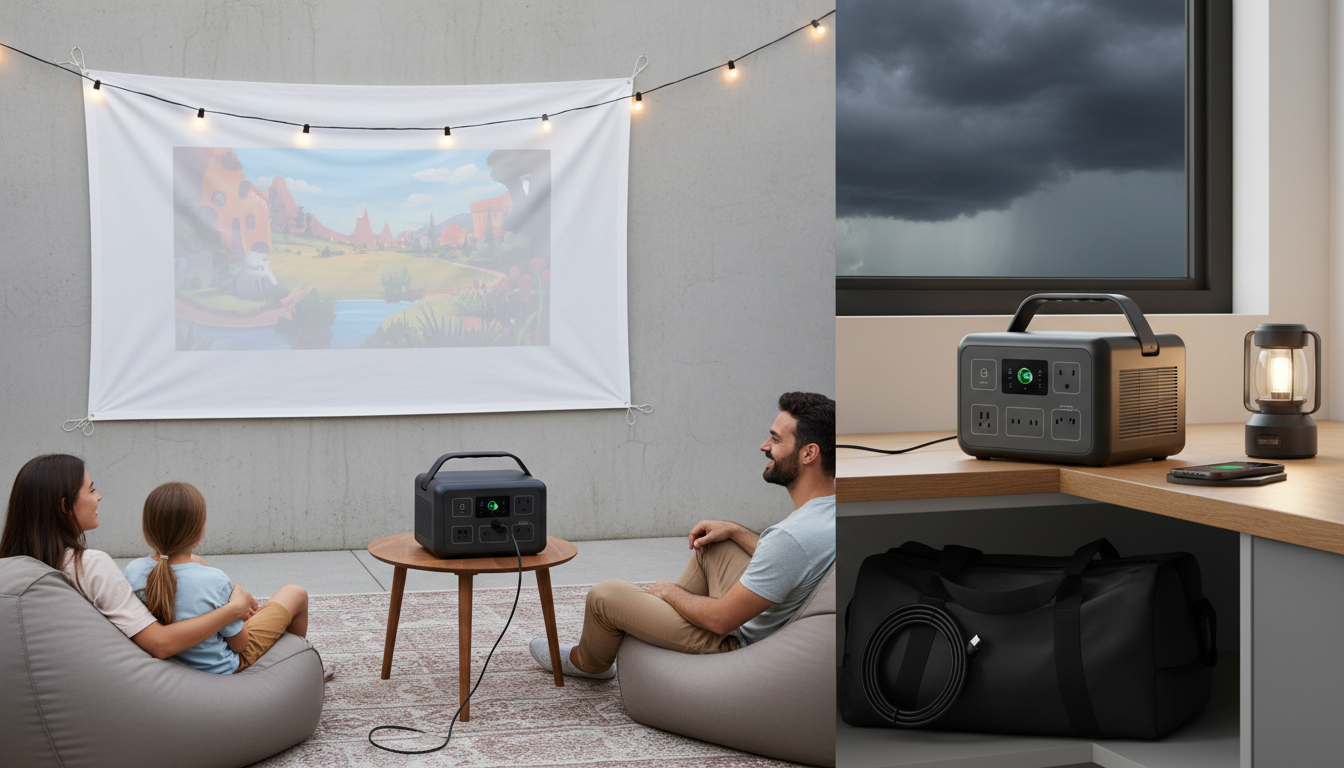
- Off-grid living and recreation: Powering camping equipment, outdoor lighting, small cooking appliances, or even entertainment like outdoor projector setups.
- Emergency preparedness: Keeping critical home devices operational during power outages, such as fans, lamps, medical equipment, or communication devices.
- Remote work and hobbies: Running laptops, power tools, or specialized electronics at job sites, workshops, or creative spaces without access to fixed power.
This capability offers a unique value proposition compared to other portable power solutions. While USB-only power banks are suitable for charging phones and tablets, they cannot energize the majority of gadgets that rely on AC power. Portable power stations with AC outlets bridge this gap, providing the flexibility to run everything from a desk lamp to a baby monitor, ensuring broader compatibility and true independence from fixed power sources.
Essential AC Outlet Considerations for Your Power Needs
Selecting a portable power station that truly maximizes versatility hinges on a close examination of its AC outlet specifications. These technical details directly influence which of your household appliances and electronics can be powered, how reliably, and for how long. Understanding these factors is crucial for an informed purchase.
A practical starting point is the number of AC outlets. While a single outlet might suffice for one device, most users find that a minimum of two AC outlets offers significantly greater utility. This allows for simultaneous operation of essential items, such as a laptop and a desk lamp, or a medical device and its charger, enhancing convenience and functionality in various scenarios.
Beyond quantity, the continuous AC output (watts) dictates the sustained power a power station can deliver. This figure should be equal to or greater than the running wattage of the appliances you intend to power. For devices with motors, compressors, or heating elements, the surge AC output (watts) is equally important. These devices often demand a brief, higher burst of power upon startup. A power station must be capable of meeting this momentary surge to successfully initiate operation without tripping or failing.
The inverter type is a critical differentiator, impacting the safety and performance for sensitive electronics.
- Pure Sine Wave inverters produce a clean, consistent power waveform that closely mimics standard grid electricity. This is ideal for sensitive electronics like laptops, medical equipment, and modern appliances, preventing potential damage, buzzing, or malfunctions.
- Modified Sine Wave inverters are less expensive but generate a stepped, less refined waveform. While suitable for basic loads like incandescent lights or simple heating elements, they can cause issues with sensitive devices, leading to inefficiency, overheating, or premature failure.
Consider also the efficiency of AC output. The process of converting the battery's DC power to usable AC power inevitably involves some energy loss. A higher efficiency rating means less power is wasted during conversion, translating to more usable energy from the battery and longer runtimes for your connected devices.
Finally, evaluate pass-through charging capabilities and their limitations when using AC outlets simultaneously. Some power stations can power AC devices while also recharging their internal battery, but this often comes with a reduced maximum AC output. Understanding if the unit can maintain full AC output during pass-through charging, or if its capacity is significantly curtailed, is vital to avoid unexpected power shortages for your connected devices.
Beyond the Outlets: Core Features of a Reliable Portable Power Station
While AC outlets are crucial for powering household electronics, a portable power station's overall utility and reliability depend on several other foundational features. These elements interact with AC output performance, influencing how effectively and safely the unit meets diverse power demands. Understanding these core specifications helps align your purchase with your specific usage scenarios and long-term expectations.
-
Battery Capacity (Watt-hours - Wh): This metric quantifies the total energy a power station can store and deliver. For AC devices, capacity directly dictates runtime. To estimate how long an appliance will run, divide the power station's Watt-hour capacity by the appliance's continuous wattage draw. For instance, a 500 Wh power station could theoretically run a 100 W device for approximately 5 hours (500 Wh / 100 W = 5 h). Higher capacity offers extended runtime but typically increases the unit's size and weight. Matching capacity to your anticipated AC device usage is key to avoiding insufficient power or unnecessary bulk.
-
Battery Chemistry (LiFePO4 vs. Li-ion): The type of battery cells significantly impacts a power station's lifespan, safety, and performance characteristics.
- LiFePO4 (Lithium Iron Phosphate) batteries generally offer a longer cycle life (thousands of charge/discharge cycles before significant degradation) and enhanced thermal stability, contributing to greater safety. However, they can be heavier and larger for a given capacity and sometimes carry a higher upfront cost.
- Li-ion (Lithium-ion, often NMC or NCA) batteries typically provide higher energy density, making them lighter and more compact for the same capacity, often at a lower initial price. Their cycle life is generally shorter than LiFePO4, and they can be more sensitive to extreme temperatures. Your choice involves a trade-off between longevity and safety versus portability and cost.
-
Charging Options and Speed: A versatile power station supports multiple recharging methods, ensuring you can replenish its battery in various environments. Common options include AC wall charging, solar panel input, and 12V car adapter charging. The speed of recharge is determined by the input wattage; higher wattage allows for faster charging. For example, a unit with a 500W AC input will recharge significantly quicker than one with a 100W input. For solar charging, look for efficient MPPT (Maximum Power Point Tracking) controllers to maximize energy harvest. Consider your primary charging environment and how quickly you need the unit ready for use.
-
Other Output Ports: Beyond AC outlets, a comprehensive selection of other output ports enhances a power station's ability to support a wide range of devices.
- USB-A ports are standard for charging older phones, tablets, and small electronics.
- USB-C Power Delivery (PD) ports are essential for fast-charging modern smartphones, tablets, and many laptops, with higher wattage (e.g., 60W, 100W) enabling quicker recharges for power-hungry devices.
- DC (12V) ports, often in the form of a car cigarette lighter socket or barrel jacks, are useful for powering specific 12V appliances like portable refrigerators, air compressors, or LED lighting. A diverse array of these ports ensures you can connect virtually any device without needing external adapters.
-
Portability and Weight: The physical dimensions and weight of a power station are critical, especially if you intend to move it frequently. There is a direct correlation between battery capacity and a unit's weight; higher Watt-hour ratings generally mean heavier devices. Evaluate your primary use case: a lighter, more compact unit is ideal for casual outdoor use or carrying short distances, while a heavier, higher-capacity model might be better suited for stationary home backup or as a base camp power source. Features like integrated handles or a robust form factor can significantly improve ease of transport.
-
Build Quality and Durability: For a reliable power source, especially in demanding outdoor or emergency situations, robust construction is paramount. Look for units made with durable materials, often rugged plastics or aluminum alloys, designed to withstand impacts and environmental exposure. Features like dust and water resistance (indicated by an IP rating) are valuable for outdoor use. Internal component quality, including efficient cooling systems, also contributes to the unit's longevity and safe operation, mitigating risks of overheating or premature failure.
Understanding the Trade-offs and Potential Pitfalls
While AC outlets significantly enhance a portable power station's utility, buyers should be aware of inherent limitations and potential issues. These considerations are crucial for setting realistic expectations and ensuring the chosen unit aligns with specific needs, preventing frustration down the line.
-
High-Draw Appliance Limitations: Despite having AC outlets, most portable power stations are not designed to power very high-wattage appliances like air conditioners, electric water heaters, or large power tools (e.g., circular saws, angle grinders) for extended periods. Their continuous AC output wattage is typically much lower than household wall outlets. Attempting to run such devices can trigger overload protection, causing the unit to shut down, or simply drain the battery extremely quickly. Always check the continuous and surge wattage ratings of the power station against the operating wattage of your intended appliances.
-
Cooling Fan Noise: Portable power stations generate heat, especially when delivering high AC output or during rapid recharging. To manage this, internal cooling fans activate. While significantly quieter than gasoline generators, these fans can produce a noticeable hum or whirring sound. In quiet environments like a tent, RV, or bedroom, this noise can be disruptive, particularly if the unit cycles its fans frequently due to heavy use or warm ambient temperatures.
-
Standby Power Draw and Low-Load Shutoff: The inverter, which converts the battery's DC power to usable AC, consumes a small amount of energy even when no device is actively drawing significant power. This "standby power" can slowly deplete the battery over time. Furthermore, some power stations feature an automatic low-load shutoff, where the AC output turns off if the connected device draws very little power (e.g., charging a small LED light or a smartwatch). This can be inconvenient if you need to continuously power or charge very low-wattage devices.
-
Reduced Output During Pass-Through Charging: A common limitation for many portable power stations is reduced AC output capability when the unit is simultaneously being recharged (pass-through charging). The internal circuitry often prioritizes incoming power for battery charging, leaving less available for AC output. This means you might not be able to run high-wattage AC appliances while the power station itself is plugged into a wall outlet or solar panel for recharging.
-
Weight and Size for Higher Capacities: As battery capacity (measured in Watt-hours or Wh) increases, so does the physical size and weight of the power station. While smaller units are genuinely "portable" for backpacking, higher-capacity models designed to power multiple AC devices for longer durations can become quite heavy and bulky. Consider your primary use case – if frequent carrying over distances is required, a larger unit might compromise true portability.
-
Battery Degradation Over Time: Like all rechargeable batteries, those in portable power stations degrade with use. Each charge and discharge cycle contributes to a gradual reduction in the battery's overall capacity. Over several years and hundreds of cycles, the usable capacity will decrease, meaning the power station will hold less charge and provide power for shorter durations than when it was new. Manufacturers often specify a "life cycle" rating (e.g., 80% capacity after 500 cycles) which provides an estimate of expected longevity.
Getting the Most Out of Your Portable Power Station with AC Outlets
Maximizing the utility and longevity of your portable power station, particularly when relying on its AC outlets, involves understanding its operational limits, best practices for battery care, and key safety measures. Thoughtful usage ensures you get reliable power for your household appliances and electronics whenever and wherever you need it.
Matching Power Needs to Station Capacity
Before connecting any AC device, accurately assess its power requirements. This involves:
- Identifying Wattage: Check the device's label, user manual, or use a power meter to find its continuous operating wattage. For appliances with motors (e.g., blenders, mini-fridges, power tools), note their higher "surge" or "peak" wattage, which occurs briefly during startup.
- Comparing to Power Station Specs: Ensure the combined continuous wattage of all devices you plan to run simultaneously does not exceed the power station's continuous AC output rating. Similarly, any individual device's surge wattage must be within the power station's surge capacity.
- Estimating Runtime: To calculate how long your power station can run a device, divide its Watt-hour (Wh) capacity by the device's continuous wattage. Remember to account for efficiency losses during AC conversion, typically around 10-20%, by multiplying the device wattage by 1.1 to 1.2 for a more realistic estimate.
Optimizing Battery Health and Longevity
The lifespan of your power station's battery, often measured in charge cycles, is significantly influenced by how it's charged, discharged, and stored.
- Charging Practices: For lithium-ion batteries, frequent full discharge (to 0%) and full charge (to 100%) cycles can accelerate degradation. For routine use, aim to keep the battery charge between 20% and 80% to extend its overall lifespan.
- Discharge Management: Avoid consistently running the battery completely dry. While modern power stations have protection circuits, repeated deep discharges can strain the battery over time.
- Storage Conditions: When storing the power station for extended periods, charge it to approximately 50-80%. Store it in a cool, dry place, away from direct sunlight, extreme heat, or freezing temperatures. Periodically check the charge level every 3-6 months and recharge if it drops significantly to prevent irreversible battery damage from deep self-discharge.
Safety and Troubleshooting for AC Use
Using AC outlets safely and efficiently, especially with various devices and environments, requires attention to detail.
- Environmental Protection: When using the power station outdoors, protect it from moisture, dust, and direct precipitation. Ensure adequate ventilation around the unit to prevent overheating, particularly when powering high-wattage AC appliances.
- Sensitive Equipment: For delicate electronics, medical devices, or audio equipment, confirm your power station features a "pure sine wave" inverter for its AC output. This provides clean, stable power that mimics standard household electricity, reducing the risk of damage or malfunction compared to less refined "modified sine wave" inverters.
- Overload Protection: If your AC outlets cease functioning or the unit unexpectedly shuts down, it's often due to overload. The power station's internal protection system has engaged because connected devices exceeded its continuous or surge capacity.
- Troubleshooting Steps: Disconnect all AC devices. Power cycle the unit (turn it off, then back on). Reconnect devices one by one, monitoring the power draw shown on the display. If a specific device triggers the overload, it may be too powerful for your unit. Consult your power station's user manual for specific reset procedures or diagnostic codes.
Matching Your Needs to the Perfect Portable Power Station
After understanding the critical specifications of AC outlets in portable power stations, the next step is to align these technical details with your personal use cases, priorities, and budget. This structured approach ensures you select a unit that offers optimal versatility for your specific demands without overspending or under-equipping.
Your ideal portable power station is a balance of capacity, output, and portability tailored to how you intend to use its AC outlets. Consider these common scenarios:
- Light Camping & Day Trips: For powering a laptop, charging camera batteries, or running a small fan for a few hours, a unit with 300-500W continuous AC output and 1-2 AC outlets is often sufficient. Prioritize lighter weight and compact size for easy transport.
- Emergency Home Backup (Essential Devices): To keep critical appliances like a refrigerator (intermittently), a medical device, or multiple lights operational during an outage, look for models with 1000W+ continuous AC output and at least two, preferably pure sine wave, AC outlets. Capacity (Wh) becomes a key factor here for extended runtimes.
- Professional Outdoor Setups & Power Tools: Running high-draw power tools or multiple devices on a job site demands robust capabilities. Seek power stations with 1500W+ continuous AC output, high surge capacity, and multiple heavy-duty AC outlets. Durability and input charging speed may also be important.
- Extended Off-Grid Living: For longer durations away from grid power, a higher capacity unit (2000Wh+) with multiple AC outlets and potentially expandable battery options becomes beneficial. Consider solar input capabilities to recharge the unit.
Prioritizing Factors for Your Purchase
Making an informed decision often involves balancing competing priorities. Reflect on these trade-offs:
- Capacity (Watt-hours) vs. Portability: Larger capacity units can power devices longer but are heavier and bulkier. If frequent transport is key, you might sacrifice some capacity for a lighter design.
- Number of AC Outlets vs. Other Ports: While AC outlets are the focus, consider your need for USB-A, USB-C, or DC ports. A unit with fewer AC outlets but ample USB options might suit someone primarily charging small electronics alongside one AC appliance.
- Continuous AC Output vs. Budget: Higher continuous wattage output, necessary for powerful appliances, generally corresponds to a higher price point. Assess the maximum wattage of your most demanding AC device to avoid overpaying for unused power.
- Surge Capability: If you plan to run appliances with motors (e.g., refrigerators, power tools), ensure the power station's surge wattage rating exceeds the startup surge of your devices to prevent overload.
Key Questions to Guide Your Choice
Before committing to a purchase, ask yourself these specific questions:
- Which specific AC-powered devices do I intend to run? List them out with their individual running wattage (found on device labels or manuals).
- How many of these AC devices need to run simultaneously? This determines the minimum number of AC outlets and the required continuous AC output.
- For how long do these devices need to run on a single charge? This directly impacts the necessary battery capacity (Wh).
- How often will I transport the unit, and what are the limitations of its weight and size for my intended use?
- What is my maximum budget for this purchase, and which features are non-negotiable within that budget?
Decision Checklist for AC Outlet Versatility
Use this checklist to ensure you've considered all critical aspects related to AC outlet functionality:
- Required Continuous AC Output (W): Does it meet or exceed the combined running wattage of devices I'll use simultaneously?
- Required Surge AC Output (W): Can it handle the startup surge of my motor-driven appliances?
- Number of AC Outlets: Are there enough outlets for all essential AC devices I need to power at once?
- AC Waveform (Pure Sine Wave): Is pure sine wave output present for sensitive electronics?
- Battery Capacity (Wh): Is it sufficient for the desired runtime of my AC devices?
- Portability: Is the weight and size manageable for my primary use cases?
- Recharge Options: Are the AC and solar charging speeds adequate for my needs?
- Budget Alignment: Does the unit's feature set justify its cost relative to my priorities?
By carefully evaluating these points, you can confidently select a portable power station whose AC outlet capabilities perfectly align with your versatility requirements.
Frequently Asked Questions About Portable Power Stations with AC Outlets
Understanding the nuances of portable power stations, particularly regarding their AC outlet capabilities, can clarify your purchasing decision. Here are answers to common questions buyers often have.
What is the difference between continuous and surge wattage?
- Continuous wattage refers to the maximum power a portable power station can consistently deliver to devices over an extended period. This is the standard operational power draw for most appliances once they are running.
- Surge wattage (or peak wattage) is the higher, temporary power output a power station can provide for a very brief duration, typically a few milliseconds. This burst of power is essential for starting devices with motors or compressors, such as refrigerators, blenders, or power tools, which require significantly more power to initiate operation than they do to run continuously. A power station's surge rating must exceed the starting wattage of your most demanding appliance to ensure it can power up successfully.
Can I use a portable power station to run a refrigerator?
Yes, many portable power stations can run a refrigerator, but several factors are critical. Refrigerators have a high surge wattage when their compressor cycles on, followed by a lower continuous wattage. You need a power station with:
- Sufficient surge capacity: The power station's surge wattage must meet or exceed the refrigerator's startup wattage.
- Adequate continuous output: The continuous wattage rating must cover the refrigerator's running power draw.
- Appropriate battery capacity (Wh): The total Watt-hours (Wh) stored in the power station will determine how long it can power the refrigerator. Smaller, energy-efficient mini-fridges or RV refrigerators are generally easier to run for extended periods than larger household models.
How long do portable power stations typically last?
The term "last" can refer to two different aspects:
- Battery lifespan (overall product longevity): This is typically measured in "life cycles," indicating how many times the battery can be fully charged and discharged before its total capacity significantly degrades (e.g., to 80% of its original capacity). Modern power stations often feature LiFePO4 (Lithium Iron Phosphate) batteries, which can offer several thousand cycles, providing many years of use.
- Run time (per charge): This refers to how long the power station can power your devices on a single full charge. It depends directly on the power station's battery capacity (measured in Watt-hours, Wh) and the total wattage (W) of the devices connected. A simple estimate is:
Run Time (hours) = Battery Capacity (Wh) / Total Device Wattage (W). Keep in mind that efficiency losses mean actual run time will be slightly less than this theoretical maximum.
Is pass-through charging safe for the battery?
Most contemporary portable power stations are designed to safely handle pass-through charging, meaning you can power devices from the AC outlets while the power station itself is being recharged. These units incorporate advanced Battery Management Systems (BMS) to regulate power flow, protecting the battery from overcharging, overheating, and excessive discharge.
However, it's worth noting that some models may have limitations. For instance, the maximum AC output wattage available while pass-through charging might be reduced if the incoming charging power is less than the demand of the connected devices. While generally safe, consistently operating under heavy load during pass-through charging may contribute to slightly faster long-term battery degradation compared to charging fully and then discharging, though for most users, this effect is minimal and outweighed by the convenience.
What's the best way to calculate my power needs for AC devices?
Accurately calculating your power needs ensures you select a power station that can handle your specific devices. Follow these steps:
- List your AC devices: Identify every AC-powered appliance or electronic device you intend to run with the portable power station.
- Determine wattage: For each device, find its power consumption, usually listed in Watts (W) on a label (often on the back or bottom). If only Voltage (V) and Amperage (A) are provided, multiply them (V x A = W).
- Identify surge requirements: For devices with motors (e.g., refrigerators, blenders, coffee makers), research or look for their starting (surge) wattage, as this is often 2-5 times higher than their running wattage.
- Calculate total continuous wattage: Sum the continuous wattage of all devices you plan to run simultaneously. This total must be within the power station's continuous output rating.
- Identify highest surge wattage: The power station's surge rating must exceed the highest individual surge wattage of any device you intend to start.
- Estimate energy consumption (Wh): For each device, multiply its continuous wattage by the estimated number of hours you'll run it. Sum these Watt-hours (Wh) for a total daily energy requirement. Add a 15-20% buffer to account for inverter inefficiencies and energy losses. This total Wh will guide your choice of battery capacity.
Empowering Your Adventures and Emergencies with Reliable AC Power
Portable power stations equipped with AC outlets fundamentally expand the utility of mobile power, transforming how you approach both recreational pursuits and unexpected events. The ability to energize standard household appliances and electronics, from essential medical devices to cooking equipment, moves these units beyond simple device charging into the realm of true grid independence. This robust AC capability is what enables wider compatibility, ensuring your critical gear and comfort items remain operational whether you're off-grid or facing a power disruption.
Making an informed decision means carefully evaluating your specific power requirements against the station's AC output, capacity, and the number of available outlets. Consider the wattage demands of your most crucial devices and balance these with practical factors like portability and budget. By aligning these considerations with your intended use, you can select a unit that reliably meets your needs without unnecessary compromises.
As battery technology and power management systems continue to advance, portable power stations with AC outlets are becoming even more efficient, compact, and accessible. This ongoing evolution promises greater flexibility and reliability for users, solidifying their role as indispensable tools for modern living, offering peace of mind and enhanced capabilities for adventures and emergencies alike.

More in Portable Power Stations
View All
How Long Do Portable Power Stations Last? Understanding Battery Lifespan and Maintenance
Compare how long do portable power stations last with a practical informational SEO brief, decision criteria, FAQs, and publishing checks before you commit
How Do Portable Power Stations Work? A Beginner's Guide to Off-Grid Energy
Compare how do portable power stations work with a practical informational SEO brief, decision criteria, FAQs, and publishing checks before you commit.
Best Portable Power Stations for CPAP: Ensuring Uninterrupted Sleep On the Go
Compare best portable power stations for cpap with a practical commercial SEO brief, decision criteria, FAQs, and publishing checks before you commit.