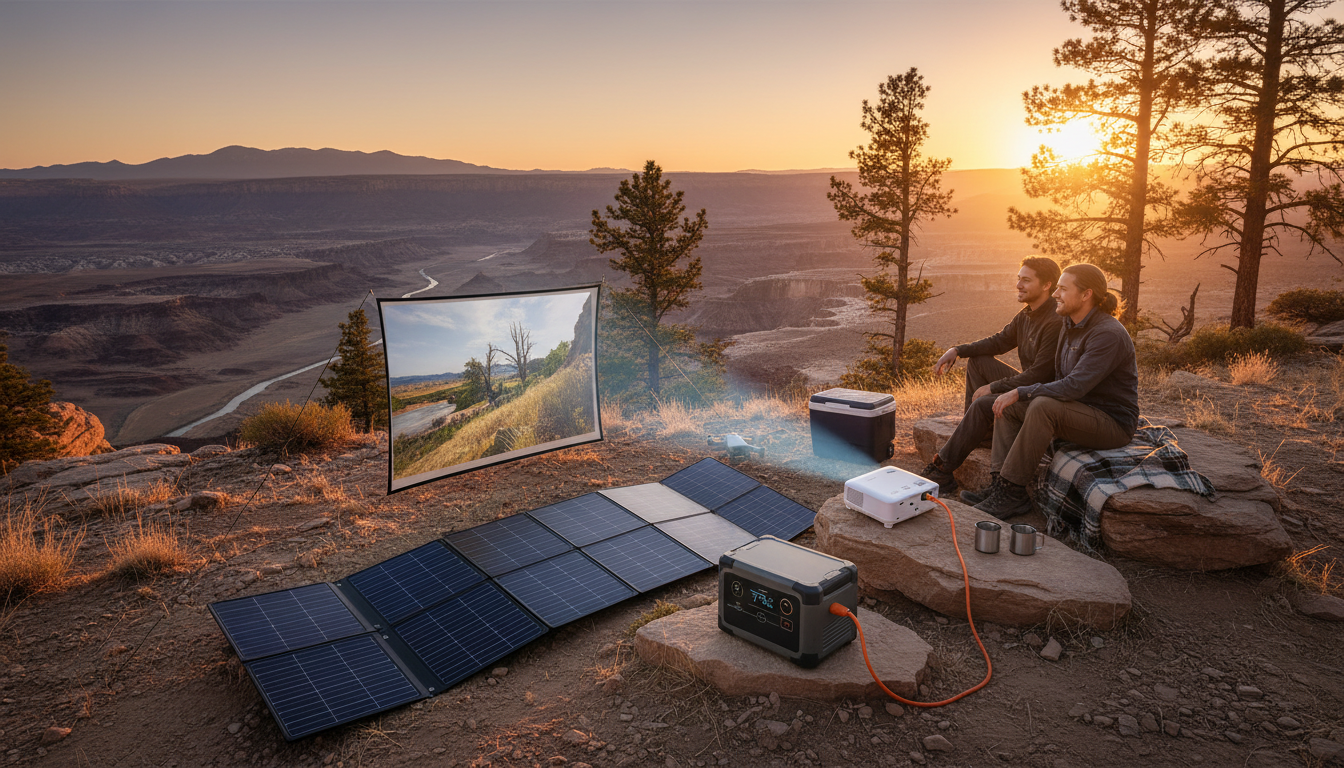
Go Off-Grid: Choosing Portable Power Stations with Solar Panels for Outdoor Adventures
Powering Your Freedom: Why Portable Solar Power Matters for Off-Grid Adventures
Venturing into the great outdoors, whether for extended camping trips, RV excursions, or remote work, often means disconnecting from traditional power grids. Yet, reliable electricity remains crucial for safety, communication, navigation, and maintaining essential comforts. For outdoor enthusiasts and adventurers, the challenge lies in ensuring a consistent power supply for devices like smartphones, GPS units, cameras, and even portable refrigerators, far from any wall outlet.
Portable power stations, especially when integrated with solar panels, offer a robust and sustainable solution to this growing need. This combination provides true energy independence, allowing you to recharge your devices using the sun's energy, reducing reliance on generators or limited battery reserves. It empowers a self-sufficient lifestyle, ensuring your essential gear remains operational, enhancing both convenience and peace of mind in remote settings.
Making an informed decision about this crucial gear requires understanding key performance factors, potential limitations, and how specific systems align with your adventure style. This guide will help you navigate the options, enabling you to confidently select a portable power station and solar panel combination that precisely meets your off-grid power demands.
Understanding the Off-Grid Advantage: How Solar Panels Integrate with Portable Power Stations
For those venturing beyond the reach of conventional power, combining a portable power station with solar panels offers a fundamental shift towards energy self-sufficiency. This integration transforms sunlight into usable electricity, providing a renewable method to keep your essential devices powered in remote locations. The core concept involves photovoltaic (PV) cells within the solar panels capturing photons from the sun and converting them into direct current (DC) electricity. This DC power then flows into the portable power station, where an internal charge controller manages its conversion and storage within the battery.
This symbiotic relationship delivers several distinct advantages for off-grid outdoor adventures:
- Sustainability: Harnessing solar energy is an environmentally conscious choice, reducing reliance on fossil fuels and minimizing your carbon footprint while exploring nature.
- Independence from Grid Power: The primary benefit is complete freedom from electrical outlets. Whether you're deep in the backcountry, boondocking in an RV, or experiencing a power outage, solar charging ensures you can generate your own electricity.
- Silent Operation: Unlike fuel-powered generators, solar panel and power station setups operate silently, preserving the tranquility of your outdoor environment and avoiding noise disturbances for wildlife and fellow adventurers.
- Reduced Logistics: Eliminates the need to carry or source fuel for generators, simplifying trip planning and reducing overall weight and bulk.
A portable power station is essentially a large, rechargeable battery pack that includes an inverter to convert its stored DC power into alternating current (AC) for standard household plugs, along with various DC outputs (USB, 12V). Crucially, it contains a charge controller designed to efficiently and safely manage incoming power from sources like solar panels. Solar panels, on the other hand, are the energy collectors, typically available in foldable, portable designs or more rigid, permanent installations for RVs.
While the concept is straightforward, achieving efficient solar charging in the field requires initial consideration of several factors. Direct, unobstructed sunlight is paramount; any shade from trees, clouds, or terrain can significantly reduce power output, potentially making charging "iffy and lengthy," as noted by consumer reports. The angle and orientation of your panels relative to the sun are also critical for maximizing energy capture throughout the day. Additionally, panel type (e.g., monocrystalline panels generally offer higher efficiency than polycrystalline) and the overall wattage of your solar array will dictate charging speed and effectiveness under varying conditions.
Essential Features for Off-Grid Solar Power: A Buyer's Checklist
Selecting the right portable power station and accompanying solar panels for off-grid adventures demands a careful evaluation of features tailored to remote and often challenging environments. This checklist outlines the critical specifications and characteristics to consider, ensuring your power solution reliably meets your needs when far from conventional outlets.
-
Power Station Capacity (Wh) & Output (W)
- Capacity (Watt-hours): This metric indicates the total energy the power station can store. Accurately estimate the combined Watt-hour consumption of all devices you plan to power daily (e.g., laptops, mini-fridges, LED lights, camera batteries). Your power station's capacity should ideally exceed your daily needs to provide a buffer for cloudy days or extended use.
- Output (Watts): This specifies the maximum power the station can deliver at any given moment. Ensure the continuous output wattage can handle the peak power draw of your most demanding appliances. For sensitive electronics, verify the AC output provides a pure sine wave.
-
Battery Chemistry: LiFePO4 vs. NMC
- LiFePO4 (Lithium Iron Phosphate): Generally preferred for off-grid use due to its longer cycle life (more recharges before significant degradation), enhanced safety, and better performance across a wider range of temperatures. While often heavier and potentially more expensive, its durability and longevity offer significant value for frequent outdoor adventurers.
- NMC (Nickel Manganese Cobalt): Offers higher energy density, meaning smaller and lighter units for comparable capacity. However, NMC batteries typically have a shorter cycle life and can be more sensitive to extreme heat or cold, which are common conditions in outdoor settings.
-
Solar Input Compatibility & Efficiency
- Input Specifications: Confirm the power station's maximum solar input wattage and voltage range. Your solar panels must fall within these specifications to charge efficiently and safely.
- Connector Types: Standardized connectors like XT60, MC4, or Anderson Powerpole ensure direct compatibility with most portable solar panels. Using adapters can sometimes lead to minor power loss.
- Panel Efficiency: Higher efficiency ratings mean panels convert more sunlight into electricity, which is crucial when space is limited or sunlight is intermittent.
-
Charging Speed
- Solar Recharging Rate: Investigate how quickly the power station can be recharged via solar panels. This is determined by the power station's maximum solar input capability and the wattage of your panels. Be aware that solar charging can be lengthy and dependent on optimal sun exposure.
- Alternative Inputs: While solar is primary for off-grid, consider AC wall charging speed for pre-trip preparation and DC car charging as a backup option during travel.
-
Portability & Durability
- Weight and Size: For adventurers on the move, the physical footprint and weight are critical. Balance the required power capacity with ease of transport, acknowledging that higher capacities often mean heavier units.
- Ruggedness: Look for robust construction, impact-resistant casings, and sturdy handles designed to withstand the rigors of outdoor environments.
- Weather Resistance: While few power stations are fully waterproof, some offer ingress protection (IP ratings) against dust and splashes, which is beneficial for outdoor exposure.
-
Output Ports
- Variety: Ensure the power station provides a comprehensive selection of output ports, including multiple AC outlets (for standard electronics), USB-A and USB-C ports (with Power Delivery for fast-charging modern devices), and 12V DC ports (for car accessories or specific camping gear).
- Quantity: Verify there are enough ports to simultaneously power all your essential devices without needing additional adapters or hubs.
-
Brand Reputation & Support
- Reliability: Research brands known for producing durable and reliable power solutions. A strong brand often indicates better quality control and component longevity.
- Customer Service: Access to responsive customer support and a clear warranty policy is invaluable should any issues arise. Some brands have established local distributors, which can streamline assistance and repairs.
Navigating the Wilderness of Choice: Common Pitfalls and Trade-offs
Selecting a portable power station with solar panels for off-grid adventures involves more than just comparing specifications; it requires understanding the practical realities and inherent trade-offs of relying on solar energy in remote environments. Overlooking these nuances can lead to frustrating experiences or insufficient power when it's needed most.
One significant consideration is the reality of solar charging speed. While the concept of endless solar power is appealing, actual charging can be 'iffy and lengthy' and highly dependent on conditions. As Consumer Reports notes, even with panels, you might only gain an hour of runtime in less-than-ideal circumstances. Factors like direct sunlight availability, cloud cover, and the time of day dramatically influence how quickly your power station recharges, making a full battery top-up potentially a multi-day affair rather than a few hours.
Another critical trade-off involves weight versus power. Larger capacity portable power stations offer more energy reserves, but this often comes at the cost of portability. High watt-hour ratings typically mean heavier units; some substantial power stations can weigh over 100 pounds. While suitable for RVs or fixed campsites, such weight can be prohibitive for backpacking or situations requiring frequent manual transport, challenging the notion of "portable" for true wilderness exploration.
Noise concerns can also impact the tranquility of an outdoor setting. Many power stations utilize internal cooling fans that activate during heavy loads or while charging, especially when converting solar input. WIRED has observed that these fans can get noisy, potentially reaching disruptive decibel levels. This operational sound can detract from the quiet ambiance of nature, particularly during overnight charging or sustained use.
The risk of over- or under-sizing your system is a common pitfall. Purchasing a unit that is too large means paying for unnecessary capacity and carrying extra weight, while an undersized unit will consistently leave you short on power for your essential devices. As OUP highlights, understanding your specific wattage and watt-hour needs is crucial to avoid the frustration of running out of power or overpaying for excess.
Finally, ensuring compatibility and managing environmental factors are paramount. Solar panels must be compatible with your power station's input specifications, including voltage, current, and connector type, to function correctly and safely. Beyond technical fit, real-world environmental variables like persistent cloud cover, partial shading from trees, and even suboptimal panel angling can significantly reduce solar efficiency. Careful placement, regular adjustment to track the sun, and awareness of weather patterns are essential for maximizing the energy harvest in dynamic outdoor conditions.
Sizing Your Solar Power Setup: Calculating Your Off-Grid Energy Needs
Accurately determining your power requirements is the foundational step in selecting a portable power station and solar panel combination for off-grid adventures. An undersized system leaves you without power, while an oversized one means unnecessary weight and cost. This practical, step-by-step approach helps ensure your setup matches your specific energy demands.
- Identify Your Devices: Begin by listing every electronic device you intend to power or recharge. This includes smartphones, laptops, cameras, drones, portable refrigerators, lights, and any medical equipment.
- Determine Wattage & Runtime: For each device, find its operating wattage (W). This information is usually on the device's power adapter, label, or in its manual. Next, estimate how many hours per day you anticipate using or charging each item.
- Calculate Daily Watt-Hours (Wh): Multiply each device's wattage by its estimated daily runtime to get its individual daily Watt-hours (Wh). Sum these values to arrive at your total estimated daily energy consumption in Watt-hours.
- Example: A 60W laptop used for 3 hours a day needs 180 Wh (60W x 3h). A 5W phone charged for 2 hours needs 10 Wh (5W x 2h).
- Factor in Inefficiency & Buffer: Not all energy stored in a power station is delivered to your devices due to conversion losses (e.g., DC to AC inversion) and battery inefficiencies. Additionally, weather can be unpredictable, and usage might exceed initial estimates. To account for this, add a buffer of 20-30% to your total daily Wh consumption. This safety margin helps prevent running out of power unexpectedly.
- Solar Panel Sizing: To determine the appropriate solar panel wattage, divide your total buffered daily Wh requirement by the average effective sun hours in your adventure location. Keep in mind that "peak" solar panel wattage is rarely achieved in real-world conditions due to factors like angle, shade, clouds, and temperature. Solar charging can be significantly slower and less efficient without direct, unobstructed sunlight. Aim for panels that can theoretically recharge your daily consumption within 4-6 peak sun hours to allow for variability.
- Battery Capacity vs. Solar Input: Your portable power station's battery capacity (measured in Wh) should ideally be at least 1.5 to 2 times your total daily buffered consumption to provide reserves for cloudy days or higher-than-expected usage. Concurrently, the solar input capability (measured in Watts) of your power station and the wattage of your solar panels must be balanced. A high-capacity battery paired with insufficient solar input will take a very long time to recharge, while powerful panels connected to a power station with limited input capability will not charge at their full potential. Matching these components prevents the frustration of running out of power or overpaying for capabilities you cannot fully utilize.
Your Adventure, Your Power: Making the Right Decision for Your Off-Grid Needs
Selecting the optimal portable power station and solar panel combination requires aligning the system's capabilities with the specific demands of your outdoor adventures. Your choice impacts not only convenience but also the reliability of your power supply in remote settings. Consider the following scenarios and critical factors to guide your decision.
Tailoring Power to Your Off-Grid Lifestyle
Different outdoor pursuits place varying demands on portable power solutions. Matching the system to your primary use case is fundamental.
- Weekend Camper: For short trips, portability and ease of setup are paramount.
- Capacity: Moderate capacity (e.g., 200-600Wh) is often sufficient to charge phones, headlamps, a small fan, or a portable cooler for a day or two.
- Solar Panels: Compact, foldable panels that are easy to deploy and pack away are ideal. Slower charging rates may be acceptable given shorter durations.
- Weight: Prioritize lighter units that are easy to carry from your vehicle to the campsite.
- Extended RV/Van Life: Living on the road demands a robust, high-capacity system capable of sustaining multiple devices and appliances.
- Capacity: Higher capacities (e.g., 1000Wh+) are necessary to power refrigerators, cooking appliances, laptops, and more for extended periods.
- Solar Panels: Larger, more efficient panels (potentially rigid, roof-mounted, or multiple foldable units) are crucial for faster, consistent recharging. Look for high wattage input on the power station.
- Battery Chemistry: LiFePO4 (Lithium Iron Phosphate) batteries offer extended cycle life and better performance in varying temperatures, which can be beneficial for long-term use.
- Output: Ensure the power station's inverter can handle the continuous wattage and surge requirements of your appliances.
- Emergency Preparedness: For backup power during outages or unexpected events, reliability and long-term storage are key.
- Capacity: Balance sufficient capacity to run essential devices (lights, communication, medical equipment) for several days with the ability to store the unit long-term.
- Reliability: Units with durable components and a low self-discharge rate are important.
- Solar Recharging: The ability to indefinitely recharge via solar panels provides crucial independence if grid power is unavailable for extended periods.
- Specific Gear Needs: The type of electronics you intend to power directly influences the required capacity and output.
- Small Electronics: Charging phones, tablets, and cameras requires minimal capacity and wattage.
- High-Draw Appliances: Running a portable refrigerator, electric kettle, or power tools demands higher battery capacity and a robust inverter with sufficient continuous and surge wattage output. Always check the power requirements of your most demanding devices.
Navigating Personal Trade-offs and Final Considerations
Making the right choice often involves balancing competing priorities.
- Budget vs. Features: Higher capacity, faster solar charging capabilities, advanced battery chemistries (like LiFePO4), and additional output ports generally correlate with a higher price point. Determine which features are essential for your adventures and which are desirable but not critical.
- Weight vs. Capacity: There's a direct relationship between battery capacity and a unit's weight. For backpacking, a lighter, lower-capacity unit might be preferred, while for car camping or RVs, a heavier, higher-capacity unit is often acceptable.
- Solar Charging Efficiency: While a power station may accept a high solar input wattage, actual charging times depend heavily on sunlight conditions and panel efficiency. Be realistic about how quickly your system will recharge in varied outdoor environments.
- Compatibility: Verify that the solar panels you choose have compatible connectors (e.g., MC4, XT60) and voltage ranges with your portable power station. Mismatched components can lead to inefficient charging or potential damage.
- Durability and Weather Resistance: Look for units with robust casings and consider IP ratings for water and dust resistance if your adventures involve unpredictable weather.
- Noise Levels: Some power stations use internal fans for cooling, which can become noticeable under heavy load or during rapid charging. While not a primary performance factor, it can affect comfort in quiet environments.
By carefully evaluating these factors against your specific off-grid needs, you can confidently select a portable power station and solar panel system that empowers your adventures without compromise.
Frequently Asked Questions About Portable Power Stations with Solar Panels
Understanding the nuances of portable power stations paired with solar panels is key to maximizing their utility for off-grid adventures. Here are answers to common questions that can help clarify your choices.
-
How long does it take to fully charge a portable power station using solar panels? The charging time is highly variable and depends on several factors: the power station's battery capacity (Watt-hours), the total wattage of the solar panels, and environmental conditions. Ideal conditions (direct, unobstructed sunlight) are rarely constant. Typically, a larger power station with lower wattage panels will take significantly longer, often many hours or even multiple days of good sunlight, compared to charging from a wall outlet. Obstructions, cloud cover, and panel angle can drastically reduce efficiency and extend charging times.
-
Are all solar panels compatible with any portable power station? No, not all solar panels are universally compatible. Key compatibility factors include the solar panel's connector type (e.g., MC4, XT60, Anderson Powerpole, DC barrel plug) and its electrical specifications (voltage and amperage output). Most power stations specify the acceptable input voltage range and connector type. Using panels that exceed the maximum input voltage can damage the power station, while panels with insufficient voltage or an incompatible connector will not charge the unit. Adapters can sometimes bridge connector differences, but electrical specifications must still match.
-
What's the difference between Watt-hours (Wh) and Watts (W) when choosing a unit? This distinction is crucial for sizing your power solution.
- Watt-hours (Wh) represents the battery's total energy storage capacity. It tells you how much power the unit can hold and, consequently, how long it can run devices or how many times it can charge them. A higher Wh rating means more stored energy.
- Watts (W) refers to the maximum power output the unit can deliver at any given moment. This indicates which appliances it can run simultaneously. For example, a 100W light bulb needs 100W of power to operate. If your power station has a 500W inverter, it can power devices totaling up to 500W.
-
How 'portable' are these power stations really? The term "portable" is relative and varies significantly with capacity. While designed to be moved, many higher-capacity power stations can be quite heavy and bulky. Units with capacities over 1000Wh often weigh 25-50 pounds or more, making them more suitable for vehicle transport (like an RV or car camping) than for backpacking. Smaller units (under 500Wh) are genuinely more portable for carrying short distances. Consider the weight and dimensions relative to your intended mode of transport and adventure type.
-
Can I use a portable power station with solar panels for home backup? While some larger portable power stations can provide limited home backup for essential devices during outages, they are generally not designed to replace a full home generator or grid connection. Their capacity and continuous power output are typically much lower than what's needed to run an entire household for an extended period. For critical items like medical devices or a refrigerator, they can offer temporary relief. However, extensive home backup usually requires a more robust, often integrated, solar battery system.
-
What are the main drawbacks of relying solely on solar for charging? Relying exclusively on solar charging presents several challenges:
- Weather Dependency: Solar panels require direct sunlight to operate efficiently. Cloudy days, rain, or snow significantly reduce or eliminate charging capability.
- Daylight Hours: Charging is only possible during daylight hours, and efficiency drops considerably in the early morning, late afternoon, or when the sun is low.
- Obstructions: Trees, buildings, or even self-shadowing from panel folds can impede sunlight and reduce output.
- Slow Charging: As noted, solar charging can be a slow process, especially for larger power stations or with smaller panel arrays.
- Panel Setup: Deploying and positioning solar panels for optimal sun exposure requires time and effort, which can be inconvenient in dynamic outdoor settings.
Embrace the Outdoors with Confidence: Your Solar Power Journey Begins
Selecting the ideal portable power station paired with solar panels is a pivotal step towards true energy independence for your outdoor adventures. This guide has aimed to equip you with the understanding needed to navigate the complexities, emphasizing the importance of aligning your choice with specific power demands, environmental factors, and potential operational challenges. By carefully assessing capacity, output, charging efficiency, and durability, you can mitigate common issues like slow solar charging or insufficient power.
Embracing a well-matched solar power solution offers unparalleled freedom and a sustainable approach to exploration. It ensures your essential devices remain operational, fostering safety, communication, and comfort in remote settings. With the insights gained into critical features, trade-offs, and fit considerations, you are now empowered to make an informed decision, confidently selecting a system that enhances every off-grid experience.
More in Portable Power Stations
View All
How Long Do Portable Power Stations Last? Understanding Battery Lifespan and Maintenance
Compare how long do portable power stations last with a practical informational SEO brief, decision criteria, FAQs, and publishing checks before you commit
How Do Portable Power Stations Work? A Beginner's Guide to Off-Grid Energy
Compare how do portable power stations work with a practical informational SEO brief, decision criteria, FAQs, and publishing checks before you commit.
Best Portable Power Stations for CPAP: Ensuring Uninterrupted Sleep On the Go
Compare best portable power stations for cpap with a practical commercial SEO brief, decision criteria, FAQs, and publishing checks before you commit.