Essential Portable Power Stations for Home Backup: Preparing for Outages
Why a Portable Power Station is Your Home's Best Defense Against Outages
The reliability of electrical grids faces increasing challenges, leading to more frequent and prolonged power outages. From severe weather events to unexpected infrastructure issues, losing power can disrupt daily life, compromise food safety, and disconnect households from essential services. Preparing for these interruptions is no longer a luxury but a practical necessity for maintaining household function and comfort.
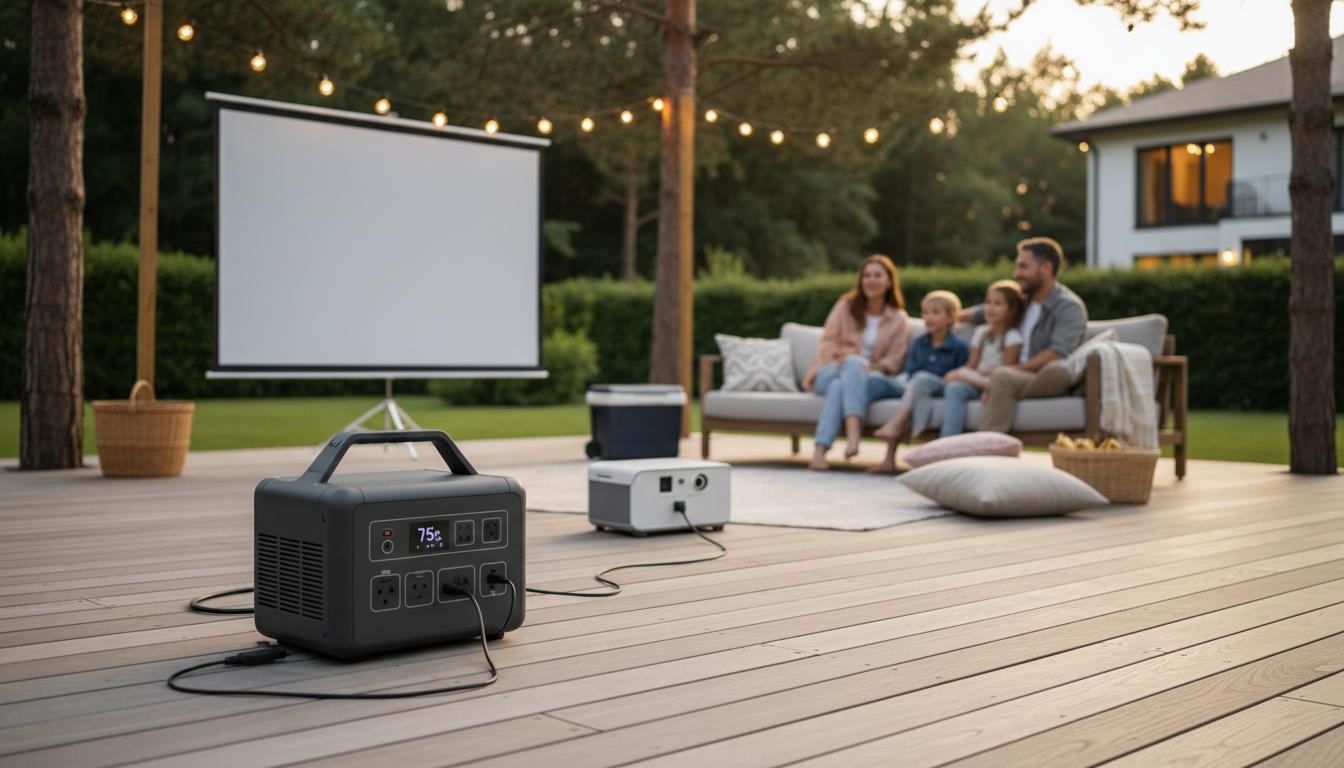
Portable power stations offer a modern, efficient, and safe solution for home backup during emergencies. Unlike traditional gas generators, these battery-powered units operate without fuel, produce no harmful fumes, and run quietly. This makes them safe for indoor use, eliminating the need for complex outdoor placement and ventilation. Their plug-and-play simplicity also means less setup time when an outage strikes, providing immediate power for critical devices and appliances.
This guide is designed to empower homeowners and renters to confidently assess their specific backup power requirements. We will explore the critical criteria, potential trade-offs, and essential considerations for selecting a portable power station that effectively meets your home's needs, ensuring preparedness for unexpected power loss.
Assessing Your Home's Backup Power Needs: A Practical Checklist
Before investing in a portable power station, a clear understanding of your household's specific energy demands during an outage is crucial. This systematic assessment ensures you select a unit that reliably supports your essential functions without overspending or underperforming.
-
Identify Your Critical Appliances: Begin by listing every device and appliance you deem absolutely necessary during an outage. This often includes:
- Communication: Smartphone, laptop, Wi-Fi router.
- Lighting: LED lamps or emergency lights.
- Food Preservation: Refrigerator (and potentially a freezer).
- Medical Devices: CPAP machines, oxygen concentrators, or other life-sustaining equipment.
- Comfort/Safety: A small fan, a water pump for a well, or a garage door opener. Avoid the temptation to power everything; focus on core necessities.
-
Determine Wattage (W) and Watt-Hour (Wh) Requirements: Once your essential list is complete, you need to quantify their power needs.
- Wattage (W): This indicates the instantaneous power an appliance draws when operating. Check appliance labels, user manuals, or manufacturer websites for "rated power" or "input wattage." This figure helps determine if a power station can run the device. Remember that some appliances, like refrigerators, have a higher "surge" wattage when they first start up.
- Watt-hours (Wh): This represents the total energy capacity of the power station and dictates how long it can power your devices. To estimate, multiply an appliance's wattage by the number of hours you expect to run it. Sum these values for all essential items to get a baseline daily Wh requirement.
-
Estimate Desired Run Time: Consider the typical duration of outages in your area and your comfort level.
- Short Outages (a few hours): A smaller capacity unit might suffice for charging phones and running a few lights.
- Moderate Outages (1-2 days): You'll likely need enough capacity to cycle a refrigerator, keep communication devices charged, and power essential medical equipment for extended periods.
- Extended Outages (multi-day): This scenario demands significantly higher Wh capacity, potentially requiring expandable battery systems or more robust units to sustain critical loads over several days.
-
Evaluate Physical Space and Portability: The practical aspects of storage and deployment are often overlooked.
- Storage Location: Where will the power station be kept when not in use? Ensure adequate space and accessibility.
- Deployment: During an outage, where will you place the unit? Since portable power stations emit no fumes, they are safe for indoor use, offering flexibility.
- Movement: Can you comfortably move the unit from its storage location to its operational spot, especially if stairs are involved? Consider the weight and presence of wheels or sturdy handles, particularly for larger capacity models. This is especially relevant for renters or those with limited storage.
Key Features and Specifications for Home Backup Power Stations
Selecting a portable power station for home backup involves understanding several core technical specifications that dictate its performance and suitability. These features directly influence how effectively the unit can power your essential appliances during an outage.
-
Capacity (Watt-hours - Wh): This metric indicates the total amount of energy a power station can store. A higher Watt-hour rating means the unit can power devices for a longer duration. For home backup, capacities typically range from 500Wh for powering small electronics and lights for several hours, up to 1500Wh or more for running a refrigerator intermittently, a CPAP machine overnight, or multiple smaller devices over an extended period. To determine the necessary capacity, multiply an appliance's wattage by its expected run time.
-
Output Power (Watts - W): This refers to the power the station can deliver at any given moment. Two key figures are important:
- Continuous Wattage: The maximum power the unit can supply consistently. Ensure this rating exceeds the total running wattage of all devices you plan to operate simultaneously.
- Surge Wattage: A brief, higher power output available for a few seconds. This is crucial for appliances with motors (like refrigerators, microwaves, or some power tools) that require a significant power spike to start up before settling into their continuous running wattage. The power station's surge rating must accommodate these initial demands.
-
Battery Chemistry: The type of battery cells used impacts the unit's lifespan, safety, and weight.
- Lithium Iron Phosphate (LiFePO4): Known for its extended cycle life (thousands of charge/discharge cycles), enhanced thermal stability, and overall safety profile. These batteries generally offer a longer operational life, making them a durable choice for long-term home backup. They can be heavier and have a slightly lower energy density compared to other lithium-ion types.
- Nickel Manganese Cobalt (NMC): Offers higher energy density, allowing for lighter and more compact designs. However, NMC batteries typically have a shorter cycle life and can be less thermally stable under extreme conditions compared to LiFePO4.
-
Charging Options: Versatile charging capabilities ensure the power station is ready when needed and can be replenished during extended outages.
- AC Wall Outlet: The most common and often fastest charging method, utilizing standard household electricity.
- Solar Panels: Allows for renewable energy charging, essential for prolonged outages where grid power is unavailable. Charging speed depends on panel wattage, sunlight intensity, and weather conditions.
- Car Charger: Provides a slower charging option from a vehicle's 12V outlet, useful for mobile recharging or during emergencies when other sources are scarce.
-
Portability and Design: Even for home backup, the ability to move the unit is important.
- Weight and Handles: Consider the unit's weight and the presence of sturdy, ergonomic handles if you anticipate needing to move it between rooms, to a different floor, or for evacuation.
- Modular/Expandable Designs: Some power stations offer the option to connect additional battery packs, significantly increasing their total capacity. This allows for scalability, letting you start with a base unit and expand its energy storage as your needs evolve or as budget allows.
-
Connectivity: The types and number of output ports determine which devices you can power.
- AC Outlets: Standard household outlets (e.g., 120V) are essential for most home appliances. Ensure there are enough to accommodate your critical devices.
- USB-A and USB-C Ports: Crucial for charging smartphones, tablets, laptops, and other smaller electronic devices. USB-C Power Delivery (PD) offers faster charging for compatible devices.
- DC Ports: Includes 12V car outlets (cigarette lighter style) and sometimes specific DC barrel ports for certain devices or lights.
Understanding Trade-offs and Limitations in Home Backup Solutions
While portable power stations offer a compelling solution for home backup, it's crucial for homeowners and renters to approach their selection with a realistic understanding of their inherent compromises and operational boundaries. These units are powerful tools, but they are not without limitations, and acknowledging them ensures informed decision-making and appropriate expectations during an outage.
-
Balancing Cost, Capacity, and Features The initial investment in a portable power station directly correlates with its energy storage capacity (measured in Watt-hours or Wh), power output capability (measured in Watts or W), and integrated features. Higher capacity units that can power more appliances for longer durations, or those offering advanced functionalities like faster charging, pass-through power, or robust app integration, typically come at a higher price point. Deciding on the right balance means weighing your budget against the assessed essential power needs of your household, recognizing that every additional Wh or feature contributes to the overall cost. Over-specifying can lead to unnecessary expense, while under-specifying can leave critical needs unmet.
-
Realistic Run Time Expectations Even with substantial battery capacities, portable power stations have finite energy reserves. The duration a unit can power your devices is directly proportional to its capacity and inversely proportional to the total wattage drawn by connected appliances. High-wattage items, such as a refrigerator compressor cycling on, a microwave, or a coffee maker, will deplete the battery significantly faster than low-draw electronics like LED lights or phone chargers. It's important to calculate estimated run times based on your specific appliance list and their average power consumption, understanding that continuous use of high-demand devices will drastically shorten the operational window.
-
Powering an Entire Home is Not Typical Portable power stations are generally designed to support critical individual appliances or essential circuits, not to provide whole-home power like a permanently installed standby generator. While some larger units can integrate with a home's electrical panel via a manual transfer switch to power specific circuits, their primary role is often for direct plug-in use. Expecting a single portable unit to run every light, outlet, and major appliance simultaneously throughout an outage is an unrealistic expectation. Their strength lies in selectively maintaining vital functions and comfort.
-
Considering System Expandability For those anticipating longer outages or evolving power needs, the expandability of a portable power station is a significant consideration. Some models offer the option to connect external battery packs, effectively increasing the overall capacity and extending run times. This modular approach can be a cost-effective way to scale your backup power solution over time, rather than needing to purchase an entirely new, larger unit if initial capacity proves insufficient. Non-expandable units, while potentially more compact, limit future flexibility.
-
Maintenance and Battery Longevity Like any battery-powered device, portable power stations require basic care to ensure optimal performance and longevity. This includes proper storage temperatures, avoiding deep discharges, and maintaining a recommended charge level when not in use (often around 80% for long-term storage). The type of battery chemistry (e.g., LiFePO4 typically offers more charge cycles than NMC) also influences its expected lifespan and how many times it can be fully charged and discharged before significant capacity degradation occurs. Neglecting these maintenance aspects can lead to reduced efficiency, diminished capacity over time, and a shorter overall service life for the unit.
Matching Your Needs to the Right Portable Power Station Category
After assessing your home's specific power requirements, the next step involves aligning those needs with the appropriate category of portable power station. These categories are defined by their capacity, output, and intended duration of use, guiding you toward a solution that effectively addresses your unique backup strategy. The most suitable choice is always a personal one, derived directly from your household's identified critical appliances and desired outage resilience.
-
Small-Scale Backup This category is designed for minimal disruption during brief outages, focusing on maintaining communication and basic illumination. These units are ideal for situations where you primarily need to keep essential personal devices charged and provide temporary light.
- Primary Use Cases: Charging smartphones, tablets, laptops, powering Wi-Fi routers, and running small LED lights.
- Typical Outage Duration: Suitable for short interruptions, often under a day, where only communication and basic connectivity are paramount.
- Key Considerations: Prioritize portability and quick deployment. These units generally have lower watt-hour (Wh) capacities and continuous power output (watts), making them compact and easy to move.
-
Medium-Scale Backup For homeowners seeking to maintain a degree of comfort and prevent significant household disruption, medium-scale power stations offer a balance of capacity and versatility. They are capable of sustaining several essential appliances for a more extended period.
- Primary Use Cases: Running a full-size refrigerator, powering a CPAP machine, keeping a television operational, or supporting a home office setup (laptop, monitor, router).
- Typical Outage Duration: Effective for 1-2 day outages, providing sufficient power to manage critical functions without immediate urgency.
- Key Considerations: Look for units with a moderate Wh capacity (often between 500-1500Wh) and higher continuous power output to handle inductive loads like refrigerators. Balance between capacity and physical size remains important for storage and occasional movement.
-
Large-Scale/Extended Backup When the goal is to maintain near-normal functionality for longer durations or to power multiple high-demand appliances simultaneously, large-scale portable power stations become necessary. These units offer substantial capacity and robust power output.
- Primary Use Cases: Powering multiple critical appliances such as refrigerators, freezers, well pumps, furnace fans, or multiple medical devices, alongside general lighting and communication.
- Typical Outage Duration: Designed for outages lasting several days or more, or for homes with higher simultaneous power requirements.
- Key Considerations: Focus on high Wh capacities (often 1000Wh and above, with some offering expandable battery options) and high continuous wattage output. Features like multiple AC outlets and efficient solar charging capabilities are often found in this category, offering greater flexibility and resilience.
Frequently Asked Questions About Portable Power Stations for Home Backup
Navigating the options for home backup power can raise several practical questions. Understanding these common concerns helps clarify expectations and guides your selection process for a suitable portable power station.
-
How long can a portable power station power a refrigerator? The duration depends on both the refrigerator's energy consumption and the portable power station's Watt-hour (Wh) capacity. Refrigerators cycle on and off, drawing power only when the compressor is running. A typical modern refrigerator might consume 100-200 Watts when active. A power station with a 1000Wh capacity could potentially power such a refrigerator for several hours to over a day, depending on how frequently the compressor cycles and its overall efficiency. Larger capacity power stations are better suited for extended refrigeration needs.
-
Are portable power stations safe to use indoors? Yes, a significant advantage of portable power stations is their safety for indoor use. Unlike gasoline-powered generators, they produce no carbon monoxide emissions, fumes, or loud operational noise. This makes them ideal for providing backup power inside your home, apartment, or enclosed spaces without ventilation concerns.
-
Can a portable power station power an entire house? Portable power stations are generally designed to power essential appliances and critical circuits, not an entire house simultaneously. While high-capacity models can handle multiple important devices like refrigerators, communication equipment, and lighting, they typically cannot support high-demand appliances such as central air conditioning, electric water heaters, or electric ovens all at once. For whole-home backup, a larger, often integrated, system or a traditional standby generator is usually required.
-
What's the difference between Watts and Watt-hours? Watts (W) measure the instantaneous rate at which electricity is consumed or produced; it's the "how much power right now" an appliance needs to run. For example, a light bulb might be 10W. Watt-hours (Wh) measure the total amount of energy stored or consumed over a period; it's the "total fuel capacity" of the power station or the total energy an appliance uses over time. A 100Wh power station can provide 100 Watts for one hour, or 50 Watts for two hours.
-
How often do I need to charge a portable power station if it's stored for emergencies? For optimal battery health and readiness, most manufacturers recommend fully recharging a portable power station every 3-6 months, even if it hasn't been used. Lithium-ion batteries, common in these devices, experience a slow self-discharge over time. Maintaining a charge within a recommended range (often 50-80%) when stored can also help prolong the battery's overall lifespan, though checking the specific manufacturer's guidelines is always best practice.
Empowering Your Home Against the Unexpected
Navigating the landscape of portable power stations for home backup can seem daunting, but this guide has provided a framework for informed decision-making. We've explored how understanding your home's unique power needs, from essential appliances to their combined wattage and runtime, forms the bedrock of a successful choice. The critical distinctions between capacity, output, and battery chemistry, alongside considerations for charging speed and safety features, all contribute to a reliable backup solution.
The ultimate goal is not just to acquire a device, but to secure peace of mind. By applying the practical criteria discussed – assessing your critical loads, calculating energy needs, and weighing the trade-offs of various features – you are now equipped to select a portable power station that truly fits your household's requirements. This proactive approach transforms uncertainty into preparedness, ensuring that when the unexpected power outage occurs, your home remains functional and resilient.
Investing in a well-chosen portable power station is an investment in your home's continuity and your family's comfort. It fosters a sense of readiness, allowing you to face disruptions with confidence, knowing you have a dependable source of power to maintain essential services and stay connected.
More in Portable Power Stations
View All
How Long Do Portable Power Stations Last? Understanding Battery Lifespan and Maintenance
Compare how long do portable power stations last with a practical informational SEO brief, decision criteria, FAQs, and publishing checks before you commit
How Do Portable Power Stations Work? A Beginner's Guide to Off-Grid Energy
Compare how do portable power stations work with a practical informational SEO brief, decision criteria, FAQs, and publishing checks before you commit.
Best Portable Power Stations for CPAP: Ensuring Uninterrupted Sleep On the Go
Compare best portable power stations for cpap with a practical commercial SEO brief, decision criteria, FAQs, and publishing checks before you commit.