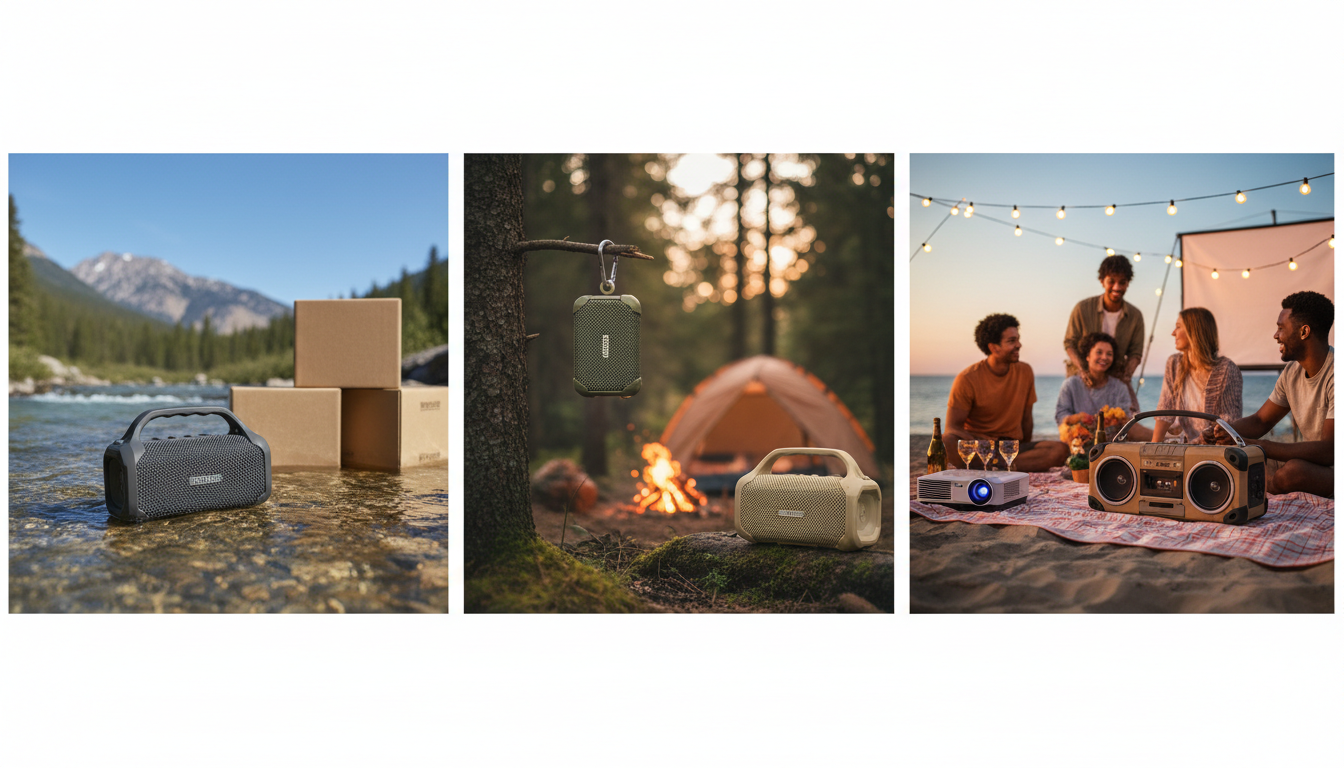
Comparing the Best Portable Outdoor Wireless Speakers for Any Adventure
Finding Your Perfect Soundtrack for the Great Outdoors
The appeal of taking your favorite music, podcasts, or audiobooks into the wild has never been stronger. Portable outdoor wireless speakers have evolved into essential companions for a wide array of activities, transforming everything from a quiet picnic to a lively beach party. Whether you're setting up camp, enjoying a backyard barbecue, or embarking on a hiking trail, these devices promise to deliver your personal soundtrack without the constraints of wires or power outlets.
However, the sheer volume and diversity of options in the market can make choosing the right speaker a daunting task. From rugged, waterproof designs built for extreme conditions to models prioritizing sound fidelity for more relaxed settings, each speaker presents a unique set of features and compromises.
This guide aims to cut through the noise, equipping you with the knowledge to identify the ideal portable outdoor wireless speaker for your specific adventures. We will explore:
- Key performance indicators and durability ratings.
- The trade-offs inherent in speaker design, such as sound quality versus battery life or portability.
- How to match speaker capabilities to your intended outdoor activities and environment.
By understanding these critical considerations, you can confidently select a speaker that truly enhances your outdoor experiences, ensuring your music never misses a beat, no matter where your journey takes you.
Essential Features for Outdoor Audio Excellence
Selecting a portable outdoor wireless speaker involves evaluating a range of technical and practical features that directly influence its suitability for various adventures. Understanding these core attributes allows you to build a shortlist based on tangible performance and utility, rather than just aesthetics.
-
Durability & Weather Resistance A speaker's ability to withstand the elements is paramount for outdoor use. This is primarily indicated by its Ingress Protection (IP) rating. An IPX7 rating signifies the device can be submerged in water up to 1 meter for 30 minutes, making it suitable for poolside or beach use. An IP67 rating adds protection against dust ingress, crucial for sandy environments or dusty trails. Beyond water and dust, consider models with shock-resistant construction, often featuring rubberized exteriors or robust casing materials, which mitigate damage from accidental drops or impacts. The level of protection needed should align directly with the speaker's intended exposure to harsh conditions.
-
Sound Quality & Volume Achieving clear, impactful audio in open-air environments is a distinct challenge. Unlike enclosed spaces, sound disperses rapidly outdoors, making sufficient loudness critical to overcome ambient noise from wind, waves, or conversations. Look for speakers designed to project sound effectively, often featuring larger drivers or passive radiators for enhanced bass response. While subjective, a balanced sound profile with clear highs and mids, alongside robust bass, contributes to an engaging listening experience. The required volume level will vary significantly between a quiet picnic and a lively outdoor gathering.
-
Battery Life & Charging The duration a speaker can play on a single charge is a fundamental criterion for extended outdoor excursions. Expected playtime typically ranges from 8 to over 24 hours, and this should be matched to your adventure length. Some speakers offer quick-charging capabilities, reducing downtime, while others include power bank functionality, allowing you to charge other devices like your phone, which can be invaluable when off-grid. A longer battery life often translates to a larger, heavier speaker, presenting a common trade-off.
-
Portability & Design The physical characteristics of a speaker directly impact its ease of transport and integration into your outdoor gear. Consider its size, weight, and overall ergonomic design. Smaller, lighter speakers are ideal for backpacking or clipping onto a bike, while larger units might offer more robust sound but require more dedicated carrying space. Features like integrated carrying straps, carabiner loops, or comfortable handles enhance convenience for on-the-go use.
-
Connectivity & Range Modern portable speakers primarily rely on Bluetooth for wireless audio streaming. Newer Bluetooth versions (e.g., 5.0, 5.2) generally offer improved range, connection stability, and energy efficiency. For a more expansive soundstage or to cover a larger area, many speakers support multi-speaker pairing technologies, enabling two or more units to play in sync (often for stereo sound or party mode). Evaluate the typical distance between your audio source and the speaker to ensure reliable connection stability.
-
Additional Features Beyond core audio playback, several supplementary features can enhance the user experience. A built-in microphone allows for hands-free calling, turning the speaker into a conference device. Companion apps can offer customizable EQ settings, letting you fine-tune the sound profile to your preference or environment. Some models include integrated LED lights, which can provide ambient lighting or visual effects, adding to the atmosphere of an outdoor gathering. While not essential for sound, these additions can contribute to overall utility and enjoyment.
Matching Speakers to Your Adventure: Use Cases and Trade-offs
The primary advantage of a portable outdoor wireless speaker over standard alternatives is its specialized design for challenging environments. Unlike indoor speakers or mobile devices, these units are engineered to project sound effectively in open spaces, resist environmental hazards, and operate independently of power outlets, directly solving the problem of bringing robust, reliable audio to any outdoor setting. Understanding how different speaker attributes align with specific activities is key to making an informed choice.
-
For Casual Backyard & Patio Use For relaxed settings like a patio or backyard, the emphasis shifts towards sound fidelity and seamless integration. Speakers for these environments often prioritize a balanced audio profile, capable of reproducing music with clarity and depth, suitable for background ambiance or focused listening. Features like multi-speaker pairing can create a wider soundstage, and an appealing design that complements outdoor decor might be a consideration. While some weather resistance is beneficial, extreme ruggedness is less critical here than for more demanding adventures.
-
For Rugged Camping & Hiking When venturing into the wilderness, a speaker's ability to endure harsh conditions becomes paramount. Models designed for camping and hiking prioritize extreme durability, often featuring robust casings that can withstand drops and impacts. Extended battery life is crucial for multi-day trips away from power sources. A compact, lightweight design with integrated carrying loops or carabiner clips ensures easy transport without adding significant bulk to a backpack. Sound output might be moderate, focusing more on personal listening or small groups rather than large-scale projection.
-
For Beach & Poolside Fun Water and sand are the primary adversaries in these environments, making superior waterproofing and sand resistance non-negotiable. Look for high IP ratings (e.g., IP67) to ensure protection against submersion and fine particles. Some speakers even offer buoyancy, preventing them from sinking if dropped in water. UV resistance can also be a factor to prevent material degradation from prolonged sun exposure. Sound profile often leans towards clear mids and highs to cut through environmental noise, with less emphasis on deep bass.
-
For Outdoor Parties & Gatherings To energize a larger group, speakers for parties and gatherings need significant volume output and robust bass response. Features like speaker linking or "party modes" allow multiple units to play in sync, creating a more immersive sound experience across a wider area. Some models incorporate customizable light shows that sync with the music, adding a visual element to the festivities. While durability is still important, the focus is on projecting powerful sound and enhancing the atmosphere.
-
Understanding Inherent Design Compromises Every speaker design involves trade-offs. A speaker built for maximum sound quality, often with larger drivers and enclosures, typically sacrifices portability and may have a shorter battery life due to higher power demands. Conversely, ultra-compact and lightweight speakers excel in portability but might compromise on bass depth or overall volume. Similarly, adding advanced features like multi-speaker linking or light shows can increase cost and potentially impact battery efficiency. The balance between extreme durability and aesthetic appeal is another common compromise; highly rugged speakers may have a more utilitarian appearance. Recognizing these inherent design choices helps align your expectations with a speaker's intended use, ensuring you select a device that prioritizes what matters most for your specific outdoor activities.
Navigating the Challenges: What to Watch Out For
While portable outdoor wireless speakers offer immense convenience, approaching their selection with a critical eye can prevent common disappointments. Understanding the practical limitations and potential pitfalls helps set realistic expectations and ensures your chosen speaker truly meets the demands of your adventures.
-
Real-world Battery Performance Discrepancies Advertised battery life figures are often achieved under optimal laboratory conditions, typically at moderate volume levels. In practice, playing music at high volumes, especially with bass-heavy tracks, or operating in colder temperatures can significantly reduce actual playback time. Always anticipate a shorter duration than the manufacturer's maximum claim for your typical high-volume outdoor use.
-
Bluetooth Range and Signal Stability The stated Bluetooth range (e.g., 30-100 feet) is usually an unobstructed, line-of-sight measurement. In outdoor environments, physical barriers like trees, tents, crowds, or even changes in terrain can attenuate the signal, leading to dropouts or a much shorter effective range. Interference from other wireless devices can also impact connectivity.
-
Sound Distortion at High Volumes Many compact portable speakers, designed for portability, can struggle to maintain audio fidelity when pushed to their maximum volume. This can result in noticeable distortion, harsh treble, or a muddy bass response, especially in open outdoor spaces where sound disperses quickly. Evaluate if a speaker can deliver clear, enjoyable audio at the volume level you anticipate needing.
-
Understanding True Durability Claims Marketing terms like "rugged" or "outdoor-ready" can be broad. It's crucial to differentiate between splash-proof (e.g., IPX4), which can handle light rain, and fully submersible (e.g., IPX7 or IP67), which can survive a dunk in water and also offers dust protection. Similarly, "shock-resistant" does not mean indestructible; severe impacts can still damage internal components or compromise water seals. Always check the specific IP rating and construction materials.
-
Ecosystem and Pairing Limitations If you plan to link multiple speakers for a stereo pair or a larger soundstage, be aware that most multi-speaker pairing technologies are proprietary. This means you typically cannot pair speakers from different brands together. Furthermore, integration with smart home ecosystems or voice assistants may be limited when the speaker is used outdoors, away from a stable Wi-Fi network.
-
Maintenance and Longevity in Harsh Conditions Even the most durable outdoor speakers benefit from proper care. Exposure to salt water, sand, excessive dust, or prolonged direct sunlight can degrade seals, corrode charging ports, or damage exterior finishes over time. Regularly rinsing off contaminants, ensuring ports are dry before charging, and storing the speaker away from extreme temperatures can significantly extend its lifespan.
Making Your Decision: A Step-by-Step Guide
Navigating the array of portable outdoor wireless speakers requires a structured approach to ensure your choice truly aligns with your needs. By systematically evaluating your requirements, you can pinpoint a speaker that enhances your outdoor experiences without unnecessary compromises.
-
Define Your Primary Use Case Begin by identifying the most frequent outdoor activity where your speaker will be used. This foundational step dictates many subsequent feature priorities.
- Quiet Background Music (Picnics, Camping): Prioritize balanced sound, decent battery life, and perhaps a more compact design.
- Loud Parties (Beach, Backyard): Focus on high volume output, strong bass, and robust durability against sand or splashes.
- Rugged Adventures (Hiking, Kayaking): Emphasize extreme durability (high IP rating), shock resistance, and secure attachment points.
-
Prioritize Key Features Once your use case is clear, determine which criteria are non-negotiable. This often involves trade-offs. For instance, a speaker with exceptional sound fidelity might be less rugged or have shorter battery life than a highly durable, utilitarian model. Decide if durability, sound quality, extended battery life, or extreme portability holds the most weight for your specific adventures.
-
Set a Realistic Budget Your budget directly influences the feature set and overall performance you can expect. Entry-level speakers can offer basic functionality and decent sound for casual use, while higher price points typically unlock enhanced durability, superior audio engineering, longer battery life, and advanced connectivity options. Understand what features are achievable within your financial comfort zone.
-
Consider Brand Reputation & Ecosystem Established brands often provide a track record of reliability, consistent quality control, and accessible customer support. Some brands also offer ecosystem benefits, allowing for seamless pairing with other devices or multi-speaker setups. While not always a deal-breaker, a reputable manufacturer can offer peace of mind regarding product longevity and performance consistency.
-
Read User Reviews Thoughtfully User reviews offer practical insights into a speaker's real-world performance and potential limitations. Look for patterns in feedback regarding durability, battery performance, and sound quality in outdoor settings. Pay particular attention to reviews from users whose intended use cases mirror your own, as their experiences will be most relevant.
-
Final Self-Assessment Questions Before making a final choice, ask yourself:
- Does this speaker meet my primary use case's most critical requirements (e.g., water resistance for beach, volume for parties)?
- Am I comfortable with the trade-offs I'm making (e.g., sacrificing some bass for extreme portability)?
- Does the speaker's size and weight fit easily into my gear or lifestyle?
- Have I considered its charging method and how it aligns with my outdoor power access?
Frequently Asked Questions About Portable Outdoor Wireless Speakers
Navigating the options for portable outdoor wireless speakers can raise several practical questions. Understanding these common concerns can further refine your selection process and ensure you choose a device that meets your expectations for performance and longevity.
-
Are all 'waterproof' speakers truly waterproof? The term "waterproof" can be misleading. Most speakers designed for outdoor use carry an Ingress Protection (IP) rating, which specifies their resistance to solids (like dust) and liquids. For example, an IPX7 rating indicates the device can be submerged in up to 1 meter of water for 30 minutes. An IP67 rating adds complete protection against dust ingress. Speakers with lower IP ratings (e.g., IPX4) are typically splash-resistant, not fully submersible. Always check the specific IP rating to understand the actual level of water protection a speaker offers.
-
How long do these speakers typically last on a single charge? Battery life varies significantly based on the speaker's size, volume level, and features (like integrated LED lights or device charging capabilities). Many portable outdoor speakers offer between 8 to 24 hours of playback on a single charge at moderate volumes. Larger speakers or those with power bank functions might offer even longer durations. Always consult the manufacturer's specifications for estimated battery life, and remember that real-world usage at higher volumes will often reduce this figure.
-
Can I connect multiple speakers together for a bigger sound? Yes, many modern portable outdoor wireless speakers feature proprietary technologies that allow you to pair two or more compatible speakers. This functionality is often marketed as "stereo pairing" (for a left and right channel setup) or "party mode" (for synchronized playback across multiple units). Connecting multiple speakers can significantly enhance sound output and create a more immersive audio experience, especially in open outdoor environments. However, this feature typically works only with speakers from the same brand or within the same ecosystem.
-
What's the main difference between Bluetooth and Wi-Fi speakers for outdoor use? For truly portable outdoor use, Bluetooth speakers are generally more practical. They connect directly to your audio source (like a smartphone) and do not require an existing network, making them ideal for remote locations. Wi-Fi speakers, conversely, connect to your home or a local Wi-Fi network. While Wi-Fi can offer higher audio fidelity and a greater range within a network's coverage, it's less suitable for adventures away from an established internet connection. Some hybrid models offer both, providing flexibility.
-
Are more expensive outdoor speakers always better quality? While a higher price often correlates with premium materials, advanced audio engineering, and additional features, it doesn't guarantee a universally "better" experience for every user. More expensive speakers might offer superior sound clarity, robust build quality, or extended battery life. However, for many users, a mid-range speaker might provide an excellent balance of performance, durability, and value that perfectly suits their specific outdoor activities without unnecessary expenditure. Evaluate features and specifications against your needs rather than solely on price.
-
How should I clean and maintain my outdoor speaker? Proper cleaning and maintenance can significantly extend your speaker's lifespan. After exposure to dirt, sand, or saltwater, gently rinse the speaker with fresh water (if its IP rating allows for it) and dry it thoroughly with a soft cloth. Avoid using harsh chemicals, abrasive cleaners, or high-pressure water jets, which can damage seals or finishes. Regularly inspect charging ports and protective covers for debris or damage. Store the speaker in a cool, dry place, and follow manufacturer guidelines for battery charging to optimize its long-term health.
Your Outdoor Audio Journey Starts Here
Navigating the diverse landscape of portable outdoor wireless speakers can seem complex, but with a clear understanding of your needs and the market's offerings, the choice becomes straightforward. The "best" speaker isn't a universal title; it's the one that perfectly aligns with your intended activities, environment, and personal priorities, whether that's extreme durability, superior sound, or extended battery life.
By considering the critical features, understanding the inherent trade-offs, and evaluating how each speaker's design fits your specific outdoor adventures, you are now equipped to make an informed decision. Use the insights gained on durability, sound projection, battery performance, and connectivity to confidently identify the model that will truly enhance your experiences.
Ultimately, your portable outdoor wireless speaker is more than just a gadget; it's a companion that brings your favorite audio to life, wherever your journey takes you. Choose wisely, and let the soundtrack of your next adventure begin.
More in Portable Outdoor Speakers
View All
Sonos Portable Outdoor Speakers: A Comprehensive Buying Guide
Compare sonos portable outdoor speakers with a practical informational SEO brief, decision criteria, FAQs, and publishing checks before you commit.
Amp Up Your Event: Best Portable Speakers for an Outdoor Party
Compare best portable speakers for outdoor party with a practical commercial SEO brief, decision criteria, FAQs, and publishing checks before you commit.
Top Picks: Best Bluetooth Portable Outdoor Speakers for Superior Sound
Compare best bluetooth portable outdoor speakers with a practical commercial SEO brief, decision criteria, FAQs, and publishing checks before you commit.